


More news on this day
United Airlines has joined Delta Air Lines, Emirates, Singapore Airlines, and British Airways in highlighting a long-standing cabin safety practice that urges passengers to raise their window shades during critical phases of flight so crew can assess exterior conditions and, if needed, evacuate more quickly.
Get the latest news straight to your inbox!
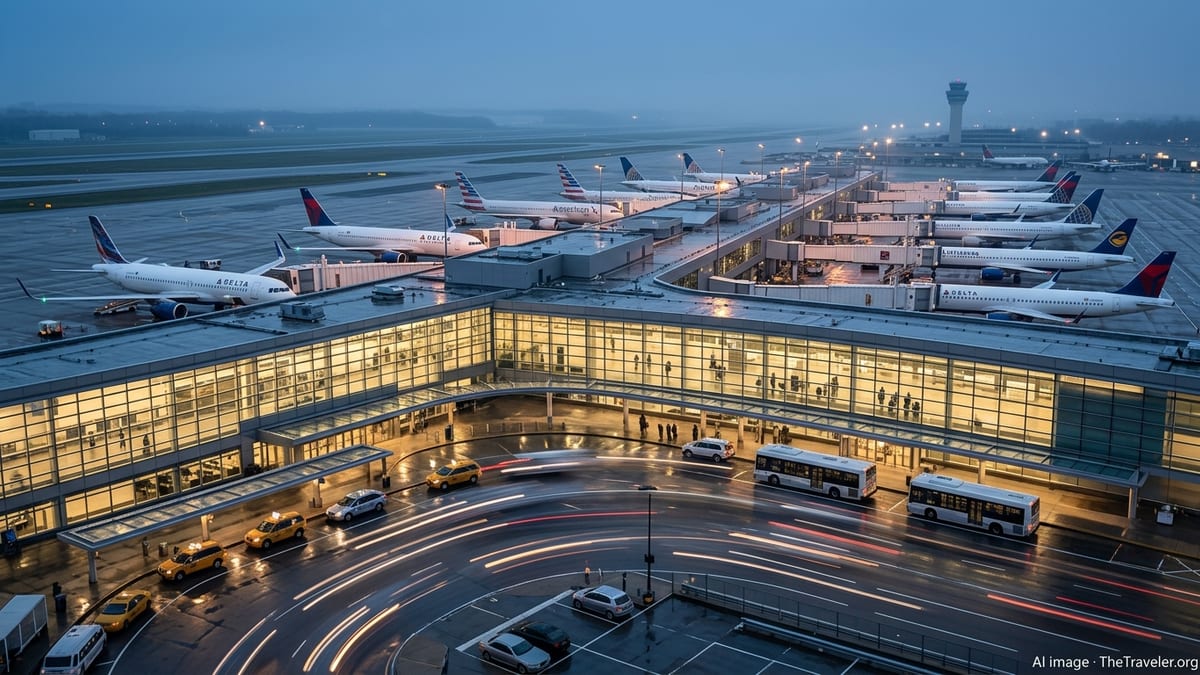
A Safety Bulletin Puts Focus Back On a Quiet Cabin Rule
According to recent industry coverage, a new multi-carrier safety bulletin involving United Airlines, Delta Air Lines, Emirates, Singapore Airlines, and British Airways reiterates that passengers should raise window shades during taxi, takeoff, landing, and emergencies to support rapid evacuation. The bulletin reflects a growing effort among major airlines to standardize procedures around what has long been treated as an informal best practice rather than a strict public-facing rule.
Reports indicate that the collaboration is framed around improving situational awareness inside the cabin and on the ground. With open shades, cabin crew can visually check for fire, smoke, debris, or obstructed exits before ordering passengers to leave the aircraft. Emergency responders outside the aircraft may also be better able to see into the cabin, particularly if smoke accumulates.
The renewed emphasis comes as airlines and regulators continue to examine real-world evacuations, in which passengers and crew must clear the aircraft within 90 seconds under demanding conditions. Window shade position is one of several small but cumulative factors, alongside seat backs, tray tables, and baggage stowage, that can influence how quickly people can reach usable exits.
For United Airlines, the bulletin builds on internal safety messaging that has previously encouraged passengers, especially those in exit rows, to keep shades open during critical phases of flight. Publicly available materials from union and industry groups show that the carrier has framed open shades as an important part of preparation for an unlikely but high-consequence event.
What FAA, EASA, And ICAO Actually Require
Despite the attention generated by the latest safety bulletin, current regulations in the United States do not mandate that all cabin window shades be open for takeoff and landing. Publicly available Federal Aviation Administration guidance outlines cabin safety requirements focused on evacuation performance, crew training, and usable exits, but leaves carriers discretion on specific window shade procedures, aside from certain exit-row provisions.
In Europe, the European Union Aviation Safety Agency similarly concentrates on whether aircraft can be evacuated within required time limits and whether crew procedures support that outcome. Guidance documents and certification material describe the benefits of clear visibility during emergencies and reference open window blinds as part of recommended cabin procedures, but they stop short of a universal, enforceable rule for every passenger seat on every flight.
At the global level, the International Civil Aviation Organization issues standards and recommended practices that member states incorporate into their own regulations. ICAO’s cabin safety material underscores the role of visual assessment before and during evacuations and supports operating procedures that help crew quickly determine which exits are safe to use. Industry summaries of ICAO guidance note that open shades align with these objectives by allowing both crew and passengers to understand what is happening outside the aircraft.
In practice, this framework means that regulators set broad performance and safety goals related to evacuation, while leaving individual airlines to translate those objectives into detailed cabin procedures. The new safety bulletin from United and its partner carriers is positioned within that space, taking existing recommendations and aligning them more explicitly with day-to-day passenger instructions.
From Recommendation To Cabin Routine On Major Airlines
International carriers such as Emirates, Singapore Airlines, and British Airways have for years been associated with more explicit policies requiring or strongly encouraging open shades during takeoff and landing. Travel industry reports describe cabin crew on many non US airlines routinely asking passengers to lift blinds during safety checks, with the expectation that they remain open through the most risk sensitive phases of flight.
By joining a joint safety bulletin with Delta Air Lines and these global carriers, United Airlines is moving closer to that model, even as wording in safety briefings still tends to stress recommendations rather than hard rules for all seats. The collaboration suggests a shared interest in minimizing variation in how crews handle window shades on different routes and aircraft types, particularly on long haul flights where operational habits sometimes differ between regions.
The move also reflects changing passenger expectations. As travelers encounter varied policies on different airlines, questions about whether shades must be open or may remain closed have become more common. Clearer, more harmonized messaging, supported by multiple large carriers, can reduce confusion and support faster compliance in time critical situations.
Industry observers note that airlines rarely adjust cabin procedures in isolation. Aligning with peer carriers, especially those with large international networks, can make it easier to defend policies that may be mildly inconvenient in normal operations but potentially critical in an emergency. The safety bulletin positions open shades as exactly that type of measure.
Why Open Window Shades Matter In An Evacuation
Cabin safety specialists have long argued that visibility and eye adaptation are key reasons for encouraging open window shades during takeoff and landing. If an aircraft must be evacuated shortly after one of these phases, passengers and crew exiting into bright sunlight or darkness may be temporarily disoriented if they move suddenly from a dim cabin to a vastly different lighting environment. With shades open and cabin lighting adjusted to outside conditions, eyes are more likely to be ready for what awaits at the bottom of the slide.
Open shades can also help crew make faster and more accurate decisions about which exits to use. Before opening a door, crew members are trained to check outside conditions for signs of fire, fuel spills, debris, or blocked escape paths. Having an unobstructed view from multiple windows along the cabin can give them more information in a shorter amount of time, potentially steering passengers away from a hazardous side of the aircraft.
For passengers, being able to see outside can aid orientation if the aircraft comes to rest in an unusual attitude or location. Visual cues about the ground, wings, or nearby obstacles may help people understand and follow crew instructions more quickly, reducing hesitation at exits and on slides. In crowded, high stress conditions, even small reductions in uncertainty can translate into significant time savings across hundreds of people.
Safety analysts point out that many of the most familiar cabin rules share this logic. Keeping aisles clear, putting seat backs upright, and stowing tray tables are all aimed at removing obstacles and maximizing both visibility and mobility if the aircraft must be cleared swiftly. Open window shades fit into the same category of low cost measures that can support the 90 second evacuation benchmark used in certification.
Global Best Practice Versus Formal Regulation
The latest safety bulletin underscores a broader tension in commercial aviation between what is formally required by regulation and what has emerged as best practice through operational experience. In the case of window shades, regulators such as the FAA, EASA, and ICAO emphasize outcomes like rapid, orderly evacuations, while industry groups and airlines interpret those goals by promoting specific cabin procedures.
Trade associations and cabin safety organizations have for years described open shades during critical phases of flight as a straightforward way to strengthen situational awareness. Published guidance materials list the practice alongside other recommended steps for crew and passengers, and training programs often present it as standard behavior even when local rules do not mandate it explicitly.
The participation of multiple major carriers in a shared bulletin signals that the line between recommendation and expectation is continuing to blur. While passengers in many regions may still view shade position as a matter of personal preference, airlines are increasingly framing it as part of a collective safety effort in which individual choices can influence outcomes for the entire cabin.
For now, the effect of the United, Delta, Emirates, Singapore Airlines, and British Airways initiative is likely to be felt most in subtle changes to preflight announcements and crew interactions. Over time, however, consistent messaging from both airlines and regulators could further entrench the idea that raising a window shade during takeoff and landing is not simply a courtesy to fellow travelers, but a small, practical contribution to global aviation safety.