


More news on this day
United Airlines has warned flight attendants that they risk termination if they intentionally exploit rolling flight delays to secure pay protection on trips they do not actually work, highlighting growing tensions around complex delay-related compensation rules across the industry.
Get the latest news straight to your inbox!
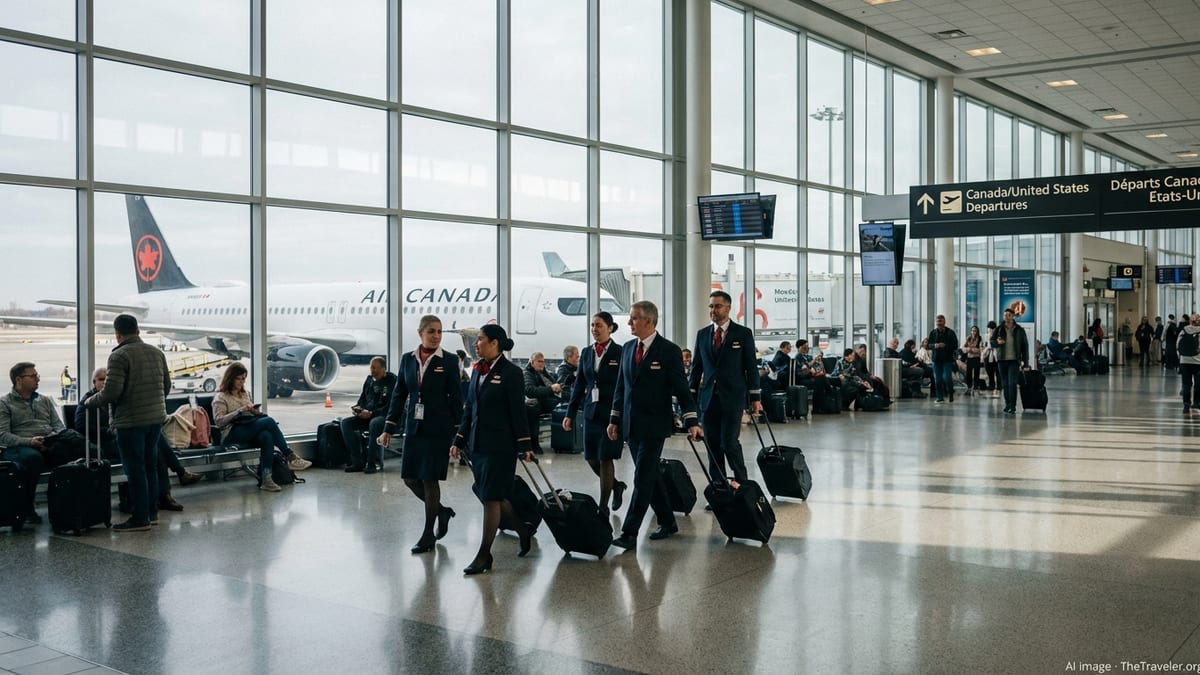
Internal memo targets rolling delay pay abuses
According to accounts shared on flight attendant forums and social media, a recent internal communication at a major U.S. carrier, identified in multiple posts as United Airlines, cautions crew members against using flight-status information and schedule changes to benefit from rolling delays without operating the affected flights. Reports indicate that the memo characterizes this behavior as a misuse of contractual pay protections and warns that it could lead to discipline, up to and including termination of employment.
Rolling delays occur when departure times are repeatedly pushed back in small increments rather than being declared as a single long delay. For flight attendants, updated schedules and delay notices can trigger additional compensation protections under union contracts, especially when disruptions extend duty periods or create long gaps between flights. Publicly available commentary from self-identified crew members suggests that some flight attendants at different airlines have learned to anticipate which flights are likely to be delayed and adjust their schedules accordingly to benefit from those protections.
One widely shared discussion among flight attendants on a national forum describes how some crew members may trade into or pick up trips that already show signs of significant disruption, then rely on contract provisions that protect their pay when the trip later cancels or substantially delays. In the recent memo described by posters, management reportedly frames this as an intentional effort to “pad” paychecks based on anticipated schedule changes rather than actual work performed. The communication, as summarized publicly, emphasizes that using internal scheduling and delay data with the primary intent of collecting pay for trips never flown is considered unacceptable.
Although full details of the internal policy language have not been published, commentary from participants familiar with the memo indicates that the airline is not attempting to remove pay protection itself. Instead, the focus is on conduct that appears to be designed to exploit those protections, such as deliberately seeking out soon-to-be-delayed flights after learning that a schedule change is likely and then not flying the trip once it cancels.
Pay protection and rolling delays under modern flight attendant contracts
The dispute arises against the backdrop of increasingly complex flight attendant pay structures, particularly at United. A new five-year contract ratified in May 2026 provides roughly a 31 percent average wage increase for the airline’s nearly 30,000 flight attendants, along with boarding pay for time spent working before pushback and new compensation for lengthy delays and long sits between flights. According to published union and company summaries, boarding pay is now calculated at 50 percent of a flight attendant’s hourly rate for actual boarding, while additional pay applies when scheduled or rescheduled ground time between segments exceeds two and a half hours.
Negotiation materials posted by the Association of Flight Attendants describe how the contract’s improved “sit pay” is meant to compensate crews for extended periods on duty when they may be waiting in terminals during irregular operations. These provisions, combined with established pay protection rules when trips delay or cancel after being assigned, are designed to ensure that crew members are not financially penalized when operations deteriorate due to weather, congestion, or other disruptions beyond their control.
However, those same protections can create gray areas when employees can see internal indicators that a delay or cancellation is increasingly likely. Discussion threads among flight attendants indicate that in some cases crew members may use this information to choose trips that are already showing significant rolling delays, knowing that the contract will protect much of their pay even if the flying does not occur. In that environment, management concerns about intentional gaming of the system focus on intent: whether a trip was selected primarily to cover the operation or primarily to trigger guaranteed pay despite minimal work.
Publicly available explanations from union-side resources stress that pay protections are a core benefit negotiated to address the unpredictability of airline schedules and should apply whenever a flight attendant is legitimately scheduled and then disrupted. At the same time, union guidance materials in the broader industry often caution members that any attempt to manipulate schedules for unearned compensation could expose them to allegations of dishonesty or misuse of company systems, potentially jeopardizing contractual protections.
United’s operational context and labor relations backdrop
The memo described by flight attendants surfaces only months after United and the Association of Flight Attendants concluded a high-profile round of bargaining. The tentative agreement announced in March 2026, later ratified by members, was promoted as delivering industry-leading total compensation, including retroactive pay dating back several years, new boarding pay, enhanced scheduling rules, and improved job security commitments. According to the union and labor organizations that reported on the vote, the deal followed a period of intense organizing and visible labor activism across U.S. airlines.
Company and union summaries alike highlight that the new agreement specifically addresses compensation during long delays and gaps between flights, reflecting increased recognition of how disruptive schedules can be for crews during peak travel seasons and irregular operations. United’s own recruiting materials emphasize that flight attendants are expected to manage high-stress situations such as delays and severe weather while maintaining safety and service for passengers, and that the role involves irregular hours and changing schedules.
Within that framework, management warnings about gaming rolling delay pay can be read as an effort to draw a line between using negotiated protections as intended and behavior viewed as opportunistic. Labor advocates, however, often point out that complex rules are a response to years in which flight attendants went unpaid for significant portions of their working time, including boarding and protracted ground delays, and that any suggestion of abuse must be weighed against longstanding concerns about undercompensation.
Legal disputes over airline pay practices underscore how contentious this terrain can be. In a recent federal case involving United, plaintiffs argued that the company’s policies around “actual flight time” and pay schedules undercompensated flight attendants for time spent working or on duty, though the court’s analysis centered on how collective bargaining agreements define duty periods and pay formulas. While that lawsuit focuses on different issues than rolling delay pay, it illustrates the close scrutiny now applied to how airlines calculate and deliver compensation for cabin crew.
Industry implications and questions for travelers
United’s internal warning about rolling delay pay practices echoes broader concerns throughout aviation about how employees and companies respond to rising disruption. Airlines have introduced new tools to manage delays, from dynamic crew-scheduling platforms to passenger compensation apps, while union contracts increasingly spell out additional pay when operations break down. These systems can create incentives on all sides, and public commentary suggests that both management and front-line staff are constantly adapting to evolving rules and technology.
For travelers, the latest controversy will likely raise questions about crew availability during major weather events or systemwide disruptions, when rolling delays are most common. Passenger-facing reports from previous meltdown periods show that flights have sometimes canceled because crews timed out or could not be positioned in time, even when aircraft were available. While there is no indication from public information that rolling delay pay practices are a significant driver of cancellations, any perception that crews might be financially rewarded for non-operation can quickly become a flashpoint in public debate.
At the same time, advocates for flight attendants note that most crew members experience rolling delays as a source of stress, fatigue, and uncertainty rather than as a financial opportunity. Union commentary in recent contract campaigns has emphasized that compensation for long delays, sits, and boarding is meant to recognize labor that was historically unpaid and to provide some measure of predictability in an unpredictable job. Against that backdrop, the warning about gaming pay protections may be seen as a targeted response to a relatively narrow set of behaviors rather than a broad shift in how delay-related compensation works.
How the issue ultimately develops may depend on whether additional details of the memo or any resulting disciplinary cases become public, and whether the union or the company chooses to address rolling delay pay practices more formally in future guidance. For now, the episode highlights the increasingly fine line between contractual protections designed to stabilize paychecks in a volatile industry and the concern, from management’s perspective, that some employees might test the limits of those protections when rolling delays present an opportunity.
Sources: https://unitedfacontract.org/ta2-articles; https://afacwa.org/united-flight-attendants-ratify-new-contract/; https://united.mediaroom.com/2026-03-26-United-Reaches-New-Agreement-with-Association-of-Flight-Attendants; https://www.reddit.com/r/flightattendants/comments/1w7nyev/_/; https://docs.justia.com/cases/federal/district-courts/new-jersey/njdce/2%3A2025cv15624/583087/58