


More news on this day
Air travelers across the United States are facing another morning of disruptions after a major air-traffic equipment failure in the Northeast on September 21 triggered widespread delays and cancellations that are still rippling through the system.
Get the latest news straight to your inbox!
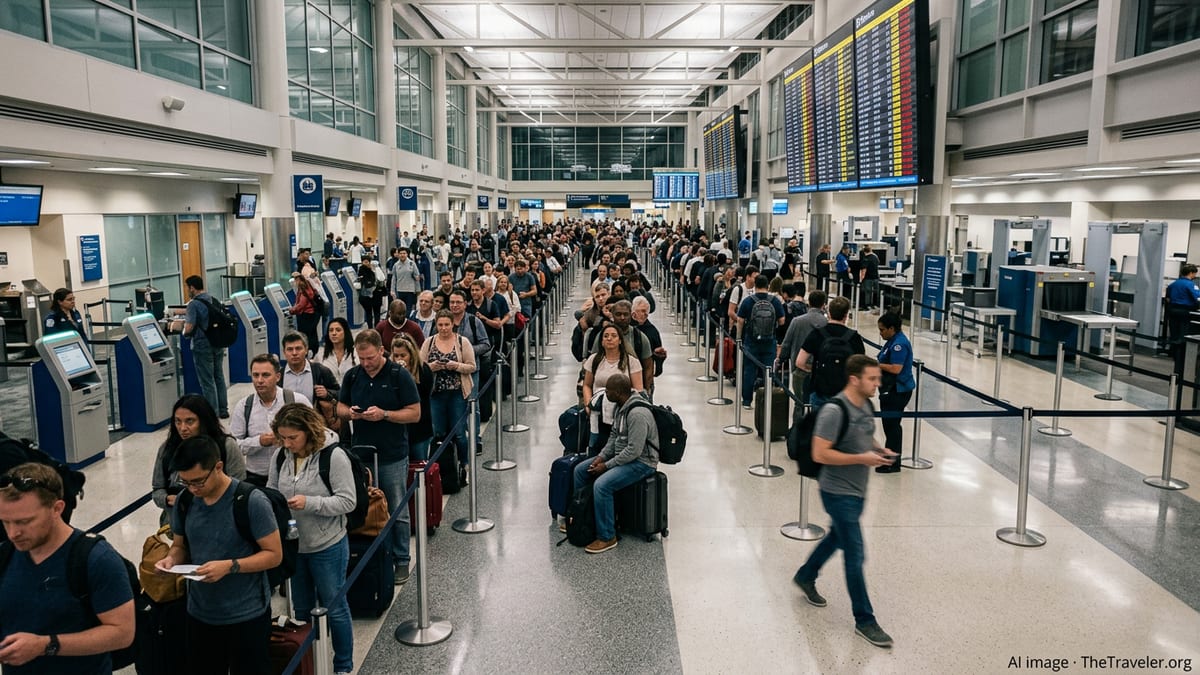
Equipment Failure in Northeast Triggers Widespread Disruptions
Published coverage indicates that a failed data circuit and damaged backup fiber line at a key air traffic facility serving the Northeast on Monday, September 21, brought operations at several major airports to a near standstill. Reports describe a communications breakdown affecting traffic into Newark Liberty International, Philadelphia International, LaGuardia and John F. Kennedy International, among others in the region.
According to publicly available flight-tracking data cited in multiple outlets, Newark experienced more cancellations on Monday than any other airport worldwide, with hundreds of flights grounded or diverted. Philadelphia also reported hours-long average delays at the height of the disruption before conditions gradually improved through the evening.
By late Monday, technicians had restored the damaged lines and the Federal Aviation Administration’s national system command data showed that ground stops in the New York and Philadelphia areas were lifted. Even so, agencies cautioned that clearing the backlog would take time, and airlines continued to adjust schedules into Tuesday to reposition crews and aircraft.
The outage coincided with heightened traffic into New York for the United Nations General Assembly, adding pressure to one of the country’s busiest air corridors. Airlines issued travel waivers for affected dates, allowing passengers flying between September 21 and 23 to rebook without change fees on select routes in the Northeast.
Residual Delays Continue Into Today’s Operations
FAA operations dashboards updated early Wednesday, September 23, show fewer severe constraints than on Monday, but some airports continue to list delays tied to weather, runway work and lingering congestion. Publicly available summary pages from the agency’s Air Traffic Control System Command Center indicate that restrictions are now more localized rather than nationwide.
Live delay aggregators built on FAA feeds show that Boston Logan, for example, has been managing a ground delay program and modest departure holds related to runway work, with recent average waits reported at around an hour for some departures. San Francisco International has also been reporting departure delays in the 15 to 30 minute range linked to airfield projects.
Even at airports not directly affected by Monday’s outage, travelers may still encounter knock-on effects. Aircraft and crews displaced by earlier cancellations can leave gaps in schedules days later, particularly on tightly timed hub-to-hub routes. Publicly available flight-status tools on airline and airport websites show scattered delays at major hubs in Atlanta, Chicago and Dallas as carriers work through repositioning.
Transportation data specialists note that these cascading impacts are typical following a large-scale disruption, whether caused by severe weather or technology issues. The pattern this week reflects that familiar dynamic: a sharp spike in delays and cancellations concentrated in one region, followed by a slower, systemwide recovery that stretches over several days.
Summer 2026 Data Show Persistent Pressure on On-Time Performance
The latest performance figures from the U.S. Department of Transportation’s Bureau of Transportation Statistics and the August 2026 Air Travel Consumer Report highlight how Monday’s outage landed in an already strained system. Federal data through July 2026 show that a number of large U.S. hubs were reporting on-time arrival rates in the low- to mid-80 percent range, with some busy airports falling below that threshold.
Year-to-date rankings published by the Bureau list variation of several percentage points between the best- and worst-performing major airports on punctuality. Congested coastal hubs and weather-sensitive midcontinent gateways consistently appear toward the bottom of on-time arrival tables, reflecting frequent traffic management initiatives and summer thunderstorm disruptions.
Regulators classify delay causes into categories such as air carrier factors, late-arriving aircraft, national aviation system constraints, weather and security. Recent reports show that a substantial share of minutes lost this year fall under national system and weather, underscoring how infrastructure constraints and storm patterns shape the traveler experience.
The outage in the Northeast added a different kind of stress test, focused on the resilience of communications technology that underpins air traffic control. Analysts point out that while such failures are rare compared with routine weather delays, they can have outsized impacts because they affect multiple airports simultaneously and may require hours to diagnose and repair.
Aging Infrastructure and Modernization Efforts Under Scrutiny
Public briefings and coverage of Monday’s incident have renewed scrutiny of the state of U.S. air traffic control infrastructure. Reports indicate that the failed circuit in the Philadelphia-area facility had been slated for replacement, and that a break in the backup fiber line left controllers without redundancy when the primary system went down.
The event follows other high-profile technology disruptions in recent years, including software outages that temporarily halted departures for individual carriers and previous regional issues in the New York area. Together, these episodes have fueled debate over the pace of modernization for critical aviation systems and the need for additional investment in redundancy.
Budget documents and federal notices show that billions of dollars are currently earmarked for upgrades to communications, navigation and surveillance systems, as well as for experimental tools that use artificial intelligence to help manage traffic flows. Monday’s failure has prompted questions in policy circles about how new technology is being integrated with older legacy hardware and what safeguards are in place during transition periods.
Aviation industry observers note that large-scale overhauls of complex systems can introduce new vulnerabilities if not carefully sequenced. The incident in the Northeast is likely to feature prominently in future discussions over funding and implementation timelines, particularly as air travel demand in the United States continues to grow and traffic volumes push back toward or beyond pre-pandemic levels.
What Travelers Can Expect in the Coming Days
While core communications capabilities have been restored, publicly available FAA system summaries and flight-status tools suggest that travelers should continue to expect pockets of delay through at least the middle of the week. Weather remains a contributing factor, with federal daily traffic reports flagging the potential for low clouds, visibility issues and thunderstorms to slow operations at key hubs including New York, Washington, Atlanta, Charlotte and several airports in Florida.
Airlines are continuing to adjust schedules in response to both the outage and seasonal storm patterns. Several major carriers have posted travel advisories and limited-fee-change policies for customers whose journeys touch the most affected airports and dates, particularly in the Northeast corridor.
Passengers planning to fly in the coming days are advised by airports and carriers, through their public channels, to check flight status frequently, allow additional time at the airport and monitor any updated guidance on rebooking options. Even on routes outside the Northeast, aircraft and crew rotations mean that a disruption several time zones away can still affect departure times.
Industry data released so far for 2026 suggest that while overall on-time performance remains better than in some recent peak disruption years, the margin is thin. Episodes such as this week’s outage illustrate how quickly conditions can deteriorate when a single point of failure intersects with already busy schedules and unsettled weather, leaving travelers across the country contending with another round of uncertainty at the airport.