


More news on this day
Hundreds of flights operated by American Airlines, JetBlue, Frontier, Air Canada and regional carrier PSA were canceled or delayed across multiple countries on Sunday, leaving travelers stranded from major hubs in the United States to Canada, Europe and the Caribbean.
Get the latest news straight to your inbox!
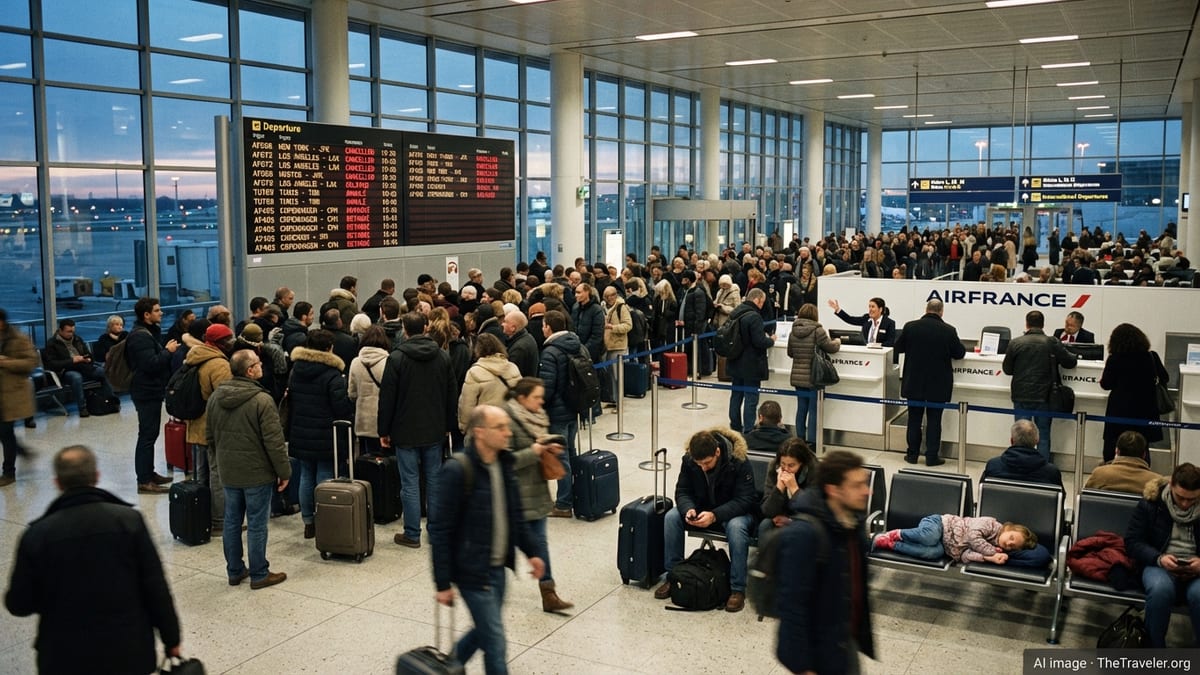
Storm-Driven Disruptions Ripple Across Major East Coast Hubs
Travel monitoring data and airline alerts show that intense weather around the northeastern United States triggered a wave of cancellations and delays centered on New York and Boston, two of the region’s busiest aviation hubs. Airlines responded by trimming schedules and imposing rolling ground delay programs, which quickly spilled over into wider network disruption.
American Airlines issued a travel alert covering New York’s John F. Kennedy International Airport and Boston Logan International Airport for June 14 and June 15, allowing eligible customers to rebook without change fees if they were willing to shift trips away from the most affected hours. Publicly available information indicates that regional operations run by PSA Airlines, an American Eagle affiliate, were hit particularly hard as short-haul flights into and out of constrained airports were prioritized or canceled on short notice to keep longer-haul routes moving.
At Boston Logan, separate aviation analysis cited by industry outlets described an operational “meltdown” as weather and air-traffic-management programs combined to push average delays past an hour on some carriers. Those conditions contributed to at least 100 flight cancellations and more than 200 delays across American, JetBlue, Frontier, Air Canada and PSA-operated services on Sunday, according to aggregated tracking data.
In New York, disruption at JFK and nearby LaGuardia complicated connections across the broader domestic network. Airlines sought to consolidate lightly booked flights and reroute crews, but the tight spacing of storms along the Eastern Seaboard limited their options and added to passenger frustration as departure times were repeatedly pushed back.
Impact Spreads to Canada, United Kingdom, France and the Caribbean
Although the most acute operational challenges were concentrated in the northeastern United States, the knock-on effects quickly reached international routes. Transatlantic services linking Boston and New York with London and Paris experienced rolling delays as aircraft and crews were held on the ground awaiting improved conditions and new departure slots.
Reports from major Canadian gateways, including Toronto and Montreal, described growing congestion as delayed inbound aircraft from the United States arrived late and missed their scheduled turnaround windows. Air Canada, which had already been monitoring volatile operating conditions tied to summer storms and broader system stress, faced additional schedule pressure as connecting passengers misconnected from U.S. feeder flights.
Further south, travelers in the Dominican Republic and other Caribbean destinations reported extended waits as aircraft scheduled to operate return legs from New York and Boston arrived hours behind schedule or were reassigned to other routes. Because many leisure destinations are served by a limited number of daily flights, even a single cancellation or significant delay can leave passengers stranded until the next operating day.
Industry observers noted that today’s disruptions add to a longer pattern of summer irregular operations in the transatlantic and Caribbean markets, where tightly packed schedules leave little room to absorb unexpected weather or airspace constraints without affecting multiple countries at once.
Low-Cost and Regional Carriers Face Particular Strain
Low-cost carriers and regional operators appeared to shoulder a disproportionate share of cancellations as airlines worked to stabilize their networks. Frontier, which operates a point-to-point model with lean spare capacity, reported scattered delays and cancellations on routes touching the Northeast corridor, with late-arriving aircraft creating domino effects across its system.
JetBlue, whose largest operations are based at New York JFK and Boston Logan, confronted simultaneous pressure on both of its main hubs. Published coverage of the day’s operations pointed to long lines at check-in and security as customers attempted to rebook canceled flights or find alternative routings. With many flights operating near capacity at the height of the summer travel season, re-accommodating disrupted passengers proved challenging.
Regional carrier PSA, flying under the American Eagle brand, serves numerous smaller U.S. cities from congested northeastern hubs. Aviation analysts note that these short-haul legs are often the first to be cut when air traffic control restrictions and weather constraints force airlines to reduce movements, since canceling a short turn frees up slots and crews for longer, higher-demand services. That pattern appeared to hold true on Sunday, leaving some communities with limited remaining options.
For affected passengers, the distinction between mainline and regional operations offered little comfort, as cancellations by one partner airline could break a chain of connections involving multiple carriers and airports.
Legacy System Fragility and Recent IT Outage Loom in the Background
The latest disruptions come less than two years after a global technology outage linked to a defective software update for Microsoft Windows systems caused what several industry assessments have described as one of the largest IT failures in aviation history. That incident, associated with a configuration problem in widely used cybersecurity software, temporarily grounded thousands of flights worldwide and exposed the vulnerability of complex airline and airport technology stacks.
While Sunday’s chaos in New York, Boston and other cities has been primarily tied to weather and airspace management rather than a fresh technology failure, the memory of the 2024 outage still looms large for travelers and carriers. Aviation risk studies published since then highlight how even localized storms or regional air traffic control constraints can interact with tightly coupled reservation, crew-management and dispatch systems to produce outsized disruption.
Industry groups and analysts have repeatedly urged investment in more resilient infrastructure, including better redundancy in critical airline IT systems and improved data sharing between carriers and air navigation authorities. The strain evident across American Airlines, JetBlue, Frontier, Air Canada and PSA operations on Sunday is seen by some experts as another reminder that recovery from relatively routine disruptions can still be slow and uneven.
Some carriers have reported incremental improvements in response times and rebooking options since the 2024 outage, including more dynamic use of mobile apps and automated reaccommodation tools. However, real-world events such as today’s weather-driven turmoil suggest that progress toward truly robust, passenger-friendly disruption management remains uneven across the industry.
Passengers Face Long Lines, Limited Options and Confusion
On the ground, travelers across the United States, Canada, Europe and the Caribbean encountered familiar scenes of long queues, crowded gate areas and limited information as rolling delays mounted. Social media posts and local news coverage from New York, Boston, London, Paris, Toronto and resort airports in the Dominican Republic showed departure boards filled with red and yellow status changes and passengers camped out near power outlets and customer service desks.
Publicly available guidance from airlines and passenger advocates continues to emphasize the importance of monitoring carrier apps and text alerts, which often reflect schedule changes before they are updated on airport display screens. Travel experts recommend that when widespread disruption hits, customers consider proactively asking to be rerouted through less congested hubs, even if that initially adds a connection, since bottlenecks at a few large airports can persist for many hours.
In many cases on Sunday, passengers reported being rebooked for departures one or two days later due to full loads on remaining flights. Travelers with flexible schedules were sometimes offered waivers to shift their trips or travel vouchers as airlines attempted to free up immediate seats for those facing more urgent needs.
With forecasts pointing to continued unsettled weather and heavy summer demand, aviation analysts warn that similar episodes of rolling cancellations and delays are likely to recur in the coming weeks, particularly at busy hubs such as New York and Boston where runway capacity and airspace are often stretched to the limit.