


More news on this day
A SkyWest Airlines United Express service operating as Flight SKW4705, using an Embraer E175, diverted from its planned route from Denver to Helena on July 30, 2026, and landed safely at Great Falls International Airport in Montana, according to public flight-tracking data and local media coverage.
Get the latest news straight to your inbox!
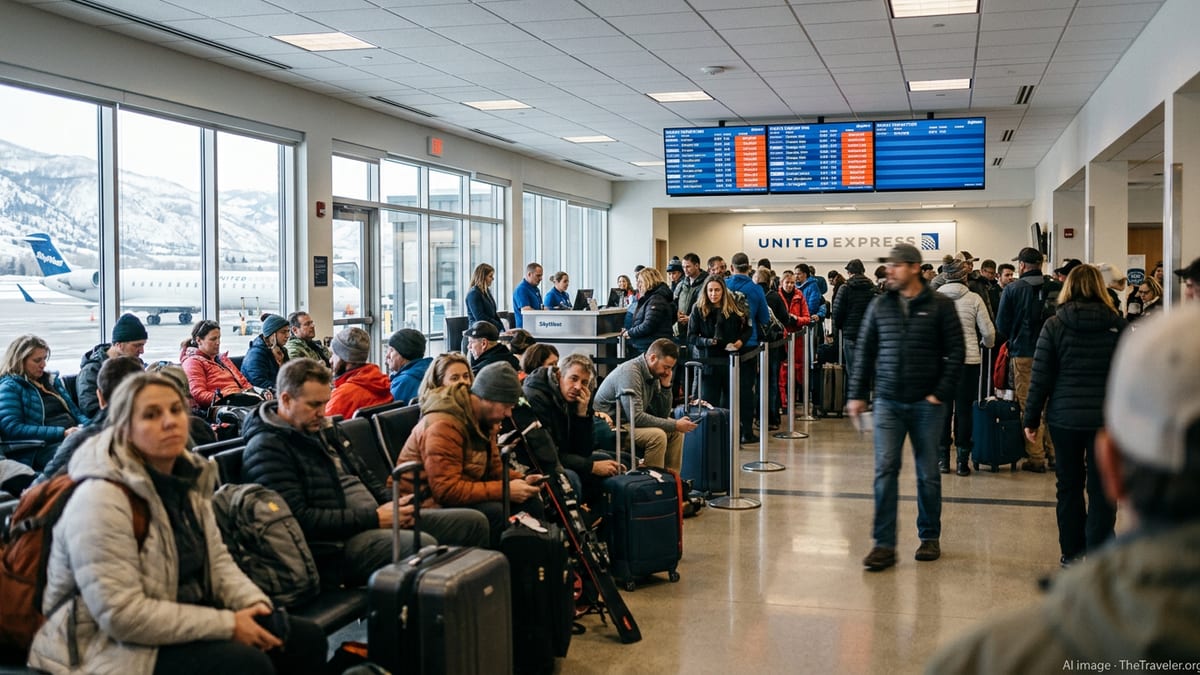
Routine regional flight experiences mid-route diversion
Flight SKW4705 was scheduled to operate between Denver International Airport and Helena Regional Airport as part of SkyWest’s United Express network, using an Embraer E175 regional jet configured for short-haul routes in the western United States. Publicly available schedules indicate that the route typically connects passengers from United’s Denver hub to the Montana state capital, often serving as a feeder for longer domestic and international connections.
On July 30, 2026, flight-tracking information shows the aircraft departing Denver and heading northwest on a path broadly consistent with the standard routing toward Helena. En route, however, the flight deviated from its expected track and turned toward Great Falls, a larger regional airport located roughly 90 miles northwest of Helena by air. The aircraft then completed a normal approach and landing at Great Falls International Airport.
There were no immediate indications from publicly accessible data of any emergency declaration associated with the diversion. The Embraer E175 continued to transmit telemetry consistent with normal operations, and tracking records show a stable descent profile into Great Falls, suggesting a controlled diversion rather than a high-intensity incident.
As of early reports, there were no public accounts of injuries among passengers or crew, and the diversion appears to have been managed as a standard irregular operations event within SkyWest’s United Express network.
Why Great Falls is a logical alternate to Helena
Great Falls International Airport is a common alternate for flights serving smaller Montana airports due to its longer runways, more extensive ground services, and broader instrument approach options. For regional jets such as the Embraer E175, Great Falls offers additional operational flexibility in marginal weather or when there are constraints at nearby airports.
Helena Regional Airport, while well equipped for commercial operations, has fewer daily mainline and regional flights and more limited ramp and maintenance facilities compared with Great Falls. In situations involving weather, runway conditions, or other operational constraints, airlines often designate larger neighboring airports as alternates to ensure access to ground support, fuel, and passenger handling resources.
Operational data and typical airline contingency planning practices suggest that a diversion to Great Falls would provide SkyWest and United Express with better options for repositioning the aircraft, coordinating onward travel for passengers, and managing crew schedules. The use of nearby alternates is a routine feature of flight planning across mountainous regions of the western United States, where sudden changes in weather or visibility can affect approach and landing options.
While precise contributing factors to the SKW4705 diversion have not been detailed in initial public reporting, the choice of Great Falls is consistent with common alternate planning for flights serving central Montana.
Passengers face onward travel changes after safe landing
For travelers on Flight SKW4705, the diversion meant an unplanned arrival at Great Falls instead of Helena. In similar situations, airlines typically arrange for ground transportation, rebooking onto later flights, or a combination of both, depending on aircraft availability and the timing of subsequent services.
SkyWest operates United Express flights into multiple Montana cities, including Helena and Great Falls, as part of United’s broader regional network from Denver and other hubs. The existing footprint in the state generally allows for some flexibility in repositioning passengers, though options may be limited later in the day or when aircraft and crews are tightly scheduled.
Publicly shared accounts from travelers on comparable regional diversions in recent months describe a range of responses, from buses provided between airports to same-day rebooking via alternate hubs. The specific arrangements for SKW4705 passengers had not yet been widely detailed in open sources, but standard industry practice suggests that affected travelers would have been offered options to continue to Helena or to adjust their itineraries from Great Falls.
For many Montana-based passengers, the overland distance between Great Falls and Helena is manageable by highway, which can simplify contingency planning compared with diversions to more distant airports.
Regional jets and diversion planning in the Mountain West
SkyWest is one of the largest regional airlines in the United States and operates flights for major carriers under brands such as United Express, Delta Connection, and others. The Embraer E175 used on Flight SKW4705 is a workhorse of the regional fleet, designed for operations at both major hubs and smaller airports, including those in challenging terrain and variable weather conditions across the Mountain West.
Diverting to an alternate airport is a built-in safety and operational tool used across the industry, particularly in regions where thunderstorms, low ceilings, and changing winds can quickly alter conditions at destination airports. Flight plans are filed with designated alternates, and crews are trained to divert when conditions dictate, prioritizing safety and predictability over schedule adherence.
In central and western Montana, airports such as Great Falls, Helena, Missoula, and Bozeman play complementary roles in the regional network. Larger facilities like Great Falls often host more capable navigation aids and additional ground support, making them preferred alternates for flights serving smaller fields nearby. Events like the SKW4705 diversion illustrate how this network is designed to absorb disruptions while maintaining a high safety margin.
Industry research on flight disruptions highlights that diversions, while inconvenient, are an accepted part of modern air travel and typically result in delays rather than accidents. For regional carriers, balancing tight schedules, crew duty limits, and weather-related challenges is a daily reality, particularly in summer and winter peaks.
Ongoing review and data tracking after the event
Following any diversion, airlines and their regional partners typically conduct internal reviews that draw on flight data, crew reports, and airport conditions to assess how the event was handled. While those internal processes are not generally disclosed in detail, aggregated safety and operational statistics are routinely shared in regulatory filings and industry reports.
Public flight-tracking platforms provide an increasingly detailed record of diversions such as SKW4705, including departure and landing times, altitude profiles, and route deviations. Enthusiast and traveler communities often use this information to reconstruct the sequence of events and to compare incidents across different carriers and regions.
For travelers, the diversion of SKW4705 on July 30, 2026, serves as a reminder that even routine regional flights can be subject to rapid operational changes. While passengers may experience delays or itinerary disruptions, the available information around this flight points to a controlled, precautionary diversion and a safe landing at an alternate airport equipped to handle the aircraft and its passengers.
As additional operational data becomes available through public channels, the SKW4705 diversion is likely to be absorbed into the broader pattern of irregular operations that airlines, airports, and travelers manage each day across the United States air transport system.