


More news on this day
Travelers heading to the California–Baja California border are being urged to reassess plans after the U.S. government issued an urgent security alert for Mexicali and temporarily halted consular activities in the border city, citing a potential threat linked to criminal violence.
Get the latest news straight to your inbox!
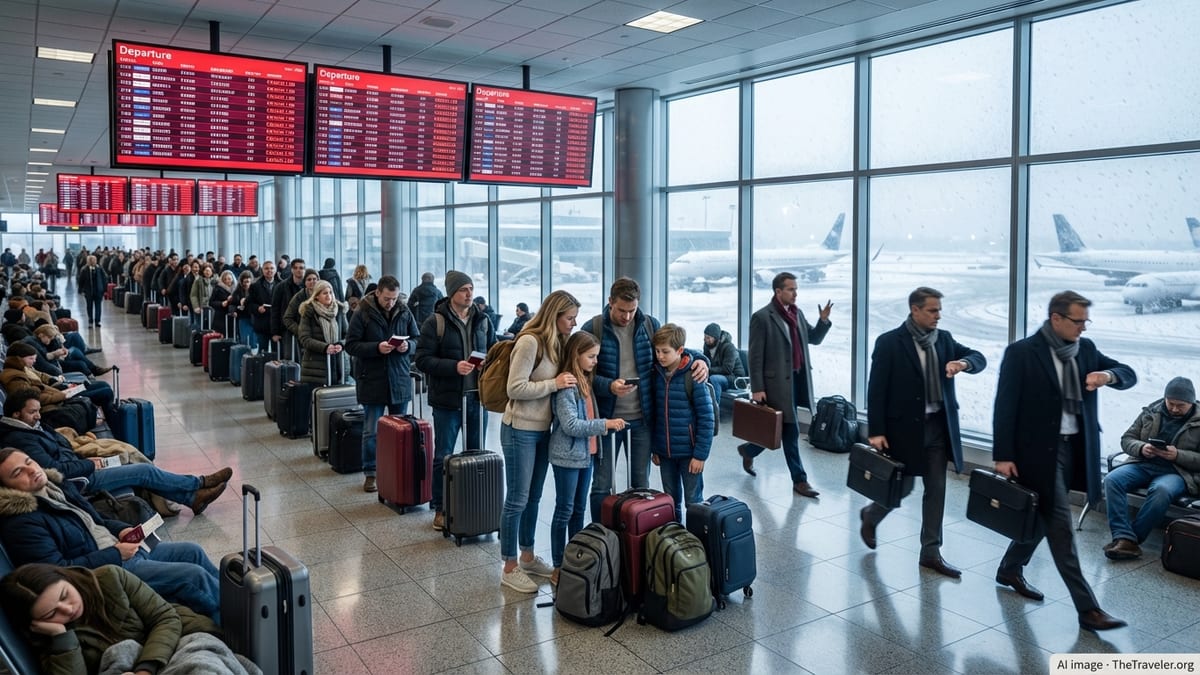
Urgent Alert Targets Mexicali on Key US–Mexico Border Corridor
The latest security alert centers on Mexicali, capital of the Mexican state of Baja California and a major crossing point opposite Calexico, California. According to published alerts and media coverage, the U.S. Consulate General in Tijuana issued a notice on August 25, 2026, warning of a potential armed attack in Mexicali and ordering a pause in official travel and consular operations in the city.
Reports indicate that the alert cites unspecified threat information and refers to concerns about possible attacks on law enforcement and government facilities in Mexicali. Coverage from international and local outlets notes that the alert did not provide detailed timelines or confirm that an attack was imminent, but the suspension of routine services signaled a higher-than-usual level of concern along this section of the border.
Mexicali is one of the busiest urban gateways between the United States and Mexico, used daily by cross‑border commuters, long‑haul truck traffic, and U.S. travelers driving deeper into Baja California. Any disruption to consular services in the city can complicate travel logistics, particularly for visitors who rely on the U.S. mission for emergency assistance or documentation issues.
Criminal Threats and Regional Violence Behind the Warning
Publicly available reporting links the August 25 alert to intelligence about potential actions by a regional criminal group. International coverage cites references to an organization known locally for clashes with security forces in Baja California and for disputes over trafficking routes near the border. While the exact nature of the threat has not been officially detailed, the alert points to concerns over a possible armed attack directed at police or prosecutorial facilities in Mexicali.
The warning arrives in a year already marked by heightened security operations across several Mexican states. Earlier in 2026, the U.S. Mission in Mexico released multiple security alerts tied to widespread law enforcement operations and road blockages in states including Jalisco, Tamaulipas, Guerrero, Michoacan, and Nuevo Leon. Those earlier advisories urged U.S. citizens in affected areas to shelter in place and highlighted the risk of roadblocks, gunfire, and targeted attacks associated with organized crime.
In May 2026, the broader U.S. travel advisory for Mexico was also updated, maintaining a patchwork of state‑by‑state recommendations that range from “do not travel” to “exercise increased caution.” The advisory underscores that violent crime, including homicide, kidnapping, carjacking, and robbery, remains a significant concern in parts of the country, particularly in regions contested by organized criminal groups.
What the Alert Means for US Travelers at the Border
For U.S. tourists, cross‑border commuters, and road‑trippers planning routes through the Mexicali port of entry, the latest alert is a signal to intensify risk assessment rather than a blanket order to avoid all travel. The U.S. government’s decision to suspend consular activities in Mexicali applies directly to official staff, but it also serves as a warning that conditions may be volatile or unpredictable in the short term.
Travelers who had planned to rely on services in Mexicali, such as emergency passport assistance at an outreach operation or in‑person support from consular teams, may need to adjust expectations. Publicly available guidance from the State Department typically recommends that travelers monitor local media, follow updates from the U.S. Embassy and Consulates in Mexico, and stay alert for further changes, including potential expansion or lifting of restrictions.
Those crossing at Calexico–Mexicali or continuing along Highway 5 into Baja California are being advised in open‑source guidance to review route plans, verify hotel and transportation arrangements, and consider alternative crossings if conditions deteriorate. While commercial crossings and tourist traffic have not been universally halted, the alert underscores that localized security incidents, including roadblocks or confrontations between criminal groups and law enforcement, can arise with little warning.
Long‑Running Concerns Along the US–Mexico Border
The Mexicali alert fits into a broader pattern of periodic security warnings issued for cities and states along the U.S.–Mexico frontier. Over the past year, the U.S. Mission in Mexico has shared multiple notices about criminal roadblocks, armed clashes, and temporary movement restrictions affecting areas such as Reynosa in Tamaulipas and tourist‑heavy coastal regions during intensive law enforcement actions.
These alerts reflect a longstanding concern about how organized crime activity intersects with key trade and travel corridors. Travel advisories for states bordering California, Arizona, New Mexico, and Texas often highlight the presence of criminal organizations, the risk of crossfire, and the possibility that road closures may occur with little advance notice. In some cases, U.S. government personnel face stricter movement rules than private citizens, such as curfews or bans on driving after dark along certain highways.
Security analysts note in open reports that U.S. advisories tend to escalate when there are indications that official facilities or personnel could become targets, as appears to be the case in Mexicali. Even when specific targets are local institutions on the Mexican side, any escalation in violence near busy ports of entry raises concern for cross‑border travelers, logistics providers, and tourism‑dependent businesses on both sides.
Practical Steps for Travelers Monitoring the Situation
In response to the Mexicali alert, publicly available guidance from U.S. government channels encourages travelers in Mexico to stay informed and maintain a heightened level of personal security awareness. Recommended steps often include enrolling in the Smart Traveler Enrollment Program (STEP) to receive direct email or text alerts, regularly checking the Mexico country page on Travel.State.gov, and following updates from the U.S. Embassy and relevant consulates.
Travelers already in the Mexicali area are generally advised in such alerts to avoid police stations and other potential targets, keep a low profile, and limit unnecessary movement until the security situation becomes clearer. Monitoring local news, hotel notices, and official city or state communication can provide additional context about any street closures, public transport disruptions, or localized incidents.
Looking ahead, the duration of the Mexicali‑specific restrictions remains uncertain. Previous nationwide security alerts in February 2026, which included shelter‑in‑place instructions for multiple states, were gradually rolled back as operations concluded and transportation links normalized. For now, U.S. travelers considering overland border trips are being urged by open‑source advisories to build flexibility into itineraries, keep contingency plans ready, and pay close attention to any further updates from the U.S. Mission in Mexico.
U.S. Embassy & Consulates in Mexico - Security Alerts
U.S. State Department - Mexico Travel Advisory
The Washington Post - Security alert in Mexicali and consular suspension