


More news on this day
The UK Foreign, Commonwealth and Development Office has tightened travel warnings for Bahrain and Kuwait as tensions between the United States and Iran surge across the Gulf, highlighting increased risks from missile and drone attacks and the possibility of sudden disruption to air routes and land borders.
Get the latest news straight to your inbox!
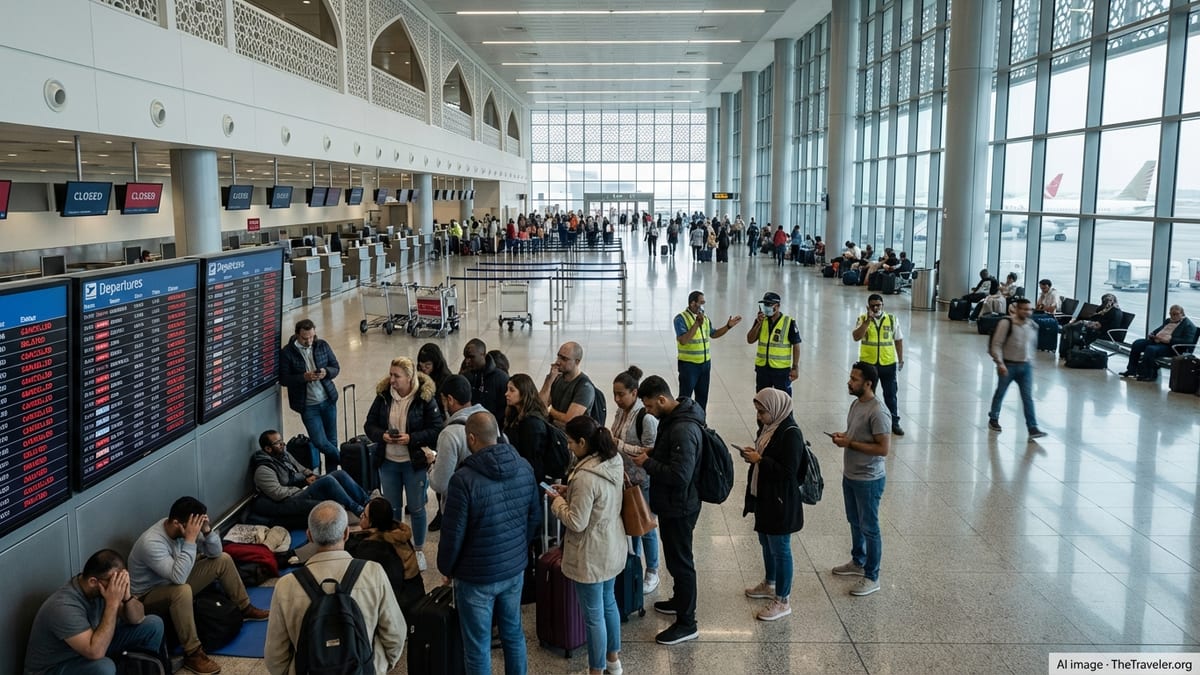
Heightened risk prompts shift in UK Gulf travel stance
Updated Foreign Office guidance now advises against all but essential travel to Bahrain, citing a pattern of Iranian missile and drone strikes on Gulf states linked to the ongoing conflict with the United States. Publicly available information notes that since early July there have been strikes and retaliatory attacks in several locations in the region, including Bahrain, targeting US military and civilian infrastructure.
For Kuwait, the UK has stopped short of a blanket “avoid all but essential travel” designation, but recent changes to the official travel advice underline a heightened security risk. Government updates in mid and late July refer to “regional tensions” following Iranian strikes and warn that the situation could deteriorate quickly, even as earlier blanket restrictions on Kuwait were eased.
The firmer tone on both country pages reflects wider concern over Iran’s targeting of US and allied positions in Bahrain and Kuwait, including bases hosting US and other foreign forces. Parliamentary records and research briefings describe how Iran’s strikes have prompted condemnation at the United Nations and new Gulf-backed resolutions responding to what they characterise as repeated violations of international law.
Travel insurers and aviation risk specialists have also flagged Bahrain and Kuwait in recent circulars about Middle East disruption. Industry notices in March recorded the closure or partial closure of airspace over multiple Gulf states, including Bahrain and Kuwait, as hostilities escalated, advising that Foreign Office warnings could invalidate standard travel cover.
Missile alerts, airspace closures and disruption to routes
The sharpened UK travel warnings come against a backdrop of repeated missile and drone incidents in and around Bahrain and Kuwait since late February. Open-source reporting on the 2026 Iran conflict describes Iranian strikes on Bahrain’s capital Manama, including districts close to US naval facilities, and attacks on Kuwait that have drawn diplomatic protests and emergency meetings at the United Nations Security Council.
Following the onset of hostilities on 28 February, the United States and other governments recorded “ongoing threats” to commercial aviation in Gulf airspace, with airlines forced to reroute or suspend flights as drone and missile trajectories intersected with major air corridors. Separate government advisories have pointed to simultaneous airspace closures and temporary shutdowns of key crossings such as the King Fahd Causeway between Bahrain and Saudi Arabia, raising the possibility that travellers could find both air and land exits restricted at short notice.
More recently, regional travel advisories from partner governments and aviation regulators have urged operators to avoid certain flight levels or entire sectors of Gulf airspace for defined periods, explicitly citing the risk from Iranian systems and potential miscalculation. This layered warning environment has reinforced the UK’s message that departure plans from Bahrain and Kuwait should be kept under constant review and that travellers need to be prepared for rapid changes to schedules.
Security alerts from other Western embassies in Bahrain and neighbouring states have also referenced intelligence about potential targeting of locations associated with US and allied interests, including hotels and commercial areas frequented by foreign nationals. Those signals have fed into an overall picture of a fluid threat environment that can shift from relative calm to active missile alerts with little notice.
What the Foreign Office advice means for UK travellers
For British nationals, the Foreign Office warnings have practical as well as legal implications. Travel across Bahrain that is not considered essential now goes against official guidance, which can affect the validity of standard UK travel insurance policies. Publicly available statements stress that anyone who chooses to enter or remain in Bahrain despite the advisory does so at their own risk and should be ready for limited consular assistance if security conditions worsen.
In Kuwait, the message focuses on careful risk assessment rather than an outright bar on non-essential trips. The advice emphasises that security conditions can change rapidly as the US Iran confrontation ebbs and flows, and it encourages travellers to monitor news and official channels closely, register for updates, and ensure they have contingency funds and plans for early departure if routes close.
Across both countries, the Foreign Office guidance reiterates long standing recommendations for regions at risk of conflict. These include avoiding demonstrations and political gatherings, exercising heightened awareness around military or government sites, and preparing for possible communication outages or transport disruption in the event of further strikes.
The advisories also highlight the importance of documentation. Travellers are encouraged to keep passports and residence permits valid and accessible, and to ensure that visas for nearby potential exit points remain in order should evacuation via a third country become necessary.
Rising US Iran tensions and regional fallout
The recalibrated UK travel advice cannot be separated from the broader trajectory of the US Iran confrontation in 2026. The current phase of the crisis was triggered by joint US and Israeli strikes on Iranian targets in late February, followed by a series of Iranian retaliatory missile and drone attacks across the Gulf, including against US facilities in Bahrain and Kuwait.
Subsequent exchanges have drawn in regional states and multilateral institutions. The United Nations Security Council adopted a resolution in March condemning Iranian attacks on Gulf countries and Jordan, while expressing concern over the knock on impact on civilian infrastructure and freedom of navigation in and around the Strait of Hormuz. UN officials have repeatedly voiced alarm at the risk of miscalculation and the humanitarian consequences of a wider war.
Within the UK, parliamentary debates and official briefings have underlined the government’s dual objectives of supporting security partners in the Gulf and avoiding direct escalation into a broader regional conflict. Public records show that the UK has deployed additional air and naval assets to reinforce missile defences for allied states, while also pledging humanitarian support for civilians affected by cross border strikes.
For travellers, this evolving strategic backdrop translates into persistent uncertainty. Even if temporary ceasefires or de escalation measures take hold, the precedent of sudden strikes and retaliatory action means that Bahrain and Kuwait are likely to remain on a heightened risk footing in UK travel advice for some time.
Planning and risk management for trips already under way
Despite the warnings, a number of British citizens and residents continue to live and work in Bahrain and Kuwait, and some travel through the region for business or family reasons. The Foreign Office guidance acknowledges that not all trips can be postponed and focuses on steps individuals can take to reduce exposure to risk.
Key recommendations include staying in accommodation with robust security measures, maintaining multiple communication channels, and sharing itineraries with trusted contacts inside and outside the region. Travellers are advised to monitor official travel advice feeds closely, as well as credible international news outlets, to track any signs of renewed strikes or large scale military movements.
In the event of a sudden deterioration, publicly available contingency planning documents suggest that any evacuation or assisted departure operations would depend on safe air or sea corridors being in place and on cooperation from local authorities. As a result, individuals are urged not to rely solely on government organised options and to plan as if commercial routes could become the primary means of leaving.
For now, the strengthened Foreign Office language on Bahrain and the sharpened warnings for Kuwait signal that the UK views the travel environment in both countries as tightly bound to the trajectory of US Iran tensions. Until that confrontation eases significantly, British travellers can expect official advice to remain cautious and subject to rapid change.