


More news on this day
From climate extremes to geopolitical crises, the shocks hitting global trade are exposing how dependent modern supply chains remain on the reliability of rail. As governments and operators confront recent disruptions, rail is being reimagined as a backbone of resilience rather than just a low-cost transport mode.
Get the latest news straight to your inbox!
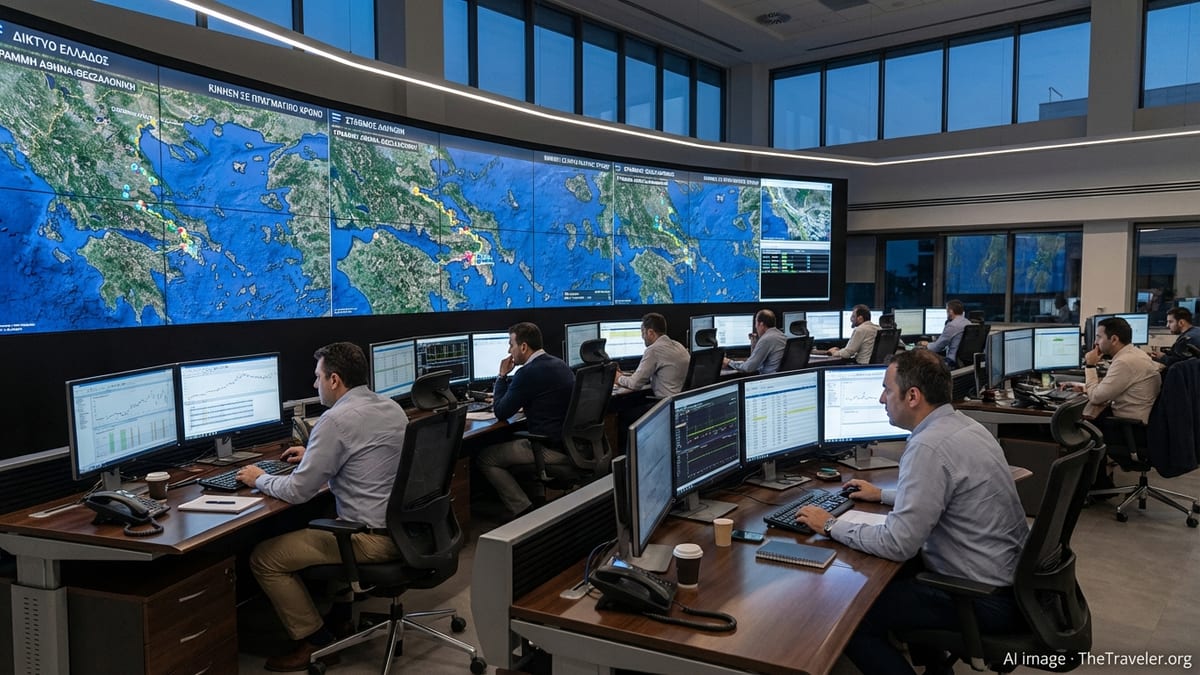
Rail Under Strain From Climate, Conflict and Labor Shocks
Recent crises have underscored how quickly rail disruptions can cascade through wider supply chains. Studies of weather-related delays in Europe indicate that storms, floods and heatwaves have cumulatively wiped out the equivalent of up to several years of rail services over the past decade, highlighting the vulnerability of key freight corridors to climate extremes.
Geopolitical tensions are also reshaping freight flows. The rerouting of container ships away from the Red Sea and Suez region has led some shippers to explore land-based rail alternatives where feasible, while making reliability and redundancy in inland rail hubs a higher priority. Transport resilience assessments from international organizations describe this as a structural stress test for how rail connects to ports, logistics parks and inland terminals.
Labor disputes add another layer of uncertainty. The 2024 shutdown of major freight operations in Canada, which halted services across two continental rail giants, triggered concern among manufacturers and agricultural exporters that rely on predictable rail movements. Public reporting on the dispute noted that even a short stoppage risked backlogs at ports and elevators that could take weeks to unwind.
Academic work on freight performance during the COVID-19 pandemic likewise shows that while rail volumes proved relatively robust, recovery trajectories varied by commodity and corridor. That research argues that resilience in rail supply chains now depends less on single-corridor optimization and more on the ability to reroute and rebalance flows across modes when shocks occur.
Governments Pivot to Resilience in Rail Investment
In response, public investment strategies for rail in North America and Europe are shifting from purely capacity-driven expansion toward resilience-focused modernization. In the United States, federal freight and logistics assessments emphasize that rail is a critical node in national supply chains and highlight the need to harden infrastructure against future shocks, strengthen data visibility and reduce chokepoints at intermodal hubs.
Recent grant programs administered by the Federal Railroad Administration have directed billions of dollars to bridge renewals, grade-crossing upgrades and terminal enhancements intended to make freight and intercity passenger lines safer and more reliable. Policy documents describe these projects as core to keeping goods moving during future disruptions, particularly on corridors serving ports, energy facilities and agricultural regions.
Major private freight railroads are reinforcing that trend with their own capital programs. Publicly available company plans for 2024 show multibillion-dollar investments in track, bridges, signaling and rolling stock aimed at both safety and capacity. Rail operators frame these projects as essential to supporting customer growth while maintaining network fluidity when weather, demand swings or port congestion hit.
In Europe, the recent revision of the trans-European transport network policy adds explicit objectives to improve resilience alongside sustainability and safety. The framework encourages member states to strengthen vulnerable nodes, diversify routes and integrate climate adaptation into rail planning. Concurrent funding calls under the EU’s transport financing mechanisms prioritize projects that make key rail corridors more robust to disruption and future-proofed for higher traffic.
New Rules and Planning Frameworks Target Network Robustness
Beyond funding, regulators are introducing new rules to ensure that rail infrastructure is managed in ways that support resilient supply chains. A regulation adopted in the European Union in May 2026 overhauls how capacity is allocated on shared rail infrastructure, seeking to optimize network use and improve cross-border traffic flows. The measure is intended to reduce bottlenecks, give freight operators more predictable access and create room for contingency paths when disruptions occur.
Separate work by the European Union Agency for Railways uses nearly a decade of weather-disruption data to propose changes to the legal framework for climate resilience. Its recommendations range from more systematic risk assessment for critical assets to clearer requirements for adaptation plans. The analysis finds that proactive measures, such as reinforcing embankments and drainage or updating maintenance regimes for extreme heat, can significantly reduce service hours lost to weather events.
National and regional rail plans are also embedding resilience objectives. The latest state rail planning in parts of the United States, for example, explicitly links climate risk mapping to investment priorities, identifying bridges, tunnels and coastal segments that face elevated flood, wildfire or heat stress. These documents call for redundancy in freight routing, enhanced emergency response protocols and greater coordination between passenger and freight operators when capacity is constrained.
At a broader level, recent supply chain reviews from national governments frame rail as one of several critical systems that must withstand cyber threats, industrial accidents and systemic demand shocks. The emerging approach combines physical hardening with digital resilience, including cybersecurity standards for signaling, traffic management and wayside monitoring systems.
Digitalization, Data Sharing and Intermodal Flexibility
Technology is emerging as a key lever for making rail supply chains more adaptable. Research on intermodal routing under uncertainty highlights the value of algorithms that can reoptimize freight paths across rail and road when particular links fail. By modeling the reliability of different routes, operators can pre-plan alternatives and communicate expected arrival times more accurately to shippers.
Railways and logistics providers are increasingly turning to real-time data platforms that track trains, rolling stock condition and terminal operations. Industry analyses suggest that when infrastructure managers and operators share standardized data, it becomes easier to spot emerging bottlenecks, from congested marshalling yards to weather-related speed restrictions. That, in turn, enables earlier interventions, such as rerouting trains, adjusting locomotive deployment or staging extra crews at stress points.
Digital tools are also being used to simulate extreme events and test response strategies. Recent academic studies of transport networks under targeted and climate-driven disruptions use network science techniques to identify which nodes would cause the greatest loss of freight capacity if knocked out. Infrastructure managers can then prioritize protection and contingency plans for those high-impact locations.
Intermodal flexibility is another focus area. As ports grapple with shifting ocean schedules, rail-linked inland terminals and dry ports are being designed with more track capacity, flexible loading tracks and connections to road distribution centers. Planning documents from both EU and North American authorities emphasize that these nodes should be capable of handling surges in either direction, providing storage and re-sequencing capabilities that help smooth shocks originating at sea or in manufacturing centers.
Global Corridors, Regional Strategies and the Traveler’s Perspective
The push for resilient rail supply chains is playing out differently across regions. In Europe and Asia, long-distance freight initiatives, including transcontinental rail corridors, are being re-evaluated through a risk lens that considers geopolitical tensions and climate exposure. Stakeholders are weighing how much cargo should traverse single high-profile corridors versus more distributed networks that offer alternative paths.
North American debates, by contrast, often center on balancing efficiency with redundancy on a freight system built largely by private operators. Policy discussions highlight the need to protect communities and the environment while maintaining the capacity to absorb sudden spikes in grain, energy or manufactured goods moving by rail when trucks or ports are constrained.
For travelers, many of these developments are largely invisible until disruption hits. However, the same investments that keep freight moving can support more reliable passenger services, particularly on shared tracks and at congested junctions. Public messaging from transport agencies increasingly emphasizes that resilient rail infrastructure helps ensure that food, fuel and medical supplies continue to reach cities and rural areas even when other parts of the logistics chain are under pressure.
As climate projections grow more severe and geopolitical risks persist, analysts expect rail to occupy a central role in national resilience strategies. The current wave of planning reforms, infrastructure spending and digitalization suggests that the question is no longer whether to invest in rail, but how to do so in ways that preserve flexibility when the next disruption arrives.