


More news on this day
Passengers flying from Bristol Airport in 2026 are encountering two major sets of changes: looser liquid rules at security following a multi-million-pound scanner upgrade, and new biometric border checks in Europe under the EU’s Entry/Exit System.
Get the latest news straight to your inbox!
Liquid rules at Bristol Airport: what has changed
Bristol Airport completed an upgrade to next-generation security scanners in summer 2024, according to its latest monitoring reports. Publicly available documents describe significant investment in computed tomography equipment designed to scan cabin baggage in 3D, allowing liquids and electronics to remain inside bags rather than being removed at the checkpoint.
Following that upgrade, the airport’s published security guidance has shifted away from the long-standing 100 millilitre liquid limit that applied across UK airports. Information available to passengers in 2025 and 2026 indicates that containers of up to around two litres can typically be carried through security at Bristol, provided they are screened by the new scanners and meet other security requirements.
Despite the more generous allowances, travellers are still being advised to check Bristol Airport’s latest guidance close to departure. Government communications on the national scanner rollout have stressed that airports may move at different speeds in changing their rules, and that some restrictions can temporarily revert to older limits during busy periods or planned works.
For passengers, the practical impact is that flying from Bristol in 2026 is generally less constrained by the tiny toiletry bottles that characterised the previous regime. However, travellers returning via other airports may still face stricter limits, so many are continuing to pack within 100 millilitre containers to avoid issues on the inbound leg of their trip.
Security screening experience in 2026
The introduction of next-generation scanners has also altered the physical experience of security at Bristol Airport. Committee minutes and airport newsletters describe a redesigned search area, with more body scanners in use and a layout built to keep trays and passengers moving as steadily as possible through the lanes.
Reports from travellers through 2025 and into 2026 suggest that passengers are now less frequently asked to unpack laptops, tablets and liquids. Instead, the focus is on placing all items flat in trays and passing quickly through the body scanners. When the system flags an item for further inspection, manual searches still take place, but routine unpacking has been reduced.
At times, particularly during peak holiday periods, there have been accounts of queues forming as staff and passengers adapt to the newer technology. National coverage of the scanner programme notes that learning curves and occasional outages can temporarily slow processing. However, the long-term aim is to cut waiting times by reducing the number of bags pulled aside and the need for repeated rescans.
Passengers departing Bristol in 2026 are being encouraged in public guidance to arrive in good time, keep metal objects easy to remove, and follow on-screen instructions at the security lanes. While the liquid rules are more relaxed, airport messaging continues to emphasise that all items remain subject to search and that security officers retain discretion to apply additional checks when needed.
The EU’s Entry/Exit System and what it means for Bristol flyers
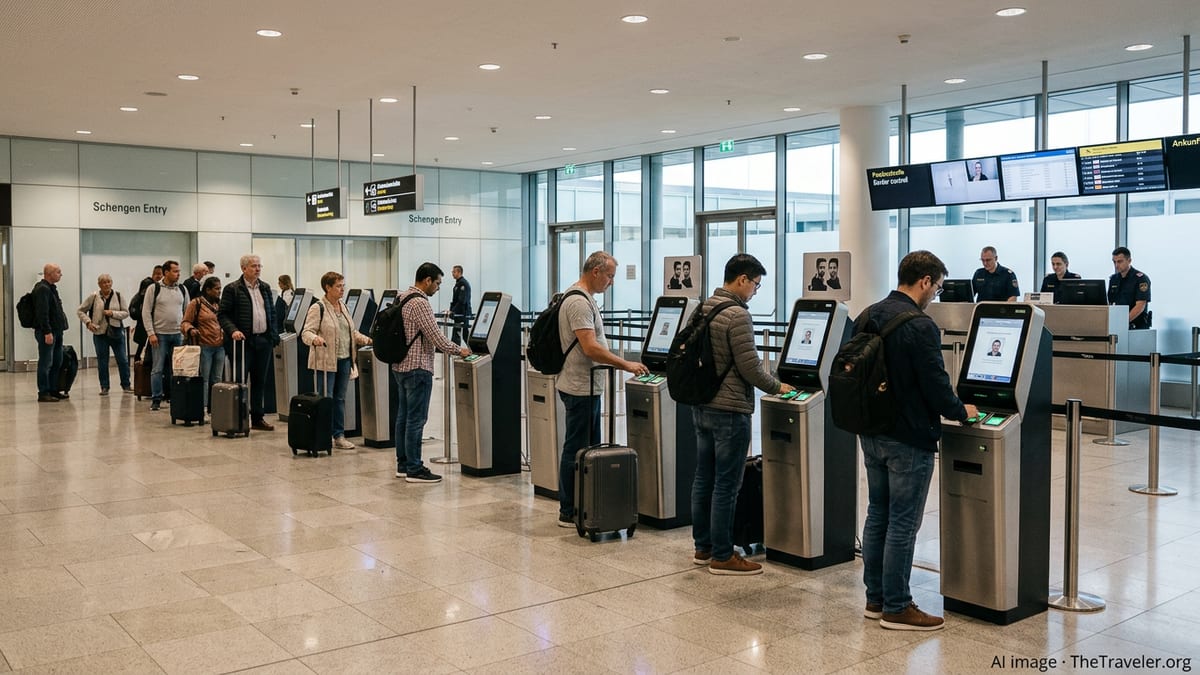
For many Bristol Airport passengers, especially those heading to popular destinations such as Spain, Portugal, Italy or France, the most noticeable change in 2026 is no longer at the UK security lane but at the Schengen border. The European Union’s Entry/Exit System, a digital scheme to record the movements of most non-EU nationals on short stays, began operations on 12 October 2025 and became fully operational across external borders in April 2026.
According to EU and UK government briefings, the system replaces manual passport stamping with electronic registration of each traveller’s identity, travel document details, biometric data and the date and place of entry and exit. For British citizens and other non-EU visitors, these details are recorded on first entry and then checked automatically on future trips to ensure the 90-days-in-180-days stay limit is respected.
Public information from European institutions explains that the Entry/Exit System is being introduced to strengthen border security, automate the detection of overstayers and make checks more consistent across the Schengen area. At the same time, the move to biometric kiosks and automated gates is intended to streamline the process once travellers are enrolled, eventually reducing reliance on manual stamping and visual inspection.
From the perspective of Bristol-based travellers, the key point is that border procedures on arrival in the EU have changed, even though the UK’s own outbound checks at the airport have not. Airlines operating from Bristol must now factor EES processing into their boarding and turnaround times, and passengers are being advised via publicly available guidance to expect new kiosks, cameras and fingerprint or facial scans at their first Schengen border crossing.
How EES is affecting journeys from Bristol in 2026
Since the progressive start of the Entry/Exit System, media and official briefings have reported a mixed picture at European border points. Some airports and ports have experienced extended queues, particularly in the early months after launch, while others have reported smoother flows as travellers and staff grew familiar with the process.
For those departing from Bristol, the practical impact often depends on their specific route into Europe. Passengers flying directly from Bristol to a Schengen airport have their first encounter with EES on arrival there, where they may be directed to self-service kiosks before proceeding to a staffed desk or automated gate. Those using UK hubs such as London airports before onward European flights encounter EES at the final Schengen entry point, not at Bristol.
UK government travel advice has highlighted that new registrations at EES can take longer than subsequent crossings, as biometric data is captured for the first time. Travellers from Bristol booking tight connections in Europe are therefore being urged through public guidance to allow extra time, particularly if their journey falls during the busy summer season or on holiday weekends.
Looking ahead to late 2026, attention is also turning to the planned launch of ETIAS, the EU’s electronic travel authorisation system for visa-exempt visitors. European and UK briefings indicate that ETIAS is expected to follow EES, with a start date to be confirmed, meaning that in future many Bristol passengers may need to secure an advance travel authorisation as well as undergoing biometric checks at the border.
What Bristol Airport passengers should do now
With both security technology and border systems in transition, passengers using Bristol Airport in 2026 are being urged by public information sources to build more preparation time into their journeys. That begins with checking the airport’s latest security page shortly before travel, to confirm current rules on liquids, laptops and other cabin items.
Because screening standards can still differ between airports, travellers making return journeys or multi-stop itineraries are being advised to plan for the strictest likely rules. For many, that means continuing to pack toiletries and other liquids in small, clearly labelled containers, even if Bristol permits larger volumes on departure.
For trips into the Schengen area, passengers are also encouraged to review up-to-date government travel advice on the Entry/Exit System and any emerging guidance on ETIAS. Knowing in advance that additional biometric steps will be required, particularly on a first trip after October 2025, can help travellers choose longer connection times or less congested arrival airports.
As 2026 progresses, Bristol Airport is expected to keep refining its security operation around the new scanners, while European authorities continue to adjust EES procedures. For now, clear information, realistic time allowances and cautious packing remain the most reliable tools for passengers navigating this new phase of air travel.