


More news on this day
Air France has temporarily suspended flights to and from Riyadh in response to the deteriorating security environment in parts of the Middle East, disrupting travel plans for passengers connecting between Europe and Saudi Arabia at the height of the summer season.
Get the latest news straight to your inbox!
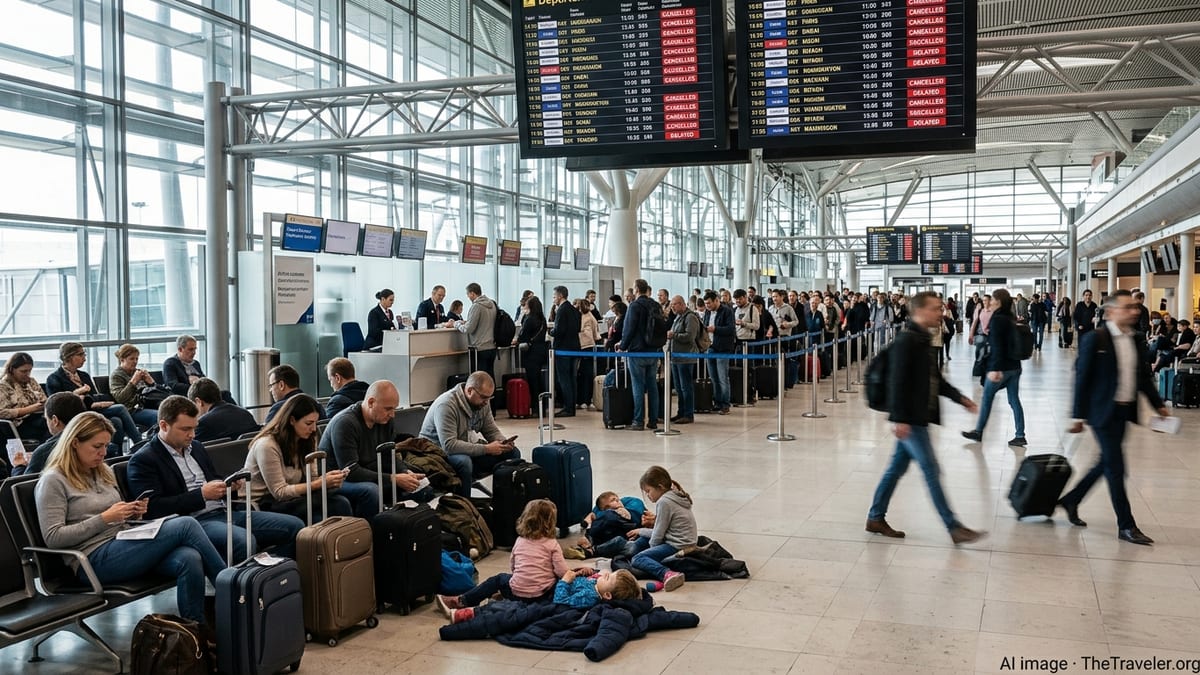
Flight suspensions extend to Riyadh, Dubai and Beirut
According to recent updates from the airline and published coverage in European and Gulf media, Air France has halted its Paris Charles de Gaulle services to Riyadh, with the suspension currently in place through at least late July. The decision forms part of a broader response to heightened regional risk, which has already seen flights to Dubai and Beirut paused or extended.
Reports indicate that flights between Paris and Riyadh are suspended until 24 July inclusive, while Paris to Dubai operations are paused until 27 July. Services to Beirut, which had already been disrupted for several months, have now had their suspension extended into early August. The measures affect both outbound and inbound traffic, cutting a key European link for travelers in Saudi Arabia and neighboring markets.
Publicly available information shows that Air France has framed the move within its wider summer schedule adjustments, which include redeploying capacity to long haul routes in Asia and other regions where demand remains strong and operational conditions are more stable. The airline continues to state that flight safety and security are the primary drivers of routing and scheduling decisions.
Riyadh is a relatively small but strategically important point in the Air France long haul network, serving a mix of corporate travelers, government traffic, and international connections to Europe and North America. The temporary loss of this nonstop option pushes more passengers onto alternative hubs in the Gulf and Europe.
Regional security and airspace warnings reshape routes
The immediate backdrop to the cancellations is a renewed spike in tensions involving Iran, the United States and regional actors, which has triggered fresh risk assessments for airspace across the Gulf. A recent Conflict Zone Information Bulletin from the European Union Aviation Safety Agency advised carriers to avoid or exercise extreme caution in the skies over several Gulf states and the Gulf of Oman, prompting airlines to reconsider both overflight and destination exposure.
In practice, that advisory has translated into extended flight times on some routes, complex re-routing to avoid specific airspace corridors, and in the case of Air France and several European and Asian carriers, the outright suspension of flights to select destinations such as Riyadh, Dubai and Beirut. The combination of potential missile activity, evolving military postures, and uncertainty around airspace access has narrowed the margin for error for commercial aviation.
Industry analysts note that airlines now regularly bake geopolitical risk into their seasonal planning, alongside demand forecasts and fleet availability. For the Middle East, this can mean rapid swings from growth to retrenchment when security alerts, sanctions or regional crises emerge. The current wave of cancellations follows earlier pauses to Tel Aviv, Doha and other points around the eastern Mediterranean and Gulf, some of which have only partially resumed.
The situation remains fluid, and schedules are being updated frequently as carriers digest new guidance from aviation authorities and national regulators. Travelers relying on Middle East connections are being urged through public advisories and airline updates to monitor their itineraries closely in the days before departure.
Knock-on effects for Saudi connectivity and summer travel
The suspension of Air France flights to and from Riyadh comes at a particularly sensitive time for Saudi Arabia’s tourism and business travel plans. The kingdom has invested heavily in positioning Riyadh as a regional hub and gateway for mega-projects, events and leisure tourism. Seasonal demand from Europe typically spikes in late July and August, and the loss of a major European flag carrier narrows nonstop options at short notice.
While Gulf-based airlines and Saudi carriers continue to operate, the withdrawal of Air France reduces competitive pressure on fares and limits the number of one stop connections to regional cities in France and beyond. Travelers who previously favored a single connection via Paris to smaller European destinations may now find themselves routed through alternative hubs in Doha, Abu Dhabi, Istanbul or Frankfurt.
For Saudi residents and expatriates, the cancellations mean rebookings, longer journey times, and in some cases overnight stays during connections. Travel forums and booking platforms already show a wave of schedule changes affecting passengers who had booked Riyadh to Paris legs for late July, with many being reassigned to different dates, routes, or airlines.
Corporate travel managers face additional complexity as they adjust itineraries for employees headed to Europe for meetings, training or project work. Some companies are temporarily steering travelers toward carriers and routings that avoid the most sensitive airspace and rely on airports with more redundancy in case of further disruptions.
Passenger options, refunds and rebooking policies
Air France has activated its standard disruption procedures for affected Middle East flights, and publicly available information indicates that passengers holding tickets to or from Riyadh, Dubai and Beirut during the suspension window may be eligible for rebooking or refunds. Specific conditions vary by fare type and booking channel, but the general framework allows travelers to shift travel dates or request a voucher or reimbursement.
Travel agents and online booking platforms report that many customers are being reprotected on partner or rival airlines, subject to seat availability. For some Riyadh bound passengers, this may involve re-routing through alternative gateways such as Jeddah, Dammam or regional hubs operated by Gulf carriers. However, tight capacity on peak summer dates means that not all travelers are able to maintain their original trip timing.
Consumer advocates advise passengers to document all communications with airlines and intermediaries and to check the conditions of carriage for information on compensation and care obligations in the event of cancellations. Within the European Union framework, certain rights can apply when flights are canceled or significantly delayed, although security related disruptions are often treated differently from operational or staffing issues.
Travel insurance policies may also come into play, depending on how they define security events, war risks and government advisories. Policyholders are being encouraged to review coverage terms to understand whether additional expenses such as extra hotel nights, rerouting costs or missed connections can be reclaimed.
Wider airline response across the Middle East
Air France is not alone in recalibrating its Middle East network. Other European and Asian airlines have also paused or reduced flights to cities including Riyadh, Dubai, Doha and Tel Aviv, while some have opted for reduced frequencies rather than full suspension. This patchwork response reflects differing risk appetites, fleet flexibility and commercial priorities.
Recent factbox style overviews from international newswires show that several carriers are maintaining a skeleton service to affected destinations while announcing intentions to restore fuller schedules later in the northern summer or at the start of the winter timetable. Others have extended suspensions through October, effectively writing off the summer holiday period for certain routes.
For the wider aviation sector, the latest cancellations add to a series of geopolitical and operational shocks that have tested resilience over recent years, from pandemic era border closures to airspace bans over conflict zones in Eastern Europe and the Middle East. Airlines have responded with more dynamic scheduling, scenario planning and contingency routing, but the financial impact of sudden suspensions remains significant.
Looking ahead, the key variables for the Riyadh route and other suspended services will be the evolution of the regional security situation and updated guidance from aviation safety bodies. Until there is greater clarity, travelers planning to fly between Europe, Saudi Arabia and the broader Gulf region are likely to face a fast changing flight landscape and should remain prepared for last minute changes to their journeys.