


More news on this day
The United States State Department has updated and intensified travel advisories across the Middle East in 2026, warning Americans of mounting security risks, disrupted air travel and the potential for renewed conflict affecting at least 14 countries in the region.
Get the latest news straight to your inbox!
Escalating Conflict Risks Shape 2026 Travel Warnings
Publicly available government notices and media coverage in 2026 indicate that the latest alerts are closely tied to the Iran war and related regional tensions that began in late February. The fighting triggered missile and drone exchanges, strikes on infrastructure and periodic airspace closures that have affected both civilian and military movements across multiple borders.
Analyses of the conflict describe one of the most serious security crises in the region in years, prompting a broader reassessment of travel risk for US citizens. Advisories highlight the possibility of rapid escalation, cross border attacks, and attacks on facilities or locations associated with the United States and its partners.
Travel advisories are being framed against a wider pattern of military buildup, including expanded US deployments to bases in Bahrain, Kuwait, Qatar, Saudi Arabia and the United Arab Emirates earlier in 2026. Publicly accessible reporting notes that these deployments have made several host nations more exposed to regional retaliation, reinforcing the determination that civilian travel faces elevated risk.
The alerts emphasize that conditions can change with little warning. Americans are being urged to monitor local media, sign up for alert services and keep contingency plans ready in case of sudden airport shutdowns, border closures or curfews.
Fourteen Countries Under Heightened Scrutiny
Published summaries of the State Department’s Middle East posture describe a two tiered picture across at least 14 countries. Iran, Iraq, Lebanon, Syria, Yemen and Gaza are consistently grouped under the most severe “do not travel” type guidance due to active conflict, high risk of terrorism, political instability and limited US consular access.
Another cluster of countries, including Bahrain, Israel, the West Bank, Jordan, Kuwait, Oman, Qatar, Saudi Arabia and the United Arab Emirates, is generally categorized at a “reconsider travel” level in recent security summaries. These destinations have seen significant fallout from the Iran war, including missile or drone threats, intercepted attacks and increased military activity in or near key urban centers and transit hubs.
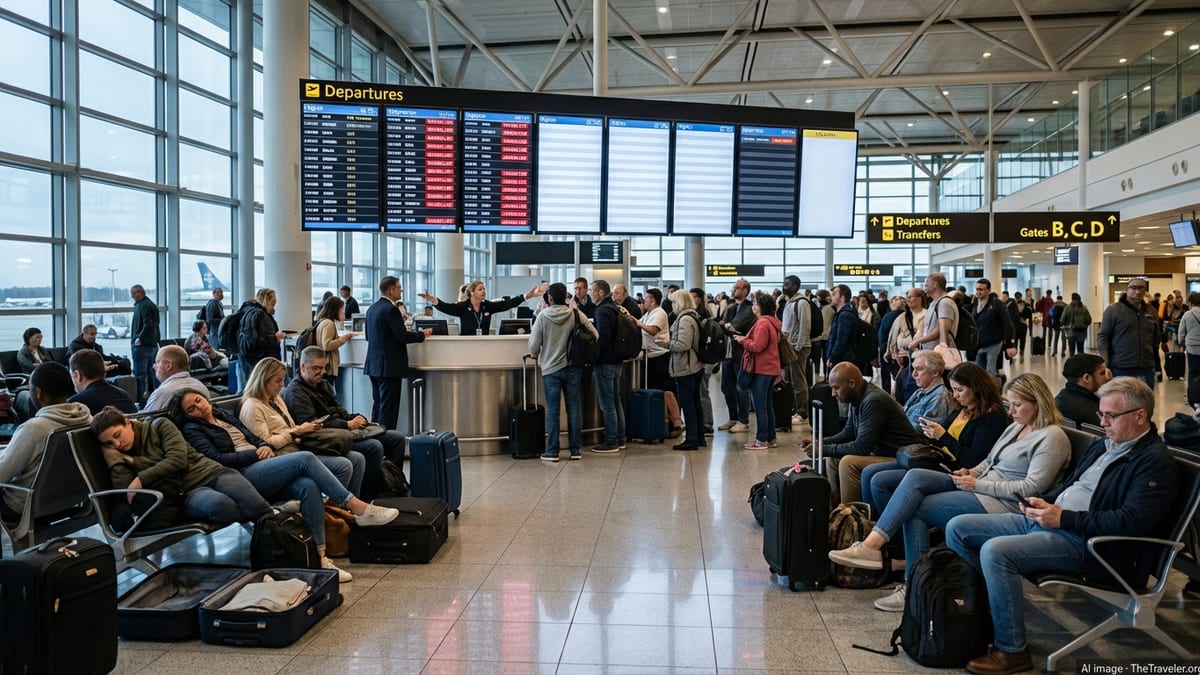
Reports on the 2026 evacuations describe how these risk levels translated into real world disruption. Airspace restrictions, suspended commercial routes and overloaded evacuation channels left tens of thousands of foreign nationals and residents temporarily stranded, particularly in the Gulf, Israel and neighboring states. The experience has been cited as a key factor in the current, more conservative travel posture.
Regional security updates circulated in recent weeks underscore that, even in countries where open conflict is not occurring, the risk of spillover incidents, demonstrations, cyber disruptions and opportunistic attacks remains elevated, warranting caution for non essential travel.
Impact on American Travelers and Regional Connectivity
The heightened alerts for 14 Middle East countries arrive as airlines, hotel groups and tour operators are still recalibrating schedules and capacity in response to the 2026 shock. Industry focused digests on the travel and hospitality sector describe a patchwork of suspended routes, rerouted flights and increased operating costs as carriers divert around higher risk airspace.
For individual American travelers, current advisories stress the potential for abrupt flight cancellations, airport lockdowns and delays in consular services. Travelers already in the region are encouraged by publicly available guidance to identify alternative exit routes, maintain flexible itineraries and ensure that travel documents, medications and essential funds are accessible in case of rapid departure.
Corporate travel and international education programs are also reassessing their exposure. Several risk assessments published in mid 2026 note increased use of virtual engagements, relocation of meetings to Europe or South Asia, and a pause or redirection of staff assignments away from higher risk Middle East postings.
At the same time, some regional hubs continue to function as critical connection points, albeit under closer scrutiny. Aviation safety notices point to ongoing coordination over flight paths crossing the Persian Gulf and eastern Mediterranean, with carriers adjusting cruising altitudes and routings in line with evolving military activity and temporary airspace advisories.
Guidance for Travelers Navigating a Fluid Security Environment
While each Middle East country faces distinct conditions, the updated alerts draw out several recurring themes for Americans considering travel. First, they highlight the importance of consulting the latest country specific advisories and security alerts shortly before departure, recognizing that levels can be raised or relaxed quickly as front line developments unfold.
Second, the notices underscore the need to prepare for constrained consular services in the highest risk locations. Public documentation indicates that in some conflict zones, US officials have limited ability to reach citizens during crises, making advance planning, local contacts and private security arrangements increasingly important for any unavoidable travel.
Third, many of the 2026 alerts point to secondary risks such as cyberattacks, disruptions to financial networks, power outages and misinformation campaigns. Travelers are advised in open guidance to maintain secure communication channels, keep multiple payment options available and verify information through trusted news and official public sources when making decisions about movements.
Finally, the messaging across government and media channels emphasizes that risk tolerance is personal. While some Americans with family ties or essential business may still choose to travel, non essential tourism to several of the 14 highlighted countries is being framed as increasingly difficult, with a higher likelihood of disruption and fewer fallback options if circumstances deteriorate.
Broader Geopolitical Stakes Behind the Alerts
The clustered warnings for 14 Middle East countries in 2026 reflect more than isolated security problems. Analysts note that the alerts are emerging during a period of intensified rivalry involving Iran, regional powers and external military actors, making the entire corridor from the eastern Mediterranean to the Gulf more volatile.
Coverage of the 2026 Iran war, the preceding military buildup and the subsequent evacuations describes a tightly interconnected region where disruptions in one country quickly reverberate through neighboring states. This interconnectedness helps explain why alerts have expanded beyond immediate battlefields to encompass transit hubs, maritime chokepoints and countries hosting foreign bases.
Commentary across think tank reports and news analyses suggests that the travel advisories serve a dual role. They are intended to safeguard citizens while also signaling the seriousness with which Washington and other governments view the potential for further escalation. The heightened alerts may therefore remain in place or evolve gradually, even if front line fighting diminishes, as long as underlying political and security disputes remain unresolved.
For travelers, airlines and the wider tourism sector, the latest State Department posture reinforces a central reality of 2026: journeys through key parts of the Middle East now demand closer monitoring, more flexibility and a higher degree of risk awareness than in previous years.