


More news on this day
The United States has reissued a Level 3 “Reconsider Travel” advisory for Israel and the West Bank as of August 26, 2026, flagging ongoing terrorism and unrest as key concerns and updating guidance on where travel is considered too dangerous for most visitors.
Get the latest news straight to your inbox!
Advisory Reissued With Level 3 Status Unchanged
According to publicly available information on the U.S. Department of State’s travel advisory pages, Israel and the West Bank remain under a Level 3 “Reconsider Travel” designation dated August 26, 2026. This level signals that serious risks exist and that many travelers may wish to avoid nonessential trips, even as the advisory stops short of an outright “Do Not Travel” warning for these areas.
The same advisory package classifies Gaza separately at Level 4, “Do Not Travel,” reflecting distinct security and infrastructure concerns there. The overall risk profile for Israel and the West Bank is tied primarily to threats of terrorism and episodic unrest, with travel guidance stressing that conditions can change quickly in response to regional developments.
The August 26 update is described in government materials as a reissue rather than a full rewrite, meaning the overall advisory level remained at Level 3. However, the text was refined to incorporate more specific “Do Not Travel” boundaries in northern Israel and near Gaza, and to clarify what movements are considered especially high risk for U.S. citizens.
Israel, the West Bank and Gaza have consistently appeared at the higher end of the State Department’s four-tier risk scale in recent years, but the August 2026 notices highlight that the nature and geography of the threat have evolved, prompting more granular warnings about certain corridors and border regions.
Newly Defined No-Go Zones in Israel and Border Areas
The latest Israel country information page outlines a number of areas where travel is advised against altogether. Publicly accessible advisory language notes a Level 4 “Do Not Travel” recommendation for territory north of Route 85 extending toward Routes 90 and 87 near the Lebanese border, describing this northern corridor as an active conflict zone with elevated risk of rocket fire and cross‑border incidents.
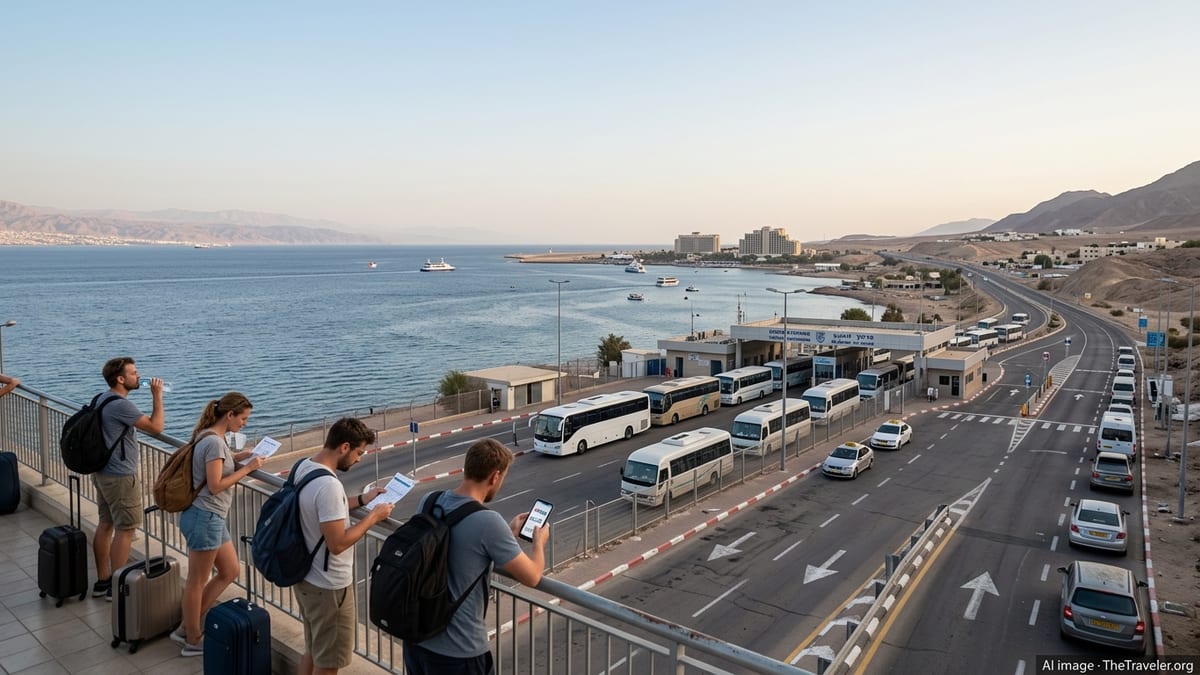
The advisory also instructs travelers not to enter the area within approximately 11.3 kilometers, or seven miles, of the Gaza Strip, citing ongoing armed conflict and the potential for sudden escalations. A further “Do Not Travel” zone is defined as within 2.4 kilometers, or 1.5 miles, of the Israel–Egypt border, with a specific exception only at the Taba crossing, also known as the Menachem Begin crossing, which remains open for routine travel under closely monitored conditions.
These geographic markers are more precise than in earlier advisories, giving prospective visitors clearer indications of where risk is concentrated. Travel analysis from regional tourism and security briefings points out that such distance‑based boundaries are intended to be easily understood on consumer maps and navigation apps, making it simpler for travelers to gauge whether their planned routes intersect with officially discouraged areas.
Outside of the defined no‑go zones, the State Department still urges heightened vigilance throughout Israel, particularly around transportation hubs, tourist sites and locations with a visible security presence. Travelers are encouraged by open‑source guidance to remain aware of shelter locations, monitor local alert applications where available and maintain flexible itineraries in case of airspace or road closures.
West Bank: Reconsider Travel Amid Movement Constraints
For the West Bank, the August 26, 2026 notice maintains a Level 3 “Reconsider Travel” advisory that links risk to both terrorism and unrest. The text points to a security environment that can shift rapidly, with sporadic clashes, checkpoints and road closures that may disrupt movement with little or no advance warning.
Public documents summarizing the advisory state that U.S. government employees working in Israel must obtain special authorization for official travel into the West Bank. Personal travel for these employees and their family members is broadly restricted, with narrow exceptions along specific corridors and for limited hours, underscoring the level of concern reflected in internal risk calculations.
Permitted routes for official U.S. personnel and accompanying family members, as outlined in secondary reporting on the advisory, include travel on Routes 1, 90 and 443, as well as visits to Jericho and to Bethlehem, including the neighboring communities of Beit Jala and Beit Sahour, generally between dawn and midnight. Checkpoint 300 near Rachel’s Tomb is identified as the only accessible entry point into Bethlehem for these travelers, reflecting ongoing closures at other crossings in the area.
Although these restrictions apply specifically to U.S. government staff, they are often viewed by private travelers and tour operators as a benchmark for underlying risk. Insurance industry commentary on the West Bank advisory indicates that some policies now require clients to confirm they will avoid higher‑risk zones or accept exclusions related to unrest‑linked disruptions.
Policy Shift for U.S. Government Families in Israel
The August 26 update also includes an adjustment with implications for the expatriate community: publicly available summaries note that family members may now accompany U.S. government employees assigned to Israel. Earlier in the current security cycle, dependents of some personnel had been subject to departures or barred from joining new postings due to security concerns.
Travel and security analysts interpret the change as signaling that, while the overall threat level remains high enough to justify a Level 3 advisory, certain conditions in core urban centers and heavily policed areas are considered manageable with appropriate precautions. The shift may lead to a modest increase in demand for schooling, housing and related services catering to foreign families in cities such as Tel Aviv and Jerusalem.
The adjustment does not, however, extend to Gaza, where official guidance continues to state that U.S. personnel are prohibited from travel and that the U.S. government is unable to provide routine or emergency consular services. Nor does the policy change relax the travel restrictions that apply to U.S. staff movements into the West Bank, which remain tightly controlled.
For independent travelers, the allowance for family accompaniment is not a risk endorsement but rather an indicator of how the U.S. government is balancing duty‑of‑care obligations with operational needs. The broader advisory continues to stress preparedness for flight disruptions, rapid changes to security posture and limited assistance options during a major crisis.
Practical Considerations for Travelers Weighing Trips
While the Level 3 designation is not a blanket prohibition on travel, it does carry practical consequences for visitors planning trips to Israel and the West Bank. Travel industry guidance notes that some tour operators and group organizers use the U.S. system as a planning benchmark and may limit or cancel itineraries whenever a destination moves into Level 3 or Level 4 status.
Travelers are also encouraged by official and independent advisories to confirm how insurance providers interpret the Level 3 rating. In some cases, standard policies may restrict coverage for trip cancellation, medical evacuation or security incidents linked to terrorism or civil unrest in areas that carry elevated warnings, prompting recommendations to review policy exclusions carefully before departure.
Consular information pages compiled by the U.S. government and partner organizations emphasize the value of contingency planning, urging travelers to maintain alternative flight options, keep travel documents up to date and register their presence online so that they can receive alerts and information about sudden changes to the security situation. Guidance also highlights the need to obey local security instructions, avoid demonstrations and remain alert in locations that attract large crowds.
With the August 26, 2026 advisory keeping Israel and the West Bank at Level 3, prospective visitors are left to balance personal risk tolerance with practical considerations such as route planning, insurance terms and the possibility of abrupt disruptions to air and ground transport. For many, the decision will hinge on the specific destinations they intend to visit and their ability to adapt if conditions deteriorate with little warning.
U.S. Department of State: Israel, the West Bank and Gaza Country Information
U.S. Department of State: Travel Advisories Index
Executive Digest: Middle East Crisis Travel & Hospitality Impact