


More news on this day
Heavy rain sweeping into the Chicago area caused major air-travel disruption at O’Hare International Airport over the weekend, with published flight-status data showing cancellations climbing into the hundreds as air traffic constraints and repeated rounds of storms slowed operations at one of the nation’s busiest hubs.
Get the latest news straight to your inbox!
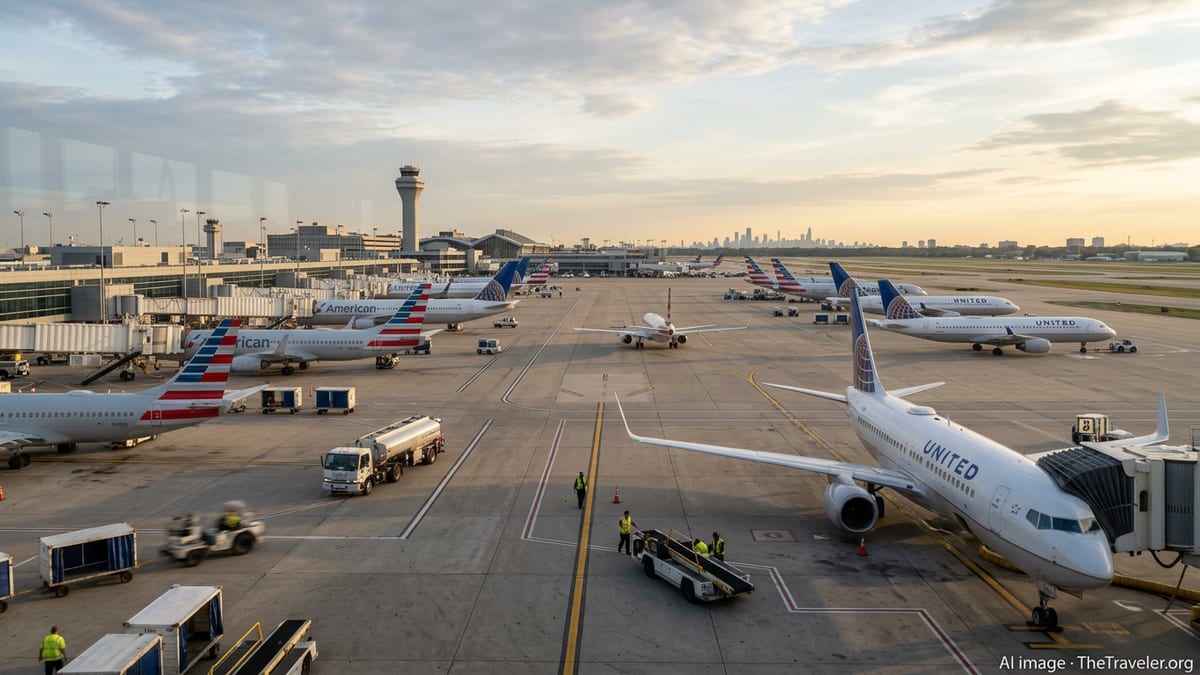
Cancellations surge as storms move across the region
Published coverage and airport-status reporting showed O’Hare’s cancellations rising past the 300 mark by Saturday afternoon, alongside widespread delays that stretched beyond an hour for many travelers. NBC Chicago reported 347 cancellations as of mid-afternoon Saturday, with average delays listed at about 68 minutes.
ABC7 Chicago similarly reported 345 cancellations at O’Hare in the early afternoon, with average delays around 78 minutes, while Chicago Midway International Airport saw far fewer cancellations and much shorter average delays. The uneven impact reflected how quickly airline schedules can unravel at a major hub when arrival rates slow and aircraft rotations get out of sequence.
For travelers checking numbers across different sources, totals can fluctuate throughout the day as airlines consolidate flights, swap aircraft, and adjust departure banks. Flight-tracking sites may show lower or higher totals depending on update timing and methodology, so the direction of travel can matter as much as the snapshot.
FAA traffic programs add to the bottleneck at a major hub
As the heaviest rain arrived, published coverage indicated the Federal Aviation Administration placed O’Hare under traffic-management measures designed to meter arrivals and reduce congestion. NBC Chicago described a ground delay in effect into late Saturday evening, a tool that holds some departing flights on the ground so the arrival airport can manage demand.
ABC7 Chicago also reported that ground stops were used at points during the day for both O’Hare and Midway as thunderstorms moved through. These programs can lead to a fast-changing operational picture: a flight might remain listed as “delayed” while it waits for an arrival slot, then later cancel if crews time out or inbound aircraft cannot reach Chicago on schedule.
The ripple effects extend beyond Chicagoland because O’Hare functions as a central connecting hub. When arrivals are constrained, aircraft and crews end up out of position for later departures, which can convert morning weather disruption into evening cancellations even after rainfall rates ease.
More rain in the forecast keeps recovery uncertain
The weekend forecast raised the risk that the disruption would not be limited to a single storm line. NBC Chicago reported forecasters warning of up to about 3 inches of rain over the weekend, with the potential for thunderstorms and localized flooding.
ABC7 Chicago reported a Flood Watch stretching across a broad swath of northeastern Illinois and nearby areas into Sunday morning, with another heavier round of rain expected Saturday evening into early Sunday. Even when lightning and wind ease, persistent rain can reduce arrival rates, slow ramp operations, and complicate baggage handling and gate turns.
For travelers, that means the key question often becomes not only whether the storm is directly overhead at departure time, but also whether the inbound aircraft and crew can reach Chicago, and whether the airport can accept arrivals at a normal pace.
What travelers can do right now if their trip touches ORD
For passengers traveling through O’Hare during a weather-driven slowdown, the practical next step is to verify whether a flight is waiting on an inbound aircraft, a crew, or an air traffic slot, because those factors can help set expectations about whether a delay is likely to become a cancellation. When hub operations slow, a single late inbound airplane can affect multiple flights later in the day.
Travelers with tight connections may want to compare alternatives before boarding a first segment, since rebooking options can shrink quickly once cancellations stack up. This is especially important at a hub where many flights are already full on peak travel days, and where missed connections can cascade into overnight stays if later departures cancel.
It can also help to monitor both the airport’s posted delay conditions and broader flight-tracking indicators, because the volume of delays matters even if your specific flight still shows “on time.” A day with widespread delays can signal gate shortages and crew constraints that become more acute as the schedule progresses.
Why O’Hare disruptions can spread quickly nationwide
O’Hare’s size and schedule density make it particularly sensitive to weather and air traffic flow restrictions. Earlier FAA announcements about managing peak-day volumes at O’Hare have highlighted how congestion, construction constraints, and air traffic staffing pressures can magnify disruptions when severe weather reduces runway capacity.
Once arrival rates drop, the impact can radiate outward to other cities with heavy Chicago service. Flights may hold at origin, divert en route, or arrive late and miss their next scheduled departure window, pushing delays into the evening bank and into the following morning.
With additional rounds of rain expected through Sunday, the weekend’s operational challenge is not only restarting the system after one storm, but sustaining recovery while new waves of heavy precipitation move through the same airspace. For travelers, that uncertainty is why checking flight status repeatedly, even after rebooking, remains essential until aircraft are airborne and headed to their destination.