


More news on this day
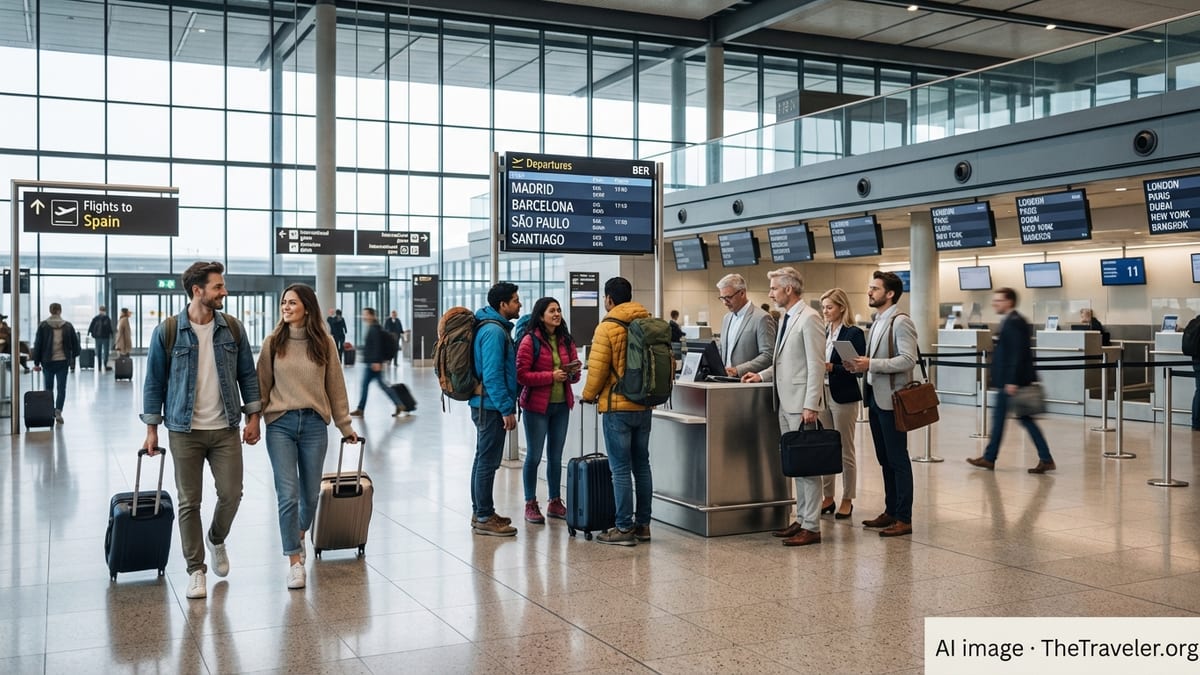
US travelers heading to Spain and several other European destinations are being urged to avoid large crowds and demonstrations after a series of updated security messages and travel advisories highlighted growing concerns over protests, strikes, and civil unrest.
Get the latest news straight to your inbox!
Updated guidance singles out Spain amid protest risk
Recent updates to US government travel information place a particular spotlight on Spain, where an August 1, 2026 revision raised the North African enclave of Ceuta to Level 3, advising travelers to reconsider travel because of unrest and the potential for violent clashes. The advisory language emphasizes the importance of staying away from large crowds in and around protest areas and near government facilities.
Additional security messaging monitored in early November points to continuing caution for travelers across Spain ahead of organized strikes and street demonstrations. A social media feed used to amplify official travel information has highlighted a general strike scheduled nationwide on November 11, urging people in major cities to avoid demonstrations and large gatherings as labor and political groups mobilize.
These warnings do not advise against travel to mainland Spain as a whole, which remains at a lower advisory level, but they underline how quickly local conditions can change. Travelers arriving for city breaks in Madrid, Barcelona, Seville, and Valencia during the busy late autumn period are being urged to monitor local news and reroute plans away from areas where crowds may form.
Publicly accessible guidance from US and university travel‐risk offices notes that even peaceful marches can turn confrontational with little notice. Large crowds can also attract pickpocketing, opportunistic crime, and transport disruption, all of which can significantly affect visitors who are unfamiliar with the layout of Spanish cities.
France and Italy: calls to steer clear of demonstrations
Spain is not the only popular European destination drawing attention. A memo circulated by a major US university travel office in late October cited updated State Department language for France that references recent rioting and violence, advising travelers to avoid demonstrations and areas of unrest and to keep clear of locations with large crowds or heavy police presence.
The same memo notes that the US embassy in Paris has issued several security alerts in October related to partial curfews in some neighborhoods and the potential for sudden protest activity. While key tourist sites such as the Eiffel Tower, the Louvre, and Disneyland Paris remain open, travelers are encouraged to plan routes that bypass protest hotspots and to build extra time into journeys across the city.
Italy has also featured in recent alerts, with the US embassy in Rome reissuing a demonstration alert in late October that again stresses avoiding demonstrations and crowds. In practice, this can mean steering clear of central squares and major boulevards when rallies are announced, as well as checking local transport bulletins for last‑minute tram and bus diversions in Rome, Milan, Florence, and Naples.
These messages stop short of advising against trips to France or Italy, which both remain major destinations for US vacationers and business travelers. Instead, they are framed as reminders to adopt a more cautious approach around public gatherings, particularly at times of political tension or major sporting and cultural events that draw large crowds into compact urban spaces.
Targeted alerts for specific hotspots and dates
In addition to countrywide advisories, the US government has issued very targeted alerts focused on specific locations and anniversaries where large crowds are expected. One recent example affects Tunisia, a popular destination for European beach holidays that is increasingly appearing on transatlantic itineraries.
An October security message from the US embassy in Tunis, widely reported in US media, urged travelers to avoid the island of Djerba on or around October 7, 2026, citing heightened concerns tied to the anniversary of the October 7 terrorist attacks in Israel. The alert specifically advised against travel to the island at that time and urged those already in the area to avoid crowds, remain aware of their surroundings, and review personal security plans.
The focus on Djerba reflects both its status as a major resort and cruise stop and its symbolic significance as the site of the historic El Ghriba synagogue, which has previously been targeted in attacks. While much of coastal Tunisia is not the subject of such date‑specific warnings, the alert underlines how advisory language can narrow rapidly to a single island or city when officials see increased risk linked to large gatherings.
Parts of Tunisia, particularly along its borders with Libya and Algeria, are already covered by a higher Level 4 advisory that urges US citizens not to travel to those areas because of terrorism concerns. The combination of long‑running regional risks and short‑term alerts about crowds at popular tourist spots highlights the layered nature of US travel guidance.
How the advisory system treats large crowds
The US State Department’s travel advisory framework is built around four levels, from Level 1, which indicates normal precautions, to Level 4, which is reserved for the most serious security environments. Background documents on the system explain that travel alerts and advisory changes are often triggered by short‑term conditions such as demonstrations, anniversaries of terrorist incidents, and major events that draw large crowds into confined areas.
Publicly available safety guidance tied to these advisories frequently includes a standard set of recommendations for crowd‑related risk: avoid large gatherings, keep distance from protests even if they appear peaceful, remain alert on public transport, and maintain a low profile in areas where tensions are running high. Universities and corporate travel‑risk teams often echo this language in their own internal notices, reinforcing the message for students and staff overseas.
Separate resources produced by academic institutions for international travelers highlight that large crowds are not only a terrorism or riot concern but can also increase exposure to theft, scams, and accidental injury. These guides encourage visitors to identify alternate routes around stadiums, protest sites, and major squares and to keep valuables secured when navigating busy tourist zones.
Travel‑advisory aggregators that track US, Canadian, and UK government updates on a daily basis show that while the official warning level for most European countries has not shifted in recent weeks, sub‑national notes related to demonstrations and crowds have become more common. This suggests a landscape where ordinary tourism remains possible but calls for more dynamic, city‑specific risk assessment.
What US travelers should do now
For Americans planning trips to Spain, France, Italy, or Tunisia in late 2026, the latest alerts do not amount to a blanket call to cancel vacations. Instead, they point toward a need for closer monitoring of local developments and greater flexibility in day‑to‑day plans, particularly in city centers and popular resort areas where large crowds can gather with limited warning.
Travelers are being encouraged, in publicly available guidance, to consult the State Department’s country pages for the most recent advisories, and to consider enrolling in the Smart Traveler Enrollment Program so they can receive security messages by email. Airlines and tour operators may also circulate schedule adjustments or excursion changes if large demonstrations are expected along key routes.
On the ground, practical steps include checking hotel or cruise daily bulletins, asking staff about any anticipated marches or strikes near major attractions, and having a backup plan if key squares or transport hubs are temporarily closed. Visitors may wish to schedule museum visits and restaurant reservations away from known protest routes or to shift high‑profile sightseeing to days when fewer events are expected.
Security specialists consulted in public reports consistently note that most US travelers to Europe and North Africa complete their trips without encountering serious problems. However, the accumulation of crowd‑related alerts this year illustrates how quickly conditions can evolve. For now, the central message from the latest US travel information is not to stay home, but to stay informed and be ready to adjust plans if large crowds or unrest materialize at popular destinations.