


More news on this day
The United States has renewed a worldwide travel caution, highlighting heightened security risks and potential disruptions for passengers transiting major airspace corridors over Turkey and Gulf Cooperation Council states as airlines adjust routings and schedules in response to regional tensions.
Get the latest news straight to your inbox!
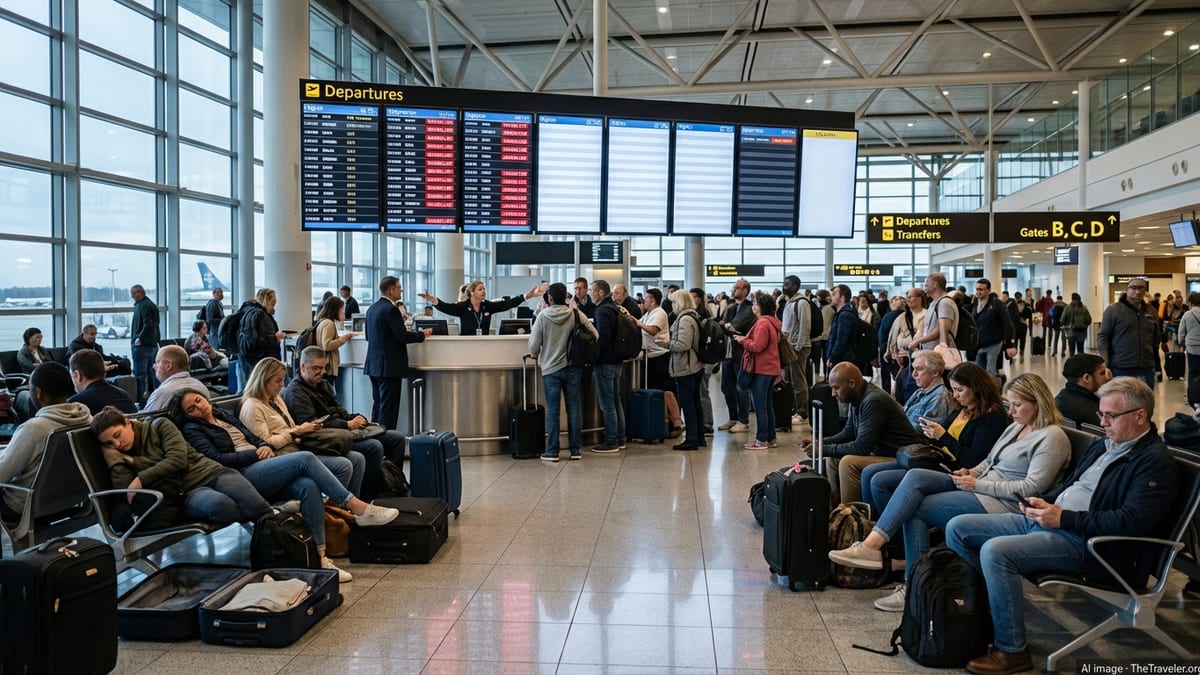
Heightened Global Warning Amid Regional Tensions
Publicly available notices from the U.S. government show that the worldwide travel caution, updated in recent months, urges American travelers to maintain increased vigilance when abroad, particularly in regions affected by conflict and terrorism. The Middle East and parts of Eurasia are at the center of this concern, with Turkey and Gulf Cooperation Council countries sitting astride some of the busiest long-haul air corridors linking North America, Europe and Asia.
The global caution follows a series of regional security alerts focused on the Middle East, where travel advisories for Bahrain, Kuwait, Oman, Qatar, Saudi Arabia, the United Arab Emirates and other nearby destinations remain at elevated levels. According to these advisories, risks include the potential for attacks on transportation hubs, locations associated with Western interests and critical infrastructure that supports international aviation.
While the worldwide caution is not a blanket ban on travel, it is intended to signal a higher baseline of risk and encourage travelers to closely monitor changing conditions. The advisory framework also underlines that security situations can deteriorate quickly, affecting airports and airspace with limited advance warning.
Turkey’s Strategic Air Corridors Under Scrutiny
Turkey occupies a pivotal position in global aviation, with Istanbul’s two major airports functioning as key junctions between Europe, the Middle East, Africa and Asia. The country continues to carry a “Level 2: Exercise Increased Caution” advisory from the United States, with terrorism and security conditions cited as the main reasons. Public guidance stresses particular caution near the borders with Syria and Iraq, where separate warnings against travel remain in force.
Other national travel advisories, including those issued by European and Commonwealth governments, have repeatedly drawn attention to the risk of terrorism in Turkish cities and to restrictions in border regions. Recent updates also referenced short-term constraints around Ankara’s Esenboga Airport during high-profile diplomatic events, underscoring how political and security developments can translate quickly into limits on commercial air operations.
Despite these warnings, Istanbul’s hubs continue to handle significant long-haul traffic. However, route planners and airline operations teams are navigating a more complex environment as they avoid sensitive airspace to the east and factor in military activity related to the wider regional crisis. Passengers connecting via Turkey to South Asia, the Middle East and East Africa are being advised to allow additional time and to monitor airline communications for schedule or routing changes.
Gulf Cooperation Council Hubs Face Elevated Risk Levels
The Gulf Cooperation Council region, home to some of the world’s largest transit airports, has come under particular focus within the updated U.S. cautions and country-specific advisories. Saudi Arabia and the United Arab Emirates, in particular, are currently subject to “Level 3: Reconsider Travel” guidance, reflecting concerns about terrorism and the threat of armed conflict.
Publicly available information indicates that U.S. government personnel have been ordered to depart certain posts in the Gulf this year, a step that often precedes or accompanies stricter advice for private citizens. In parallel, advisories warn that transportation hubs, including major international airports, could be targeted in the event of further escalation between regional actors.
Within this context, the major hubs of Dubai, Abu Dhabi and Doha, which collectively process tens of millions of transit passengers each year, are adjusting to a patchwork of military advisories, airspace notices and insurance constraints. Airlines using these hubs have already redesigned flight paths around portions of Iranian, Iraqi and other regional airspace, with some carriers temporarily reducing frequencies or suspending specific routes.
Airspace Notices and Operational Shifts for Airlines
The U.S. Federal Aviation Administration has issued specialized Notices to Air Missions advising U.S. operators to exercise caution over parts of the Middle East, including airspace surrounding several Gulf states. These notices, which are publicly accessible, reflect assessments of potential risks from military activity, missile and drone operations and other conflict-related hazards that could threaten civil aviation at cruising altitude.
In response, carriers across different regions have re-routed flights to avoid certain flight information regions, adding distance and flight time to some long-haul services connecting North America and Europe with India, Southeast Asia and Australasia. Industry analysis in recent months has pointed to rising jet fuel costs and schedule complexity as airlines lengthen routings to keep clear of contested skies and constrained corridors.
Travel data and aviation commentary suggest that the cumulative effect of these changes includes increased flight times, reduced timetable flexibility and a higher risk of missed connections at already-busy hubs. For travelers, the most immediate impact is seen in longer itineraries, tighter rebooking options when disruptions occur and a growing need to pay attention to airline alerts in the days leading up to departure.
Implications for Travelers Planning Routes via Turkey and the Gulf
For passengers planning journeys that transit Turkey or Gulf Cooperation Council states, the worldwide caution adds an additional layer of consideration to route planning, insurance and on-the-ground decision-making. Public advisories emphasize that conditions can shift quickly and that commercial options may narrow if security situations deteriorate further in specific countries or airspace sectors.
Travel experts who monitor official bulletins broadly recommend that passengers transiting these corridors maintain flexible bookings where possible, stay registered with national traveler enrollment programs and check airline and government advisories frequently before departure. These steps can prove particularly important for itineraries involving multiple connections or travel through smaller regional airports that may be more vulnerable to sudden closures.
At the same time, most major hubs in Turkey and the Gulf remain operational, and airlines continue to position them as key transfer points between continents. The revised U.S. worldwide caution does not instruct travelers to avoid these hubs entirely, but it does frame them within a global landscape of heightened risk, reminding passengers that their journeys can be affected as security dynamics and airspace rules evolve.