


More news on this day
The United States continues to apply its highest Level 4 “Do Not Travel” advisory to Afghanistan, reinforcing guidance that U.S. citizens should avoid all trips to the country and that those already there should depart as soon as conditions allow.
Get the latest news straight to your inbox!
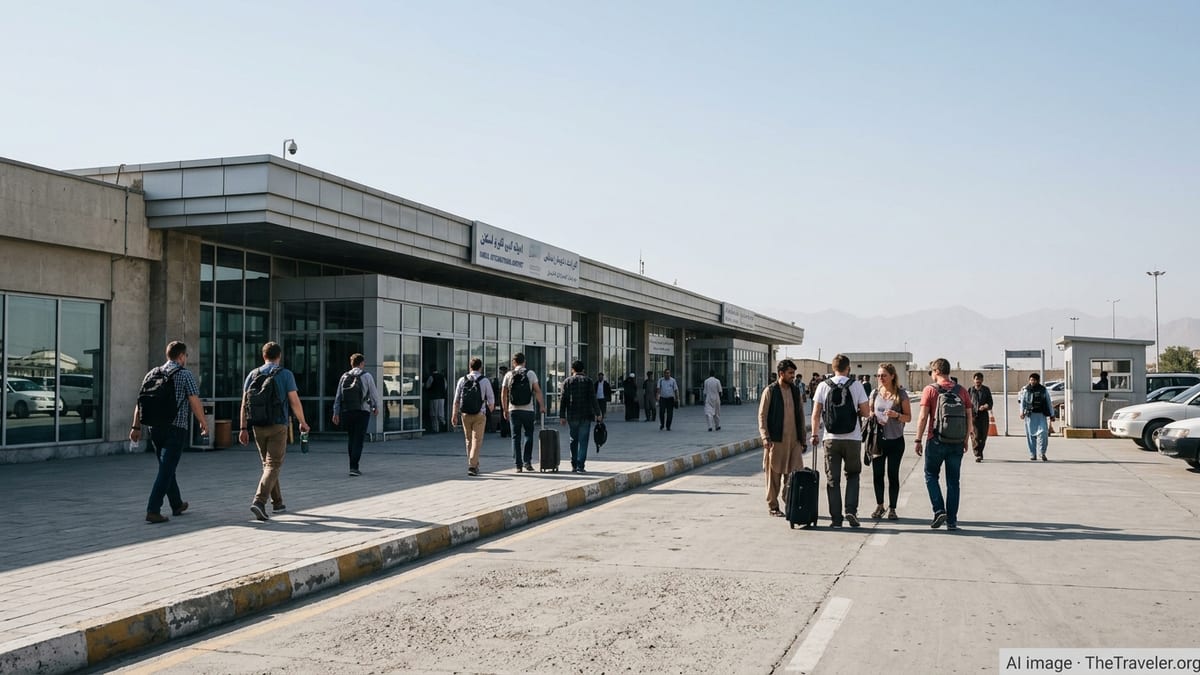
Level 4 Status Confirmed in Latest Advisory
Publicly available information from the U.S. Department of State shows that Afghanistan remains classified at Level 4, the most severe category in the four-tier travel advisory system. The current Afghanistan advisory, dated February 20, 2026, instructs U.S. citizens not to travel to the country for any reason and highlights that those already in Afghanistan face life-threatening risks.
The Level 4 designation indicates that the likelihood of serious harm is considered high and that the U.S. government may have very limited ability to assist citizens during an emergency. The standing notice urges individuals in Afghanistan to arrange departure plans that do not rely on direct U.S. government intervention, reflecting the absence of a functioning U.S. embassy in the country.
Tracking services that compile official advisories note that Afghanistan has effectively remained in the highest risk category since at least 2018, despite periodic updates to wording and risk indicators. The February 2026 notice keeps the overall recommendation firmly at “Do Not Travel,” signaling that U.S. authorities continue to assess the security environment as extremely unstable.
Security Risks Cited: Terrorism, Kidnapping and Wrongful Detention
The current U.S. advisory points to a combination of terrorism, crime, civil unrest, kidnapping and the risk of wrongful detention as primary reasons for keeping Afghanistan at Level 4. Reports indicate that extremist attacks, targeted killings and complex security incidents continue to be documented across multiple provinces, with civilians, aid workers and perceived foreign-linked individuals among those at risk.
Kidnapping and hostage taking remain particular concerns, with non-governmental assessments describing an elevated threat to foreigners and locally affiliated partners. International risk consultancies classify the entire country as an extreme-risk destination, noting that armed groups, criminal networks and opportunistic actors all contribute to a volatile environment for overland movement and daily activities.
The advisory also highlights limited medical facilities, fragile infrastructure and the potential impact of natural disasters such as earthquakes and floods. In practice, this means that individuals who experience health emergencies, accidents or security incidents in Afghanistan may find that advanced treatment, reliable evacuation options and sustained medical support are unavailable or severely constrained.
No On-the-Ground US Consular Presence
Since the closure of the U.S. embassy in Kabul in 2021, consular services for American citizens related to Afghanistan have been handled from outside the country. Official guidance indicates that there is no U.S. embassy or consulate operating on Afghan territory, and that emergency or routine consular assistance cannot be provided in person inside Afghanistan.
U.S. citizens seeking help are directed, through published materials, to make contact with consular staff based in third-country posts such as the U.S. embassy in Doha. Even in those cases, information notes emphasize that assistance options are limited by security conditions and the lack of direct access to Afghan territory.
This absence of on-the-ground representation is a central element of the Level 4 rating. The State Department’s broader travel advisory framework explains that at Level 4, citizens are urged not to travel and those in-country are advised to leave when it is safe to do so, in part because U.S. government capacity to respond quickly to crises, evacuations or legal issues is sharply restricted.
Alignment With Other Governments’ Warnings
Other governments continue to issue similarly severe warnings about travel to Afghanistan, reinforcing the U.S. assessment. Recent updates from Canadian authorities, for example, advise citizens to avoid all travel to Afghanistan due to the extremely dangerous security situation, citing terrorist attacks, ongoing armed conflict, kidnapping risks and arbitrary detention by the de facto authorities.
Independent trackers that compare advisories from multiple countries report little divergence among the United States, United Kingdom, Canada and Australia on Afghanistan, with all four advising against travel. These services show that all four governments currently maintain their highest-level warnings, noting that the situation remains highly unpredictable and that rapid deterioration is possible in many areas.
University and corporate travel risk programs often mirror these governmental assessments. Policies from major institutions describe Afghanistan as a high or extreme risk destination, frequently prohibiting or tightly controlling institutional travel to the country and requiring elevated review for any proposed visits connected to research, journalism or aid work.
Implications for Travelers and Organizations
The continued Level 4 warning has practical consequences for individual travelers, aid organizations, media outlets and contractors. Many travel insurance policies either exclude coverage for destinations under a “Do Not Travel” advisory or require specialized, high-cost policies that specifically address war and terrorism risks. Air routes into Afghanistan remain limited, and regulatory requirements for carriers and insurers can further constrain available options.
Organizations that still consider sending personnel into Afghanistan, including humanitarian groups operating in critical sectors, generally rely on detailed security risk assessments and specialized assistance providers. Public guidance from academic and corporate risk offices points to mandatory pre-approval processes, enhanced tracking of staff movements and standby evacuation planning as standard requirements for any presence in the country.
For most private travelers, the combination of the U.S. Level 4 advisory, comparable warnings from other governments and the lack of in-country consular support effectively closes Afghanistan as a viable leisure destination. Observers of global travel patterns indicate that, as of late 2026, Afghanistan stands out as one of the clearest examples of a destination where official guidance consistently discourages any form of discretionary international travel.