


More news on this day
The US Mission to the United Arab Emirates has issued a fresh regional security alert warning American citizens across the Middle East of an increased threat of armed attacks and potential disruption to air travel as tensions linked to the Iran conflict and Yemen’s Houthi movement continue to ripple across the region.
Get the latest news straight to your inbox!
New alert highlights rising regional threat picture
According to public advisories published on November 7, 2026, the US Mission to the UAE has urged Americans currently in the Middle East to exercise heightened vigilance in response to what it describes as an increased threat of armed attacks by Iranian‑supported Houthi forces in Yemen and reported Iranian efforts to target US government officials in the region. The alert follows similar regional messages circulated by multiple US embassies in recent days and builds on broader worldwide caution notices already in force.
Coverage of the alert indicates that US diplomatic posts from the Gulf states to Israel and Iraq have issued near‑identical language, underlining a shared assessment that threats are not confined to one country. The latest warning comes against the backdrop of the 2026 Iran war, missile and drone exchanges across the Gulf, and a series of high‑profile incidents that have reinforced concerns about the vulnerability of civilian and aviation infrastructure.
Travel advisories for the United Arab Emirates and other Gulf destinations remain at elevated levels, with official guidance from the United States and other governments describing a complex and rapidly shifting security environment. These advisories emphasize that attacks could occur with little or no warning and may focus on locations linked to US and Israeli interests, critical infrastructure and crowded public places.
Impact on air travel and transit through Gulf hubs
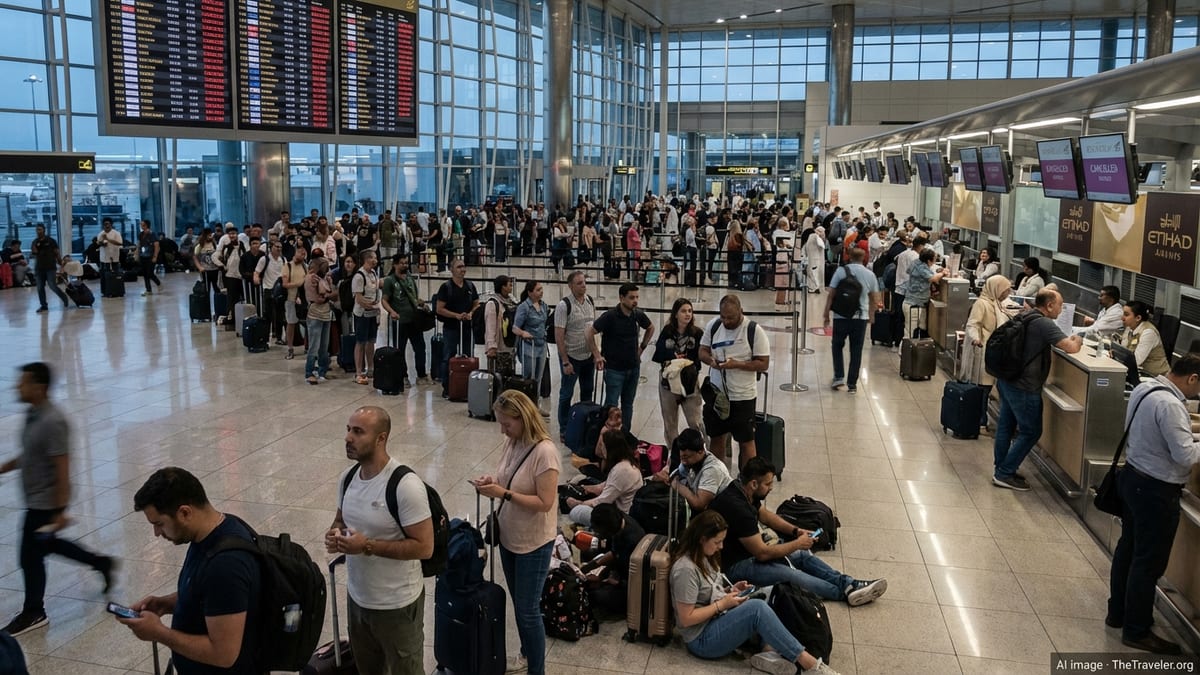
The November 7 alert explicitly warns Americans in the Middle East to be prepared for flight cancellations, temporary airspace closures and other travel disruptions as tensions fluctuate. Earlier regional assessments issued in 2026 described how air corridors around the Gulf have been periodically restricted following missile and drone launches, forcing carriers to reroute or suspend services at short notice.
Publicly available information from recent government travel advice in both the United States and Europe notes that travelers transiting major hubs such as Dubai and Abu Dhabi should factor in the possibility of sudden schedule changes. During previous spikes in hostilities earlier in 2026, some flights were diverted or delayed as authorities briefly closed segments of airspace and assessed the risk to civil aviation, especially after attacks on facilities in Saudi Arabia and near major airports.
The current US Mission notice stops short of advising immediate departure from the UAE or neighboring states but reinforces earlier messages that Americans should ensure flexible tickets where possible, maintain contingency plans for alternate routing and closely monitor airline and airport communication channels. The alert also aligns with existing guidance that Americans considering new trips to or through the Middle East should carefully weigh the potential for rapid deterioration in the security environment.
Key locations and sectors identified as at risk
Recent updates to the official US travel advisory for the United Arab Emirates highlight a range of potential targets for terrorist or state‑linked attacks, including transportation hubs, tourist sites, shopping centers, government facilities and places of worship. Particular concern is noted around locations associated with Jewish and Israeli communities, which have been referenced repeatedly in earlier 2026 alerts shared by the US Mission in Abu Dhabi and other embassies in the region.
Regional travel advisories from partner governments echo these assessments, drawing attention to critical energy infrastructure, ports, data cables and military‑adjacent areas as possible points of interest for hostile actors. In past incidents, ballistic missiles and drones launched from Yemen and Iran have targeted oil facilities and airports, demonstrating capabilities that could also threaten civilian movements if escalation resumes.
Security analysts and publicly available threat assessments issued during 2026 describe an environment in which Iran and allied groups retain the capacity to conduct missile, drone, maritime and cyber operations across a wide arc of the Middle East. While many of these activities focus on military or governmental objectives, the geographic proximity of civilian areas and the use of shared infrastructure heighten the risk of collateral impact on travelers and residents.
Guidance for Americans living in or visiting the UAE
Updated US advisories for the UAE urge Americans to enroll in the Smart Traveler Enrollment Program in order to receive security alerts and to ensure that contact details are current in case embassies need to reach citizens quickly. Guidance also encourages travelers and residents to familiarize themselves with local emergency notification systems, including mobile phone alerts issued by UAE authorities, which have been highlighted in event planning guidance for international fixtures in Abu Dhabi.
Americans in the UAE are advised in publicly available materials to maintain a high degree of personal security awareness, particularly near diplomatic facilities, large public gatherings and locations connected to US, Israeli or other Western interests. Recommendations include reviewing personal movement patterns, limiting time spent around sensitive sites and having a plan for seeking shelter indoors away from windows and exterior walls if warning sirens or mobile alerts indicate an imminent threat.
Local security information published by the UAE and partner governments stresses that, while major cities such as Abu Dhabi and Dubai continue to function as important commercial and tourism hubs, the wider regional backdrop remains volatile. Travelers are encouraged to monitor local news, follow instructions disseminated through official channels and check the latest country‑specific advice from their home government before and during travel.
Regional travelers weigh risk against mobility needs
The newest alert from the US Mission to the UAE arrives as peak winter tourism and business travel seasons begin to ramp up across the Gulf, traditionally one of the busiest periods for long‑haul connections linking Europe, Asia and North America. Industry commentary and public discussion in recent weeks suggest that many travelers still regard the UAE as a comparatively stable base but are paying closer attention to contingency planning than in previous years.
Reports from regional risk consultancies and government advisories indicate that corporate travel managers are updating internal protocols to reflect the possibility of short‑notice route changes, temporary relocation of staff and remote‑work arrangements if conflict zones expand or airspace restrictions tighten. Companies with operations in sectors such as energy, logistics and critical infrastructure are described as particularly focused on scenario planning, given their proximity to assets that may be of strategic interest in any escalation.
For individual travelers, the latest message from the US Mission reinforces a theme that has shaped Middle East travel in 2026: mobility remains possible and, in many locations, routine daily life continues, but the margin for unforeseen disruption is narrower. Americans considering trips to or through the UAE and neighboring states are being advised, through official and publicly accessible guidance, to stay informed, remain flexible and treat security updates as a central part of their travel planning rather than an afterthought.