


More news on this day
New US security alerts tied to rising tensions in the Middle East are tightening the net on leisure and business travel across the region, prompting Americans to rethink itineraries, review airline plans and prepare for sudden changes in flight operations.
Get the latest news straight to your inbox!
Worldwide caution and elevated regional advisories
Publicly available US government information shows that a standing Worldwide Caution advisory urges Americans to exercise increased vigilance when traveling abroad in light of heightened global security concerns related to terrorism and geopolitical conflict. That broad alert explicitly highlights the Middle East as an area where conditions can change quickly, with potential implications for airspace access and commercial flights.
Alongside the global guidance, the State Department’s destination-specific advisories for multiple Middle Eastern countries have been pushed to higher risk levels. Recent advisories list Iran and Iraq at Level 4 “Do Not Travel,” citing threats ranging from unrest and terrorism to kidnapping and wrongful detention. Saudi Arabia is currently designated Level 3 “Reconsider Travel,” reflecting security threats in certain border areas and risks tied to regional conflict spillover.
Separate consular pages for Middle Eastern destinations emphasize that even countries marketed heavily for tourism, such as the United Arab Emirates, sit within a region where missile and drone attacks linked to Yemen’s conflict and broader Iran-related tensions have periodically disrupted airports and energy infrastructure. The language in these advisories urges Americans to monitor local media, register with the Smart Traveler Enrollment Program and maintain contingency plans for departure.
Analysts note that these layered alerts are not formal travel bans for most destinations, but they do influence corporate risk policies and personal decisions. Travelers who might once have transited via Gulf hubs without a second thought are now weighing routing and insurance more carefully, particularly when itineraries involve connections near conflict zones.
Embassy alerts and warnings over flight disruptions
In recent weeks, U.S. embassies across the Middle East have supplemented the standing advisories with country-specific security alerts. According to published coverage, American embassies in Saudi Arabia, the United Arab Emirates, Qatar, Jordan, Bahrain, Kuwait, Oman, Lebanon, Iraq and Israel issued coordinated messages advising U.S. citizens to remain vigilant and to monitor airline operations closely in case of rapid escalation.
These alerts describe a complex security environment with the potential for sudden airspace restrictions, heightened airport security postures and limited capacity on outbound flights. Some public notices advise travelers to keep travel documents current, maintain flexible reservations and be prepared for short-notice schedule changes if regional tensions spike.
Travel media reports indicate that earlier rounds of escalation already triggered widespread flight cancellations and diversions when airspaces in Israel, Lebanon, Jordan, Iraq, Iran and several Gulf states were temporarily closed. Airlines responded with route suspensions, diversions through alternative hubs and rebooking policies that allowed date changes or refunds during defined disruption windows.
These episodes illustrate how quickly the practical landscape can shift even for travelers not headed directly into active conflict zones. Passengers simply connecting between Europe and Asia through Middle Eastern hubs can face long delays, forced overnights or circuitous routings if air corridors close or carriers reduce capacity in response to security assessments.
Airport and inflight security measures on US-bound routes
While the highest-profile alerts focus on whether to travel at all, a quieter tightening is taking place at the checkpoint level. Transportation Security Administration material describes a “layered” approach to aviation security, with both visible and unseen measures applying to flights headed to the United States from about 280 foreign airports in more than 100 countries. Airports in the Middle East with nonstop services to U.S. cities fall squarely within that network.
Following earlier concerns about explosive devices and other threats to civil aviation, US guidance led to enhanced screening protocols for US-bound flights originating in the Middle East and North Africa. Public information from the Department of Homeland Security notes requirements for increased airport and aircraft security, more intensive passenger vetting and closer cooperation with foreign airport authorities for last-point-of-departure flights to the United States.
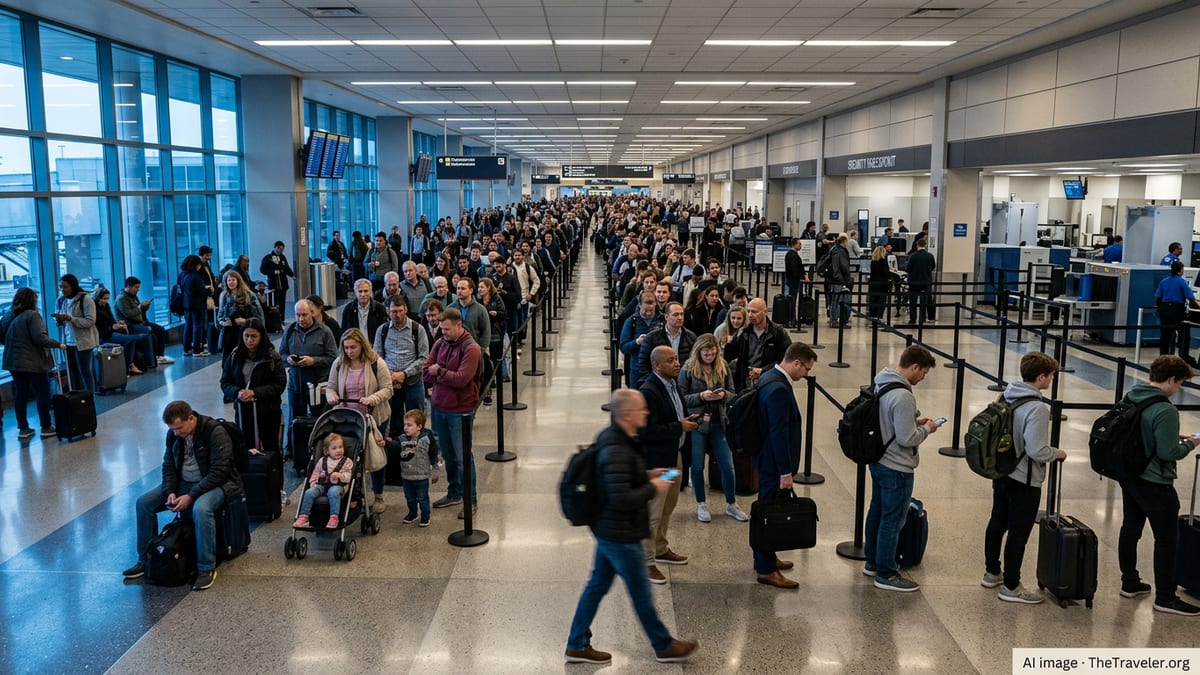
For travelers, these policies translate into additional layers of questioning at check-in, secondary screening near departure gates and longer processing times at security for certain routes and carriers. Even where earlier device-specific bans have been lifted, the tighter baseline for US-bound flights remains in place, interacting with local security responses to regional tensions.
Industry reports also point to ongoing investment in technology at screening checkpoints, as U.S. agencies work with international partners to raise detection standards without halting the surge in global air traffic. The challenge is acute in the Middle East, where several airports function as mega-hubs linking Europe, Asia and Africa and must balance throughput with elevated risk profiles.
Impact on carriers, hubs and global connectivity
Aviation data published by industry bodies underscores how central the Middle East has become to long-haul connectivity. International airline analysis indicates that about one in ten global international passenger kilometers now passes through airports in the region, with key flows connecting Europe, Africa and Asia via Gulf hubs. When security alerts or conflicts constrain these corridors, the ripple effects reach far beyond local markets.
Recent conflict-related airspace closures over Israel, Lebanon, Jordan, Iraq and Iran prompted significant rerouting and cancellations, according to both civil aviation authorities and airline statements. Charts compiled by airline associations show that at periods of peak disruption, capacity to and from strategic Middle Eastern hubs fell by levels not seen since the most severe phases of the COVID-19 pandemic, especially on routes linking Asia-Pacific and Europe.
US and European carriers have periodically adjusted schedules to Tel Aviv, Beirut and other regional airports in response to risk assessments and insurance considerations. Some have temporarily suspended services on specific routes, while others have opted for equipment changes, reduced frequencies or detours that add flight time but avoid contested airspace.
For travelers based in the United States, these changes can manifest as fewer nonstop options, longer connection times and higher fares on remaining services. Published airline advisories urge customers with itineraries touching the region to check their flight status frequently and to ensure that contact details in their bookings are current so that rebooking offers or schedule changes can be delivered quickly if conditions deteriorate.
Planning strategies for Americans considering Middle East trips
Against this backdrop of tightened security alerts and operational uncertainty, travel planners are reassessing how to approach trips to or through the Middle East. Public US guidance consistently recommends that Americans review the State Department advisory and country information pages for every stop on their itinerary, including transit points, before purchasing tickets and again close to departure.
Travel risk specialists point to several practical adjustments that can reduce exposure to disruption. These include selecting tickets that allow changes without heavy penalties, building in longer connection windows when routing through regional hubs, and maintaining backup plans such as alternative routings via Europe or direct services where available.
Insurance is another focus. Some policies explicitly address trip interruption or evacuation tied to security events, while others exclude conflict-related disturbances. Experts advise reading policy terms closely and confirming whether coverage extends to airspace closures, airport shutdowns or government travel warnings, which are increasingly central to disruption scenarios involving the Middle East.
Finally, travelers are encouraged by public advisories to maintain a low profile, keep family and employers informed of plans, and enroll in alert systems that can push security updates directly to mobile devices. For those who decide that current alerts tilt the balance against travel, postponement or selection of alternate destinations outside high-risk corridors remains an option. For others with essential reasons to travel, the tightened security net now forms an integral part of the planning landscape rather than a background consideration.