


More news on this day
UK holidaymakers are reporting hours long queues, missed departures, and overnight stranding at European border points as the Schengen area’s new biometric Entry/Exit System beds in ahead of the peak summer season.
Get the latest news straight to your inbox!
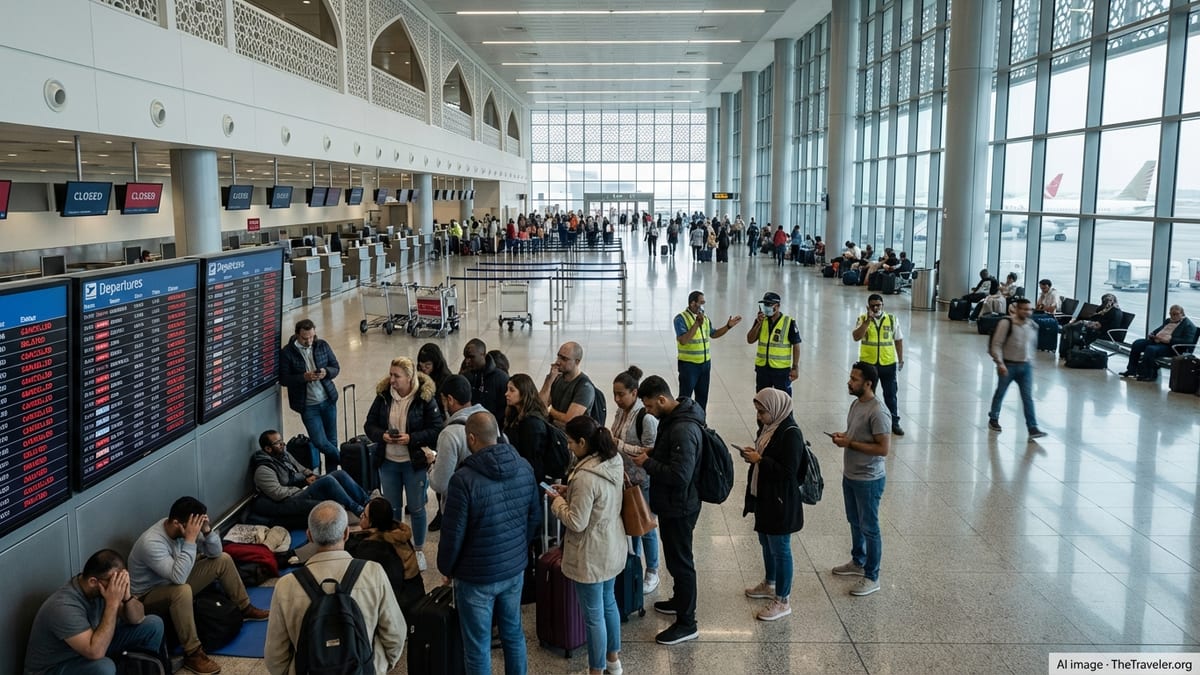
New Biometric Rules Collide With Peak UK Travel
The European Union’s Entry/Exit System, which became fully operational at external Schengen borders on 10 April 2026, replaces manual passport stamping with biometric registration for non EU nationals, including UK citizens. Travellers now have their fingerprints and facial image captured and their entry and exit records logged in a central database each time they cross the border.
Publicly available information from EU institutions describes the system as a key element of the bloc’s efforts to modernise border management and enforce the 90 day in 180 days stay rule for short term visitors. In practice, however, the first full holiday season under the new regime is coinciding with a surge in British demand for European city breaks and beach trips, magnifying the impact of any technical glitches or staffing gaps.
Reports from aviation and travel industry bodies indicate that airports in Spain, Portugal, France, Italy and other popular destinations have already seen queues stretching two to four hours at passport control. For UK nationals who must enrol in the biometric system on their first trip, the additional time needed for fingerprint and photo capture is proving particularly disruptive on busy weekend and school holiday peaks.
Polls cited in recent British media coverage suggest that most UK residents are now expecting significant border delays this summer, with many planning to arrive earlier at departure airports or to avoid tight connections via major Schengen hubs.
Missed Flights and Overnight Stranding at Key Hubs
As the EU’s biometric checks have moved from pilot to full operation, travel tracking platforms and passenger accounts point to a sharp rise in missed flights and forced overnight stays. When processing times climb from seconds to several minutes per person, queues can quickly spill through arrival halls, and travellers with onward connections are among the first to be affected.
Reports from hubs such as Paris Charles de Gaulle, Madrid Barajas, Lisbon, Frankfurt and Amsterdam describe instances where biometric kiosks have failed, systems have slowed, or staff have been overwhelmed by the volume of first time registrations. In those cases, border guards have sometimes resorted to manual processing, which removes the main efficiency gains the digital system was meant to deliver.
Low cost carriers have responded by urging UK passengers to arrive markedly earlier at European departure airports, in some cases advising a minimum of three hours for flights back to Britain. Trade groups representing airports have echoed those warnings and suggested that the Entry/Exit System is already contributing to documented delays of up to three hours at some terminals.
For travellers who miss connections or final flights because they are stuck in biometric queues, the consequences can be severe. Accounts shared on social platforms highlight families forced to sleep in terminals after missing last departures of the day, business travellers who have abandoned trips when they could not clear border control in time, and tour groups who have seen itineraries shredded by hours spent in lines.
Dover, Eurotunnel and Eurostar Face Growing Pressure
The disruption is not confined to continental airports. The same biometric rules apply at all external Schengen land borders, including the critical short sea and rail crossings linking the UK and France. That has put Dover ferry terminals, Eurotunnel’s Le Shuttle services, and London’s Eurostar terminal squarely in the spotlight as the summer getaway approaches.
Specialist travel coverage in late May reported queues at Dover reaching around six hours at peak times as the Entry/Exit System was integrated into French border checks carried out in the UK. Analysts note that processing vehicles and coachloads of UK tourists through biometric registration can be more complex than handling individual air passengers, particularly when large volumes of first time enrollees arrive at once.
Industry observers warn that similar bottlenecks could soon appear at the Eurotunnel terminal in Folkestone and at London St Pancras, where French officials carry out Schengen entry checks before boarding. With the system now mandatory and full UK facing infrastructure still evolving, there is concern that trains could be delayed or passengers left behind if queues build faster than they can be cleared.
Travel planners and ferry operators are advising UK drivers and coach groups to allow extra hours at ports on peak days, especially during July and August. Some school and sports groups are reportedly reconsidering coach based trips to France and beyond, citing the risk that biometric queues could wipe out valuable time at their final destination.
Uneven Implementation and Patchwork Exemptions
Another source of frustration for UK travellers is the uneven way the new biometric rules are playing out across the Schengen area. Although the Entry/Exit System is formally in place at all external borders, the pace of deployment, quality of equipment, and local staffing levels vary significantly between states and even between individual airports.
Some border points have invested heavily in pre registration kiosks and e gates to speed up the process, while others are relying more on staffed booths and manual steps. Aviation associations and EU monitoring reports both point to a gap between airports that prepared early and those still catching up, with the latter more prone to long queues when traffic surges.
At the same time, political decisions are creating a patchwork of exemptions that can be confusing for travellers. Recent British travel trade reporting notes that demand for holidays in Greece has increased since the country announced it would not require Entry/Exit System processing for UK visitors during the 2026 summer season, even as other Schengen destinations press ahead.
This divergence means that some UK tourists may pass through Greek airports this summer with minimal change to their experience, then encounter lengthy biometric procedures when connecting through or visiting other Schengen states. Travel advisors are urging passengers to pay close attention to which countries they are actually entering and where the first Schengen border check will take place.
What UK Travellers Can Do Now
With no immediate prospect of the biometric rules being rolled back and the separate ETIAS pre travel authorisation still due in late 2026, analysts suggest that British visitors will need to adapt their travel habits rather than waiting for a quick fix. The focus is shifting from whether the Entry/Exit System will happen to how best to travel within its constraints.
Consumer organisations and travel experts broadly recommend building in significantly more time for all border crossings involving the Schengen area, especially for the first trip on a new passport. That applies not only to departures from UK airports, but also to arrivals at European hubs, land crossings to the continent, and any connections that require passing through passport control.
Passengers are also being advised to avoid very tight layovers when booking itineraries that involve entering the Schengen zone and then catching onward flights, and to consider routing through less congested airports where possible. Some guidance suggests that travellers with flexibility may wish to avoid the busiest weekends of the school summer holidays or to favour destinations where initial reports point to smoother biometric processing.
As the technology stabilises and staff become more familiar with the system, border authorities are expected to move closer to target processing times. For the current season, however, the emerging picture for UK visitors is one of careful planning, longer queues, and a higher risk that a European holiday or business trip could begin or end with an unexpected night stuck at the border.