


More news on this day
The United States has revoked more than six hundred visas in recent months as part of an intensified campaign against so called birth tourism, coinciding with the creation of a new federal task force designed to target visa fraud schemes that market American citizenship to foreign parents.
Get the latest news straight to your inbox!
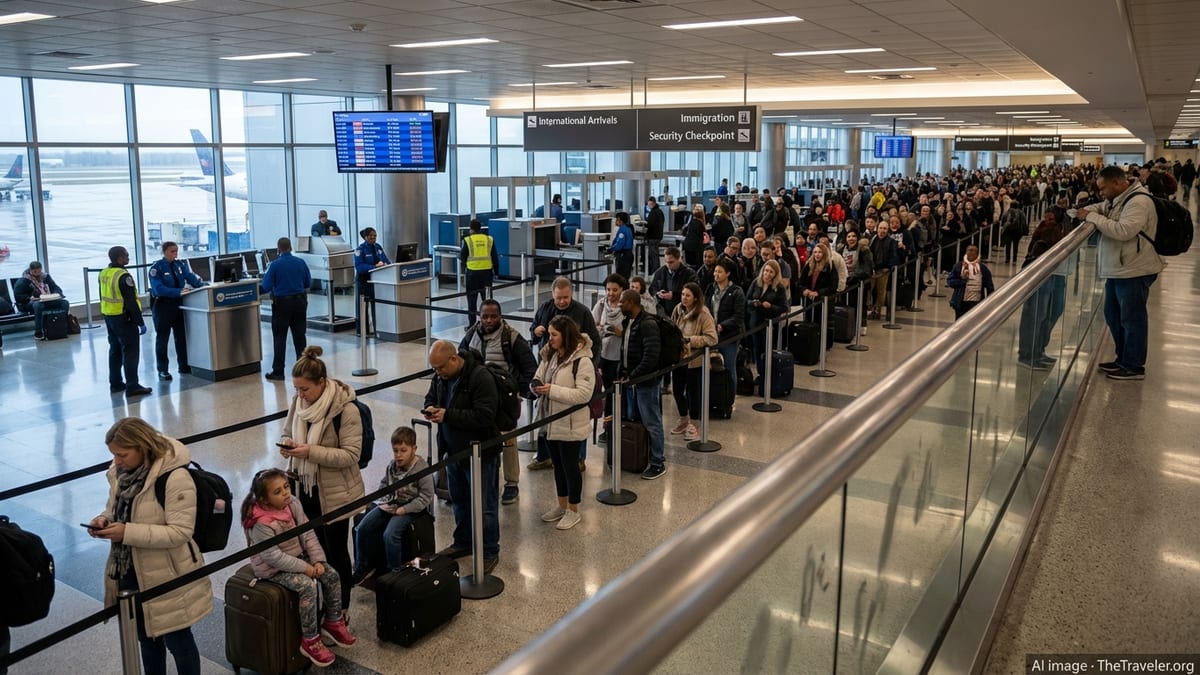
New Task Force Targets Commercial Birth Tourism Networks
Publicly available congressional records and recent policy summaries indicate that federal agencies have been directed to establish a specialized birth tourism task force, bringing together the State Department, the Department of Homeland Security and Justice Department components to coordinate investigations. The new body is described as focusing on commercial operators that advertise U.S. birth packages, arrange travel and housing, and coach clients on how to navigate visa interviews while concealing their true purpose for visiting.
According to published coverage of the latest executive actions on immigration, the task force mandate extends beyond individual travelers to include recruiters, document preparers and so called visa fixers operating in multiple regions. These entities are alleged to have used deceptive marketing and falsified paperwork to help clients secure tourist visas while intending to give birth in the United States so that their children obtain U.S. citizenship.
Policy documents linked to these actions characterize birth tourism schemes as a thriving industry that exploits gaps in visa screening and monitoring. The task force is expected to centralize data on suspected networks, share intelligence across embassies and consulates, and recommend further regulatory changes aimed at curbing abuses in the B 1 and B 2 visitor visa categories frequently used for short term travel.
Over Six Hundred Visas Revoked Under Expanded Vetting
Within this broader crackdown, publicly circulated summaries of State Department activity describe more than six hundred visa revocations tied to suspected birth tourism or related fraud. These numbers form part of a larger wave of cancellations affecting a wide range of visa holders, but officials have highlighted cases where consular posts identified clusters of travelers whose primary purpose appeared to be giving birth on U.S. soil.
Reports referencing internal briefings describe one U.S. mission in North Africa that revoked over one hundred visas for parents labeled as birth tourists and similar actions in West Africa aimed at dismantling a network of more than one hundred foreign nationals using fraudulent documents. Additional revocations have been reported in Europe and Asia, where investigators linked travel patterns, shared accommodation and common facilitators to commercial maternity tourism services.
The current campaign builds on earlier moves to subject millions of visa holders to continuous vetting, under which new derogatory information can trigger automatic review and potential revocation. In the context of birth tourism, that process has increasingly focused on inconsistencies in travel histories, undisclosed pregnancies, and evidence that applicants misrepresented the length or purpose of their stay during consular interviews.
New Rules Follow Years of Tightening Birth Tourism Policies
The latest task force and wave of visa revocations arrive after more than a decade of incremental restrictions on birth tourism. Background materials on U.S. visa policy note that in January 2020, the United States began denying visitor visas to applicants believed to be traveling primarily to give birth, unless they could demonstrate a different main purpose for their trip and the ability to pay medical costs.
Subsequent enforcement actions targeted operators running so called maternity hotels in states such as California and Florida, where federal prosecutions documented schemes that charged clients tens of thousands of dollars for housing, hospital arrangements and coaching on how to answer questions from immigration officers. Those cases drew attention to the financial scale of the industry and its concentration in certain U.S. cities with sizable foreign language networks and medical infrastructure.
Recent executive orders on immigration have gone further by explicitly defining birth tourism as a problem of visa fraud and national security, and by instructing agencies to prioritize investigative resources accordingly. The creation of a dedicated task force signals that the issue is now being treated as a distinct enforcement portfolio within the broader landscape of visa and immigration control.
Travel and Tourism Sector Watches for Ripple Effects
While the stated focus of the new measures is on organized fraud rather than ordinary travelers, the travel industry is monitoring potential knock on effects on legitimate tourism and family visits. Past waves of visa restrictions and travel bans have been associated with noticeable dips in foreign arrivals and business travel, and analysts are studying whether tighter scrutiny of pregnant visitors could create a broader perception that the United States is a less welcoming destination.
Industry observers note that most international visitors do not engage in birth tourism, and that the number of births linked to tourists remains a small fraction of overall U.S. births each year. However, changes in screening practices at consulates and ports of entry can affect the experience of all travelers, particularly women of childbearing age who may face additional questioning about medical plans and insurance coverage.
Travel advisors are already reporting heightened concern among clients who are planning long stays in the United States for business, study preparation or extended family visits. They warn that even travelers with no intention of giving birth abroad may feel compelled to bring extra documentation on health insurance and itineraries to avoid misunderstandings during the visa process or at border controls.
Legal and Human Rights Questions Around Birth Tourism Crackdown
The new task force and the revocation of hundreds of visas have also drawn attention from legal scholars and advocacy groups, who distinguish between combating fraud and altering the constitutional principles that govern citizenship. Public commentary on recent executive orders stresses that court rulings continue to affirm birthright citizenship under the Fourteenth Amendment for almost all children born on U.S. soil, regardless of their parents immigration status.
At the same time, experts point out that visa issuance and revocation remain largely within the political branches, giving the executive wide latitude to tighten standards for entry as long as those measures do not directly contradict constitutional protections. In the case of birth tourism, this means enforcement has so far focused on misrepresentation, document fraud and the commercial exploitation of visa categories, rather than attempting to deny citizenship to children already born in the country.
Human rights advocates caution that aggressive vetting can lead to overbroad enforcement, in which individuals with legitimate medical needs or complex family circumstances are swept up alongside those engaged in organized schemes. They call for transparent criteria, clear avenues for appeal and accessible information for travelers, particularly as the United States seeks to balance its efforts to curb abuse with its longstanding role as a major global travel destination.