


More news on this day
The United States has moved to ease its broad warning for Americans considering travel to the Middle East, even as ongoing airspace closures, diversions, and reduced schedules keep flight disruptions in place across one of the world’s most important aviation corridors.
Get the latest news straight to your inbox!
Advisory Shift Reflects Nuanced View of Regional Risk
Publicly available information from recent State Department updates indicates that Washington has adjusted elements of its guidance for US citizens traveling to parts of the Middle East, stepping back from the most restrictive language that was issued in the early weeks of the Iran conflict. Analysts interpret the change as a recognition that conditions vary significantly across the region, with some Gulf and Levant destinations remaining open to tourism even as fighting and instability persist elsewhere.
Travel-advisory trackers show that several key hubs, including Bahrain, Jordan, Kuwait, Oman, Qatar, Saudi Arabia, and the United Arab Emirates, continue to fall under Level 3 “Reconsider Travel” guidance, rather than the more severe “Do Not Travel” threshold applied to active conflict zones. Israel and the occupied West Bank are also covered by elevated alerts, but some categories of non-essential travel are no longer described in blanket terms as inadvisable for all US visitors.
The recalibrated language follows months in which the region was treated in near-uniform fashion in official messaging, prompted by missile strikes, airspace closures, and sporadic attacks that affected multiple countries’ airports and airlines. The revised stance now more clearly distinguishes between destinations experiencing direct hostilities and others facing mostly indirect spillover risks such as disrupted connections, higher costs, and more complex routing.
Risk consultants note that the updated guidance still points to a volatile environment and stresses the possibility of sudden changes in security and transportation conditions. For US travelers, the shift does not signal a return to pre-conflict normality, but rather a move toward more targeted warnings that attempt to balance geopolitical realities with the economic importance of tourism and business links.
Flight Networks Recover Partially As Rerouting Becomes the Norm
While advisories have become more nuanced, the region’s aviation network remains under strain. Published coverage from global carriers and aviation analysts shows that airlines are gradually restoring some Middle East services after the worst of the initial Iran war shock, yet many Europe–Asia routes are still being redirected around closed or restricted airspace.
Large Middle Eastern carriers have added back capacity and reopened select routes, providing lifelines for travelers who rely on Gulf hubs to connect between continents. At the same time, numerous airlines based outside the region continue to suspend or sharply curtail flights to cities such as Tel Aviv, Riyadh, Dammam, and select Iranian and Iraqi destinations, or to avoid overflying large swaths of the Gulf and Levant entirely.
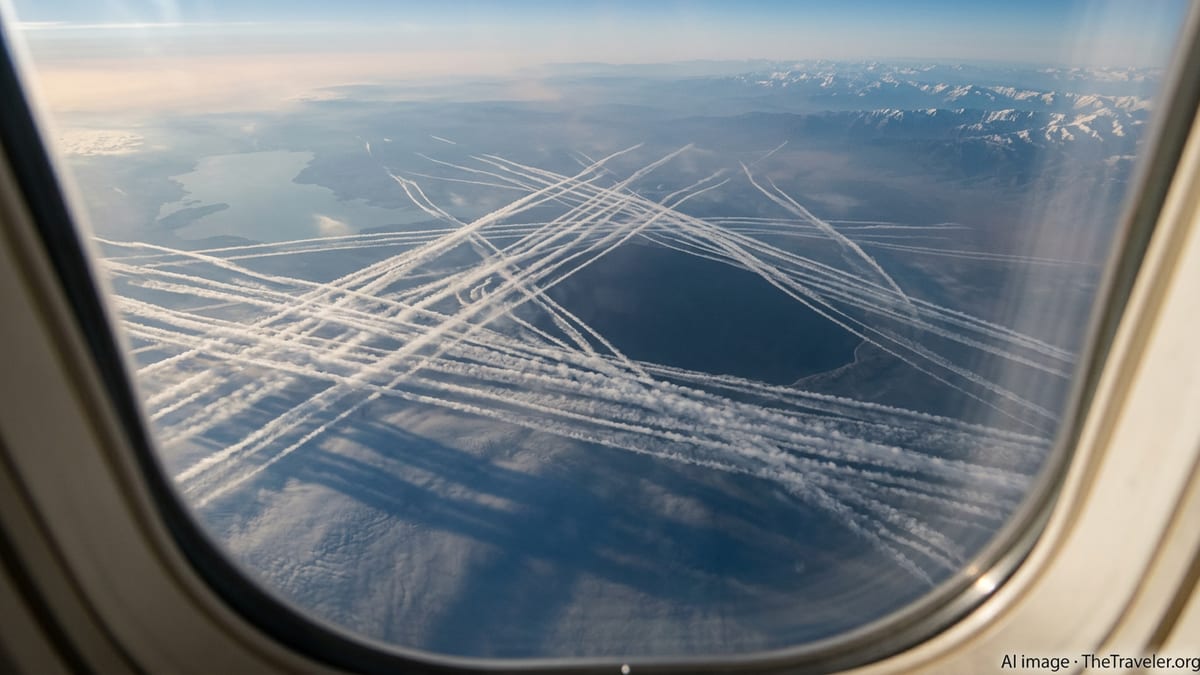
Aviation advisories describe two primary long-haul corridors now absorbing much of the displaced traffic: a northern channel looping via the Caucasus and parts of Central Asia, and a southern arc passing over Egypt and Saudi Arabia. The result is longer flight times, higher fuel burn, and congestion in remaining airways, with knock-on effects felt by passengers far beyond the conflict zone.
Industry outlook reports suggest that, even with incremental resumptions, tens of thousands of flights have been canceled or rerouted since the start of the crisis, and schedules remain fluid week to week. For US travelers connecting to Asia or Africa via the Middle East, this means that itineraries can change at short notice, often requiring overnight stops, new routings, or last-minute use of alternative hubs in Europe or South Asia.
Travelers Face Uncertain Schedules, Flexible Policies, and Higher Costs
Consumer-facing guidance from airlines and travel associations highlights an environment in which flexibility has become essential. Many major carriers serving the region have introduced or repeatedly extended special waivers, allowing passengers to change or postpone itineraries touching affected airports without standard change fees, though fare differences often still apply when rebooking onto alternative dates or routes.
Travel trade bodies in Europe and the Middle East report that passengers whose flights are canceled are typically being given a choice between refunds and rerouting at the earliest available opportunity, in line with local consumer-protection frameworks. However, with capacity constrained and some key hubs operating reduced schedules, replacement options are sometimes limited, especially during peak travel periods.
Insurance specialists note that policy wording is now a critical consideration. Some plans continue to cover delays and cancellations related to airspace closures and operational disruptions, while others exclude claims linked to known conflicts or travel to destinations under higher-level government advisories. Travelers are being urged by industry briefings to confirm both their airline’s flexibility rules and their insurer’s stance before departure.
For US visitors in particular, the combination of altered advisories and persistent disruption has led many to adopt conservative planning strategies. Reports from tour operators and corporate travel managers point to increased demand for fully refundable fares, longer connection times, and itineraries that can be re-routed through alternative hubs if conditions deteriorate again in the Gulf or Levant.
Tourism Sector Balances Recovery Hopes With Ongoing Volatility
The easing of some US travel language is being closely watched by tourism boards and hospitality groups in relatively stable Middle Eastern markets that depend heavily on international visitors. Industry analysis indicates that destinations such as the United Arab Emirates, Qatar, and parts of Saudi Arabia remain eager to welcome US leisure and business travelers, promoting large-scale events and new attractions even as they grapple with reduced airlift and elevated insurance costs.
Economic assessments from travel and tourism organizations estimate that the region has been losing hundreds of millions of dollars per day in visitor spending at times of peak disruption, due to a combination of flight cancellations, traveler hesitancy, and route changes that bypass traditional hubs. The gradual normalization of some flight operations and the softening of government messaging are seen as prerequisites for any sustained rebound.
Nonetheless, analysts caution that recovery is unlikely to be linear. With the conflict’s trajectory still uncertain and airspace restrictions subject to rapid change, airlines may continue to adjust capacity in response to new security assessments, while travelers may pivot quickly between destinations based on headlines and advisory shifts. This dynamic is particularly pronounced in source markets such as the United States, where corporate travel policies often track official guidance closely.
Hotel and tour operators in the region are therefore focusing on short booking windows, flexible cancellation terms, and diversified source markets to mitigate the risk of sudden downturns. For many, attracting US travelers now depends as much on demonstrating robust contingency planning and crisis communications as on traditional marketing campaigns.
What US Travelers Should Watch in the Weeks Ahead
Travel risk experts and airline updates point to several key variables that US passengers should monitor as the summer peak approaches. The first is any further adjustment in US government advisories, which could either tighten again in response to new incidents or ease incrementally if the security environment stabilizes and flight networks prove resilient.
Equally important is the operational picture at major hubs across the Gulf and Levant. Even if direct fighting remains geographically contained, renewed missile activity, cyber incidents targeting aviation infrastructure, or diplomatic tensions affecting overflight permissions could quickly ripple through schedules, affecting travelers en route to Asia, Africa, or Europe via the Middle East.
Observers also highlight the role of airline network strategy. Carriers that have invested heavily in alternative routings and interline agreements may be better positioned to offer viable workarounds when disruption flares up, while those with limited flexibility could face extended cancellations on certain city pairs. For US-based travelers, choosing tickets that include generous change options and clear rebooking rules remains a practical hedge against this uncertainty.
For now, the easing of some US travel language offers a modest psychological boost to Americans with upcoming trips to relatively stable parts of the Middle East. Yet as flight disruptions continue to ripple through global aviation, the region remains a place where close attention to advisories, schedules, and fine print is likely to be essential for some time to come.