


More news on this day
Rail passengers across south London and parts of Surrey are being urged not to travel after severe disruption halted services on key commuter routes through Purley, with major knock-on effects expected for Monday morning journeys.
Get the latest news straight to your inbox!
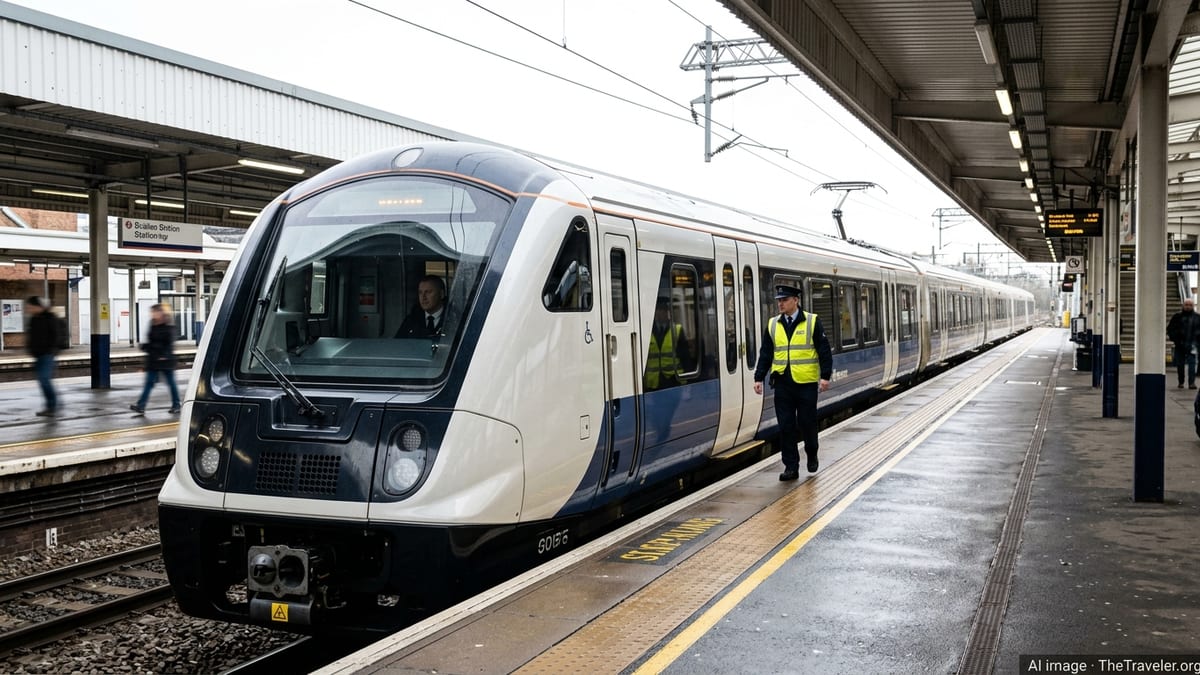
Multiple incidents bring key south London corridors to a standstill
Published operational updates from train operators show a rare "do not travel" alert in place on Sunday 14 June across sections of the south London network, focused on lines running through Purley. Services operated by Thameslink and Southern on routes linking London with Surrey and Sussex are among those most heavily affected.
Reports from the live service pages indicate that no trains are running via Purley for an extended period, with disruption expected to continue into the start of the working week. The warning covers some of the busiest commuter flows into the capital, including links towards London Bridge, London Victoria and Gatwick Airport.
Passenger accounts shared online describe widespread cancellations and severe crowding on remaining services, with some trains terminating short of their planned destinations and others diverted across alternative lines. The combination of technical issues and infrastructure concerns has left large parts of the usual south London rail network effectively shut.
Travel advice published on operator channels is unusually stark, urging customers to avoid rail altogether where possible and seek other forms of transport until services can be safely restored.
Infrastructure concerns near Purley compound earlier power issues
Information circulating among local rail users points to a developing infrastructure problem on a bridge just south of Purley Station, reportedly linked to a possible sinkhole. That localised issue has coincided with what operator updates describe as a separate incident affecting power and signalling on nearby routes, creating a complex operational challenge.
Engineering teams are understood to be inspecting rail structures in the area, while power supply problems have reduced the available capacity on the remaining lines that would normally be used as diversionary routes. This combination has limited the ability of control teams to reroute trains around the affected corridor.
Published travel summaries compare the situation with earlier incidents on the Thameslink network, in which power failures and infrastructure faults around south-east London have led to hours of cascading disruption. On this occasion, the impact is amplified by scheduled engineering work elsewhere in the region, which was already funnelling additional traffic through the Purley corridor.
Until detailed safety checks are completed and full power is restored, operators are prioritising safety and reliability over running a limited, heavily delayed service, which has prompted the stronger "do not travel" message.
Commuters into London warned of major disruption on Monday
Although the original incidents occurred on Sunday, operators are warning that Monday 15 June is likely to be significantly affected. Trains and crew are out of position across the network after widespread cancellations, and timetables for the morning peak may be difficult to operate in full even if some routes reopen overnight.
Regular commuters from towns such as Coulsdon, Purley, Caterham, East Grinstead and Brighton, who typically rely on services via Purley and the Quarry Lines, are being advised by public travel information services to check live updates before setting out. The same guidance applies to passengers heading to Gatwick Airport, where some services may be diverted or replaced by slower stopping trains.
Publicly available planning tools already show reduced frequencies and gaps in early morning services, reflecting the difficulty of reforming trains and crews after a prolonged shutdown. Rail commentators note that the knock-on disruption may last throughout the day, particularly if further infrastructure assessments are required.
Passengers who must travel are being advised to allow significantly more time, consider alternative suburban routes into London, or make use of bus and tram connections where available.
Alternative routes strained as passengers seek other options
With the Purley corridor effectively closed, attention has turned to alternative lines across south London, including routes through Sutton, Wimbledon, and the London Overground and Tramlink networks. However, those options are limited in their ability to absorb large volumes of displaced passengers at short notice.
Journey-planning platforms indicate busier than usual services on parallel corridors, and local reports describe heavy crowding on some remaining mainline trains into London Victoria and London Bridge. Some passengers travelling from Kent and Sussex have been advised to route via different junctions or to change at intermediate hubs, but capacity constraints and pre-planned engineering work remain significant obstacles.
The disruption also comes amid a wider period of planned closures and upgrades across London’s rail and Underground systems, further restricting alternatives. Recent maintenance programmes on Underground and Overground lines have already been causing weekend closures and reduced services, meaning that the wider capital network is operating with less resilience than usual.
Public transport advice stresses that travellers should consider whether their journey is essential and be prepared for extended travel times, multiple changes and the possibility of not being able to board the first service that arrives.
What passengers should do if they must travel
Rail operators and national journey planners are directing passengers first to check real-time information before leaving home, and to confirm whether tickets are valid on alternative routes. Live status tools are being updated throughout the day as engineering inspections progress and any limited services are reinstated.
Published guidance indicates that tickets dated for the disruption period are being accepted on different trains or at different times in many cases, although specific arrangements vary by operator and route. Some passengers may be able to use their tickets on alternative operators or by slower, less direct paths into London, but capacity on these alternatives is expected to be tight.
Consumer groups advise passengers to keep records of cancellations and severe delays, as compensation schemes may apply when services are significantly disrupted. However, some passengers have expressed concern that strong "do not travel" messaging can make it harder to claim reimbursements if they decide to avoid disrupted routes entirely.
For now, the priority for many rail users in south London and the wider south-east is simply to reach work or home. With infrastructure assessments ongoing and trains and crews dispersed around the network, the region faces at least one more day of extremely challenging conditions on the rails.