


More news on this day
U.S. travelers eyeing high-risk international getaways are being urged to treat some trips less like vacations and more like deployments, as recently highlighted guidance advises Americans headed to certain destinations to prepare a will, update insurance beneficiaries and put formal emergency plans in place before departure.
Get the latest news straight to your inbox!
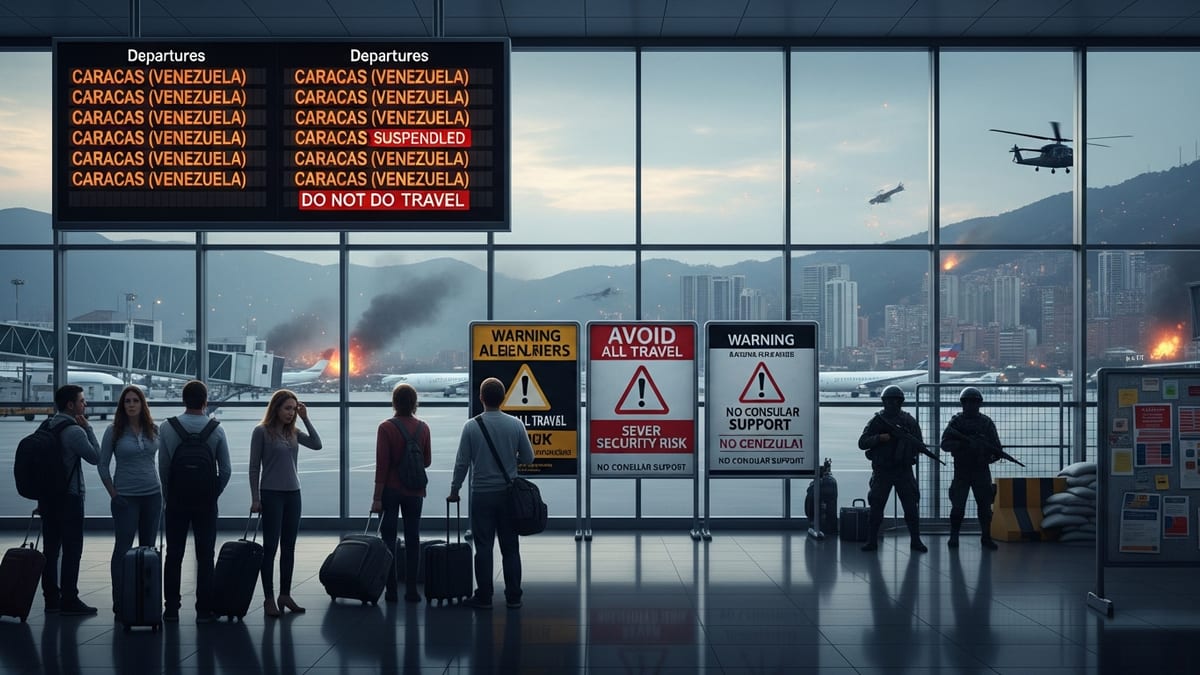
Stark language in advisories for extreme-risk destinations
Recent attention has focused on U.S. government material linked to some of the world’s highest-risk destinations, where security conditions are considered so volatile that traditional holiday planning advice is replaced by explicit end-of-life preparations. Publicly available information tied to Afghanistan, for example, carries a Level 4 “Do Not Travel” advisory and includes a recommendation that anyone who still decides to go should draft a will and designate appropriate insurance beneficiaries or a power of attorney before leaving the United States.
The Afghanistan country page on the State Department’s travel website, updated in 2026, warns that U.S. citizens in the country face threats ranging from terrorism and kidnapping to wrongful detention. Embedded planning guidance advises would-be visitors to finalize a will, organize key legal documents and prepare a contingency plan for emergencies such as a sudden need to evacuate or prolonged separation from family members.
Separate explanatory material from consular and overseas briefings underscores that wills and similar legal instruments must be prepared in line with U.S. state law to be considered valid. Official briefing documents note that travelers are encouraged to seek professional legal assistance when drawing up such paperwork and to keep copies stored securely, including with trusted family members who may need to act on their behalf.
The result is an unusually blunt message for anyone considering travel to these locations: a vacation-style visit is being treated in official writings as carrying comparable risk to living or working in an active conflict zone, and preparations are framed accordingly.
How the State Department’s four-level warning system works
The United States uses a four-tier scale to classify risk levels for every country, providing an at-a-glance snapshot of the dangers Americans may face abroad. Level 1 advises travelers to “exercise normal precautions,” Level 2 calls for “increased caution,” Level 3 urges people to “reconsider travel,” and Level 4 is reserved for “Do Not Travel” guidance, where publicly available information indicates a significantly higher likelihood of life-threatening risks such as armed conflict, terrorism, kidnapping or state detention.
According to the State Department’s advisory portal and companion safety briefings, Level 4 destinations come with additional, country-specific instructions that may include recommendations on emergency planning, financial contingencies and evacuation strategies. A separate government overview of the advisory system explains that at Level 4, the U.S. government may have very limited ability to assist citizens who remain in or enter the affected country, particularly where embassies have suspended normal operations or where local authorities restrict foreign consular activity.
In practice, that means the burden of preparation falls heavily on individual travelers. Public documentation urges those contemplating a trip to consult detailed country pages, sign up for the Smart Traveler Enrollment Program so they can receive security alerts by email, and routinely monitor the advisory level in case conditions change on short notice.
Travel experts who track these advisories note that while many popular destinations sit at Level 1 or Level 2, a small pool of countries at Level 4 carry guidance that is qualitatively different, extending beyond warnings about crime or health issues into specific instructions on estate planning and emergency coordination.
Why “prepare a will” is appearing in travel guidance
Estate planning has traditionally been discussed in general travel checklists as a background consideration for frequent flyers or long-term expatriates, but recent coverage highlights that some U.S. government resources now treat it as an essential step for Americans insisting on visiting the most dangerous destinations. A State Department advisory for Afghanistan, for instance, lists drafting a will alongside updating insurance beneficiaries and creating a contingency plan as practical steps for anyone who travels despite warnings.
Separate safety communications and archived overseas briefings explain the reasoning: in the event a U.S. citizen dies, is seriously injured or goes missing abroad, families may have to navigate multiple legal systems, secure local death certificates or medical reports, and coordinate the return of remains or personal effects. Having a clear, legally valid will and designated beneficiaries can simplify decisions about repatriation, funeral arrangements and access to financial accounts at a time when relatives are already under severe stress.
Government briefing notes also stress that wills are only one part of a broader preparation package. Travelers are encouraged to ensure that trusted relatives know how to reach them, where important documents are stored, and whom to contact if communication is cut off. Recommendations in publicly available guidance for some high-risk destinations also mention appointing a single primary family contact for potential hostage or kidnapping situations, and considering how loved ones would verify a traveler’s identity or survival if they cannot speak directly.
While such measures might sound extreme in the context of leisure travel, officials frame them as a realistic response to conditions in countries where infrastructure is fragile, medical facilities are limited and security incidents can unfold with little warning.
Implications for mainstream U.S. vacationers
The vast majority of U.S. tourists will never contemplate a trip to Afghanistan or similar Level 4 destinations, but the stark wording in these advisories is influencing how some Americans think about travel risk more broadly. Coverage of the “prepare a will” guidance has prompted renewed interest in what, if anything, ordinary travelers should do before visiting destinations that sit at Level 2 or Level 3 on the State Department scale.
General planning resources published by consular authorities and partner agencies encourage all international travelers to start with the basics: checking the advisory level and local entry rules for their destination, reviewing health and vaccination information, and confirming they have adequate travel and medical insurance, since the U.S. government does not pay for medical treatment or evacuations abroad. These materials also highlight the value of registering itineraries through the Smart Traveler Enrollment Program so that travelers can receive timely alerts about protests, natural disasters or other disruptions.
Estate planning, by contrast, is not singled out in routine advice for lower-risk destinations in the same explicit way it is for a handful of extreme cases. Legal professionals in the United States, however, often point out that keeping a basic will and medical directive up to date is sound practice regardless of travel plans, and some law firms market pre-vacation estate planning checklists to clients seeking peace of mind before major trips.
For many travelers, the key takeaway from the recent focus on “prepare a will” language is not that every beach holiday requires a visit to an attorney, but that government advisories can escalate to unusually blunt terms when risks reach the highest level. Americans weighing trips to unfamiliar destinations are being encouraged to read full advisories carefully and decide how comfortable they are with the documented conditions on the ground.
How to check and interpret current travel warnings
For U.S. citizens, the primary source of official risk information remains the State Department’s travel website, which compiles country pages, advisory levels, security messages and embassy contacts in one place. A dedicated map allows travelers to see the current level for each country at a glance, while individual pages outline specific concerns such as terrorism, crime, health, civil unrest or natural disasters, along with any regional differences inside a country.
Public guidance from federal agencies and consumer-facing government portals advises Americans to consult this information before booking a trip, not after tickets are purchased. Travelers can also review separate Centers for Disease Control and Prevention notices that focus on infectious disease risks, and cross-check coverage from major news organizations to understand how quickly a situation is evolving.
Experts who monitor travel risk emphasize that advisory levels can change as conditions on the ground shift. A country that is Level 2 today may move to Level 3 or Level 4 after a coup, a wave of kidnappings or a major terrorist attack, while others may be downgraded as security improves. For that reason, travelers are encouraged to keep checking advisories in the weeks leading up to departure and during their trip, particularly if visiting regions known for political volatility.
The heightened attention on stark phrases such as “prepare a will” serves as a reminder that the wording inside advisories is deliberate and calibrated. For U.S. travelers, reading beyond the headline level to understand specific recommendations has become an essential part of responsible trip planning, especially when a destination’s appeal as a “bucket list” experience may not match the realities described in official risk assessments.