


More news on this day
The U.S. State Department has issued an updated security alert for the Middle East, urging Americans already in the region to consider leaving and warning prospective travelers to rethink plans as tensions and the risk of sudden airspace closures grow.
Get the latest news straight to your inbox!
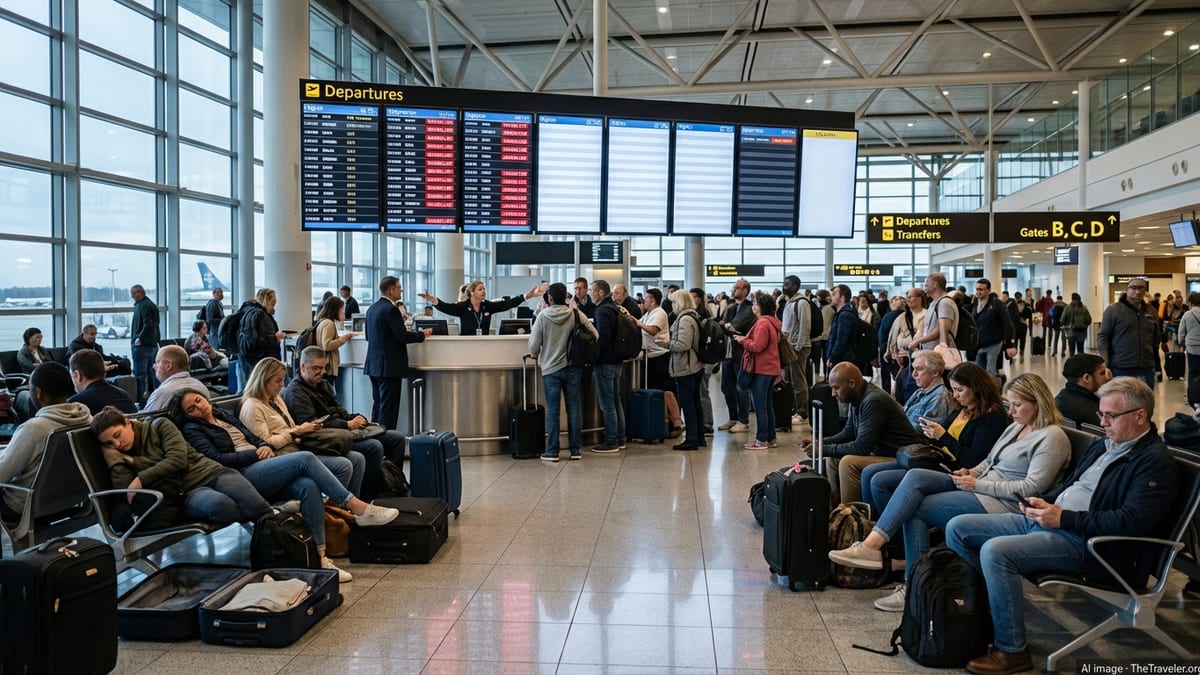
Heightened Security Concerns Across the Middle East
According to publicly available information, the latest alert highlights a complex and volatile security environment across parts of the Middle East, driven by heightened tensions involving Iran and allied groups. The advisory notes that U.S. interests and locations associated with Americans could face increased security risks in the event of an escalation.
The alert reiterates that U.S. diplomatic facilities in and beyond the region have been targeted in the past and that future incidents could occur with little or no warning. It emphasizes that a sudden deterioration in conditions could disrupt normal consular services, limiting the ability of U.S. missions to assist citizens who choose to remain.
The State Department maintains a four-tier advisory system ranging from Level 1, exercise normal precautions, to Level 4, do not travel. Several countries and sub-regions in the broader Middle East are already listed at Level 3, reconsider travel, or Level 4 due to risks that include terrorism, civil unrest, armed conflict and kidnapping.
Recent advisories for specific countries, including Lebanon and areas along the Israel–Lebanon and Israel–Syria borders, have pointed to cross-border fire, sporadic attacks and the potential for broader confrontation. Those notices have separately urged U.S. citizens to avoid certain border areas and, in some cases, to depart while commercial options remain available.
Call for Americans to Be Ready to Depart Quickly
The new regional alert uses unusually direct language in advising Americans currently in the Middle East to be prepared to leave on short notice. Publicly posted text from the notice urges travelers to anticipate flight cancellations, periodic airspace closures and broader disruptions to commercial aviation.
The advisory states that Americans in the region should consider departing or be prepared to depart if tensions escalate. It also recommends that travelers outside the region carefully reconsider plans to transit through Middle Eastern hubs, noting that even indirect itineraries can be affected by regional security events.
Previous country-specific advisories have provided similar warnings, encouraging U.S. citizens to keep travel documents up to date, maintain access to funds and ensure that they have contingency plans in case they must move quickly. In earlier crises, public information has stressed that people who decline to depart when commercial flights are still available may later face more limited options, including long waits or overland evacuations.
The language reflects lessons from recent emergencies, including conflicts where commercial capacity shrank rapidly and governments struggled to organize assisted departures while infrastructure and security conditions deteriorated.
Impact on Flights, Tourism and Regional Hubs
The advisory signals renewed uncertainty for airlines and travelers who rely on major Middle Eastern hubs. Reports from recent months describe instances in which carriers postponed schedule expansions or temporarily halted routes to conflict-adjacent cities in response to risk assessments and airspace concerns.
Past advisories related to Lebanon and Israel have coincided with reduced capacity at airports such as Beirut–Rafic Hariri International Airport and Tel Aviv’s Ben Gurion Airport, as airlines weighed security and insurance considerations. Travel industry coverage indicates that changes can be abrupt, with rerouted flights, higher fares on remaining services and longer journey times for passengers seeking to avoid specific airspace.
Tourism boards and travel operators across the region have been attempting to balance safety messaging with economic needs. Some destinations that depend heavily on stopover traffic via Gulf hubs are monitoring developments closely, wary that even a perceived risk of escalation could dampen bookings for the upcoming travel seasons.
For American travelers, the advisory underscores that disruptions may extend beyond immediate conflict zones. Even itineraries focused on popular leisure destinations can be affected by diversions, airspace restrictions or shifts in airline schedules that ripple across connecting networks.
What the Advisory Means for Travelers With Existing Plans
For Americans who already hold tickets to or through the Middle East, the renewed guidance effectively amounts to a strong recommendation to revisit those plans. Public travel-safety resources encourage travelers to review the detailed advisory pages for individual countries, paying attention to distinctions between specific regions, border areas and major cities.
Travel experts note that those who decide to proceed should prepare for contingencies, including potential last-minute cancellations or extended airport waits. Keeping airline contact details handy, monitoring carrier notifications and registering in the State Department’s voluntary traveler enrollment system are common suggestions in such situations.
The advisory also has implications for those living or working long term in the Middle East. Past notices in other crisis settings have stressed the importance of having an exit plan that accounts for family members, dependents and special needs, as well as an understanding of what assistance U.S. missions can and cannot provide during a rapid deterioration in security.
Insurance considerations are also critical. Some travel and medical evacuation policies restrict coverage in countries listed at Level 3 or Level 4, so policyholders may need to verify benefits and exclusions before departure. Travel industry reporting indicates that travelers sometimes discover limitations only after conditions worsen.
Regional Outlook and Evolving Risk Assessments
Analysts following regional developments note that the latest alert aligns with a broader pattern of caution from foreign ministries as tensions involving Iran, Israel and allied groups fluctuate. Each flare-up tends to prompt a round of updated guidance from multiple governments, often advising citizens to defer nonessential travel and review security preparations.
While no single scenario is presented as inevitable, public documents stress that the possibility of rapid escalation cannot be ruled out. That uncertainty is central to the call for Americans to be ready to depart, rather than assuming that commercial routes will remain available or that future evacuations will mirror past operations.
The State Department’s advisory system is designed to be updated as conditions change, meaning that today’s guidance could tighten or ease depending on developments on the ground. Travelers are urged in public materials to check for new information frequently, since updates can appear without advance notice.
For now, the message to U.S. citizens is clear: reconsider discretionary travel to the wider Middle East, closely track evolving security and aviation conditions, and be prepared logistically and financially to leave on short notice if the situation deteriorates.