


More news on this day
New United States visa bond requirements are beginning to reshape international travel patterns, adding hundreds or even thousands of dollars in up‑front costs for some visitors and raising fresh concerns for tourism‑dependent destinations such as New York and Florida.
Get the latest news straight to your inbox!
Visa Bonds Move From Pilot To Permanent Policy
Publicly available federal notices show that a visa bond mechanism, once framed as a limited pilot, is now being embedded more firmly into the United States visitor visa system. Under the program, certain applicants for B‑1 and B‑2 business and tourism visas can be required to post bonds typically set at 5,000, 10,000 or 15,000 dollars, which are refunded only if the traveler complies with the terms of the visa and departs on time.
Regulatory filings indicate that the State Department is moving to make the program permanent and expand its country coverage, citing concerns about overstay rates and gaps in background information. The rule targets countries with comparatively high overstay levels or limited data‑sharing arrangements, alongside some states that operate investor citizenship schemes. The department has stated in its notices that the bond tool is intended to deter overstays and is not a guarantee that a visa will be issued.
News reports in 2026 describe successive rounds of expansion that have nearly tripled the list of affected countries, adding a mix of African, Asian, Caribbean and Latin American states. While the overall share of global travelers directly subject to bonds remains relatively small, industry analysts note that the requirements fall heavily on emerging markets that had been supplying a growing share of visitors to major U.S. destinations.
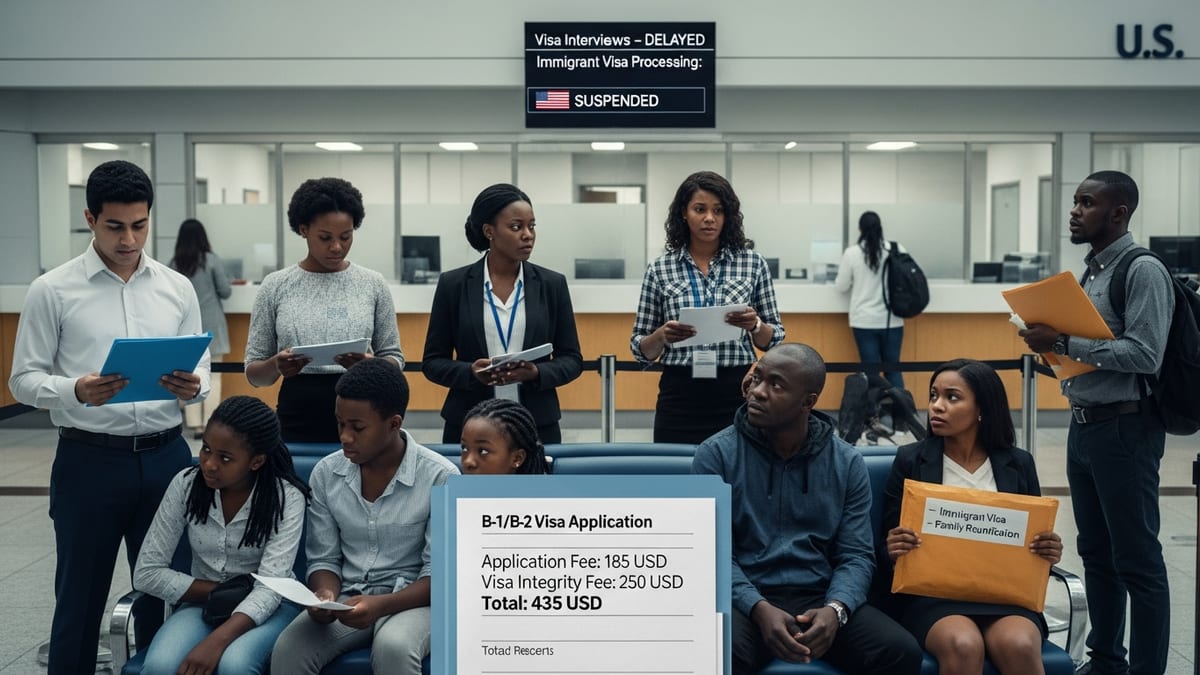
The bond policy operates alongside existing nonimmigrant visa application fees, which were raised in 2023 to 185 dollars for most visitor visas. For travelers from bond‑listed countries, this fee now represents only a fraction of the potential up‑front costs associated with securing permission to visit the United States.
New York’s International Visitor Mix Faces Added Friction
New York City remains one of the world’s most visited urban destinations, with federal data showing it as the top U.S. state visited by overseas travelers and international rankings placing the city among the global leaders by foreign arrivals. Industry reports for 2024 and 2025 describe a tourism sector that has largely recovered in headline numbers, with total visits and visitor spending close to or surpassing pre‑pandemic levels.
Beneath those aggregate figures, however, the composition of New York’s tourism base is shifting. Materials from New York City’s official tourism organization show that domestic tourism has powered recent gains, while the number of international visitors has grown more slowly and even edged down slightly in 2025. International travelers still account for a large share of spending in the city, but their overall proportion of visits has narrowed.
Visa bond rules introduce a new layer of friction for visitors from many emerging markets that local tourism officials have courted aggressively for more than a decade. Travelers from parts of Africa, South Asia and Latin America subject to bond requirements may now have to lock up several thousand dollars in addition to paying standard visa fees, airfare and New York’s relatively high accommodation costs. Industry observers warn that for price‑sensitive segments such as family visits, student‑related tourism and small business travel, these added costs could be decisive.
New York’s reliance on high‑spending international visitors magnifies the potential impact. Public financial assessments for the city and state show that tourism‑related industries support hundreds of thousands of jobs and tens of billions of dollars in wages, with international travelers contributing disproportionately to hotel, dining and shopping revenue. A modest decline in international arrivals from bond‑affected countries could therefore be felt in sectors that depend on long‑haul visitors who stay longer and spend more.
Florida’s Gateway Airports and Theme Parks Confront Higher Barriers
Florida, alongside New York, consistently ranks among the top U.S. destinations for overseas visitors, with Orlando and Miami serving as major entry points. International travelers are a core market for the state’s theme parks, cruise terminals and resort corridors, particularly during winter months and school holidays in Europe and Latin America. Visitor data compiled by federal agencies show Florida as one of the leading states visited by overseas tourists in 2024.
Tourism analysts note that several of the countries subject to U.S. visa bond requirements are rising or established source markets for Florida’s beaches and attractions, including Caribbean and Latin American nations with strong diaspora ties in Miami and other cities. For travelers from these countries, a discretionary bond requirement sits on top of airfare, accommodation, park tickets and insurance, pushing the total cost of a family holiday to new heights.
Industry commentary suggests that price‑sensitive travelers may respond in several ways, from shortening trips and downgrading hotel categories to choosing alternative destinations in the Caribbean, Mexico or Europe that do not require visas or large bonds. Cruise itineraries that embark from non‑U.S. ports may also become more attractive to travelers wary of complicated visa procedures. Florida’s businesses, which have benefited from the rebound in international travel in recent years, now face the risk that some of this recovery could be diverted elsewhere.
Local economic studies have repeatedly underscored the importance of international visitors for Florida’s tax revenues and employment, particularly in hospitality, transportation and retail. With global competition for tourists intensifying, higher entry costs tied to visa bonds may affect the state’s ability to win back and retain long‑haul travelers from bond‑listed countries.
Balancing Security Goals With Tourism Competitiveness
The U.S. government frames visa bonds as a targeted enforcement tool aimed at improving compliance with immigration rules rather than a broad restriction on travel. Regulatory analyses emphasize that consular officers retain discretion to require or waive bonds, and that the measure applies only to select countries based on overstay data and other risk indicators. In official filings, the State Department has argued that the policy could reduce overstay rates and administrative burdens over time.
Travel industry groups and some lawmakers, however, have raised concerns about the economic side effects of the program. Public letters to the State Department describe fears that steep bond requirements will deter legitimate travelers, especially from middle‑income countries, and slow the recovery of the tourism economy. Critics also question whether financial bonds are the most effective way to manage overstay risks, suggesting that improved data sharing, streamlined processing and expanded visa facilitation programs could achieve similar goals with less disruption.
For destinations like New York and Florida, the debate is not abstract. Their tourism economies depend on predictable, affordable access for millions of international visitors each year. Analysts point out that the bond program arrives at a moment when global travel is highly competitive, with rival destinations investing heavily in simplified e‑visas, visa‑free entry for key markets and targeted marketing campaigns. Increased friction at the U.S. border could push some travelers to opt for cities and resorts that are easier and cheaper to enter.
Observers also note that the United States is preparing to host major global events, including matches of the 2026 FIFA World Cup, which are expected to attract large numbers of foreign fans. Recent policy announcements have carved out specific exemptions from visa bonds for certain ticket holders, an acknowledgment that rigid requirements might otherwise suppress demand. The handling of such high‑profile events could serve as an early test of how visa bonds interact with large‑scale tourism flows.
Travelers Weigh Alternatives As Industry Adapts
On the ground, travel advisers report that visa rules and perceived hassle already factor heavily into destination choices, particularly for first‑time international travelers and families planning long‑haul trips. With visa bonds now part of the U.S. entry landscape for select nationalities, many potential visitors are conducting more detailed cost‑benefit comparisons between American destinations and competing markets.
New York and Florida still benefit from powerful brand recognition, extensive air connectivity and a deep roster of attractions, from Broadway and museums to beaches and theme parks. Yet these advantages may be tested if bond requirements persist and expand. Tourism boards and local businesses are likely to respond with promotions aimed at offsetting higher up‑front costs, while airlines and tour operators could adjust capacity and itineraries based on changing demand from bond‑affected countries.
Policy analysts suggest that monitoring data from the next two to three years will be critical. If bond rules correlate with a measurable decline in arrivals or spending from certain markets, pressure may build for targeted adjustments or expanded exemptions. Conversely, if overstay rates fall without major disruption to visitor flows, the program’s backers may argue that the bond mechanism can coexist with a healthy tourism economy.
For now, the new visa bond landscape adds another variable to an already complex global travel equation. As international travelers weigh where to spend their money and their limited vacation time, the balance between border control priorities and tourism competitiveness will remain in sharp focus for leading U.S. destinations such as New York and Florida.