


More news on this day
A fresh “worldwide caution” alert from the United States has drawn renewed attention to global security risks and left many Australian travellers asking how the warning could affect upcoming overseas plans.
Get the latest news straight to your inbox!
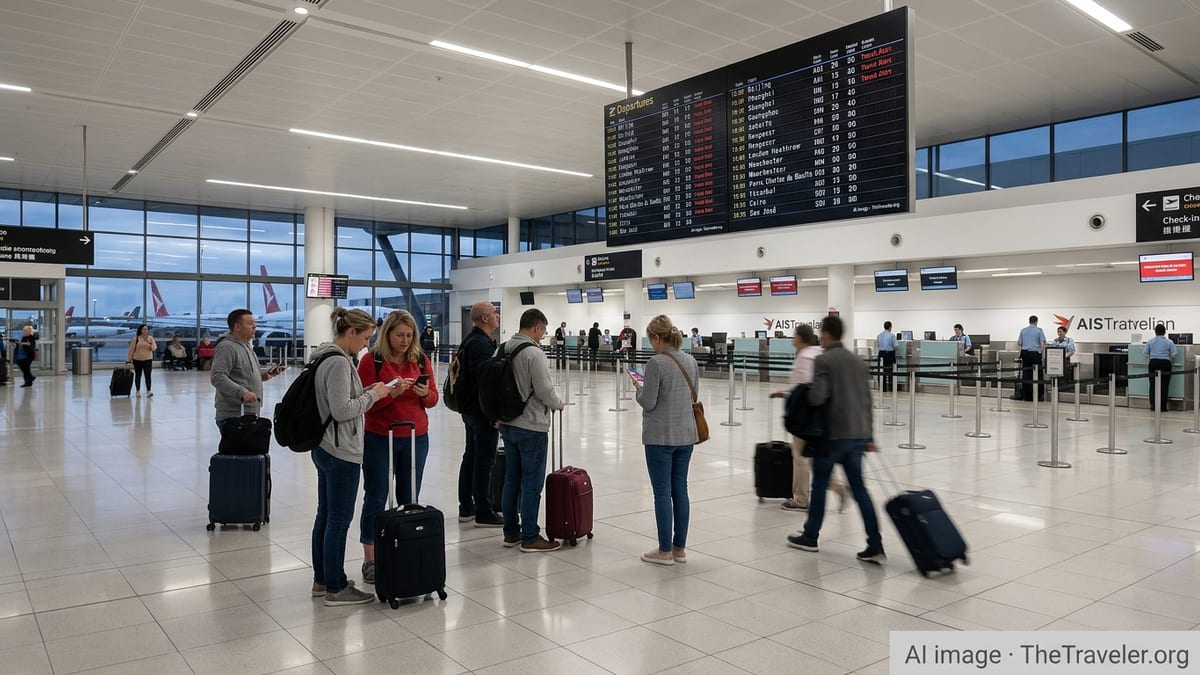
What the new US ‘worldwide caution’ alert actually means
The latest worldwide caution, updated by the US Department of State in July 2026, urges American citizens to exercise increased vigilance across all destinations, citing a complex and volatile security environment, particularly linked to tensions in the Middle East. The advisory highlights the potential for sudden escalations, disruptions to airspace and flight schedules, and the risk that US-linked facilities and interests could be targeted abroad.
Worldwide cautions are broad security alerts intended to flag elevated global risk rather than conditions in a single country. They typically reference concerns such as terrorism, geopolitical tensions or major regional conflicts, and they sit alongside country-specific travel advisories that remain the primary guide for risk in individual destinations.
For Australian travellers, the critical point is that the US notice is directed at Americans and US interests. However, because many Australians transit through the same hubs, visit the same crowded attractions and use the same airlines and airports, the overall risk environment described in the advisory has indirect implications for anyone on the move internationally.
Travel and aviation analysts note that such alerts do not automatically translate into immediate changes for tourists, but they can foreshadow short-notice disruptions, particularly on routes that cross or connect through politically sensitive regions.
How Australia’s advice differs from the US warning
While the US has elevated its global messaging through a renewed worldwide caution, Australia’s Department of Foreign Affairs and Trade (DFAT) continues to rely on its four-level country-by-country system, published through the Smartraveller platform. Each destination is assigned a level ranging from “exercise normal safety precautions” to “do not travel,” updated as security conditions evolve.
Recent DFAT updates emphasise that terrorism remains a worldwide threat and that the security outlook across parts of the Middle East is unpredictable. Official crisis-hub material notes that conditions can deteriorate rapidly and that airspace or key transit routes could be affected with minimal warning, even after diplomatic initiatives aimed at easing tensions.
Australia has recently adjusted its travel levels for several Middle Eastern states, shifting some destinations from “do not travel” down to “reconsider your need to travel” as on-the-ground assessments changed. That recalibration underlines that Canberra is not simply mirroring Washington’s global framing; instead, it is refining advice country by country based on its own risk assessments.
For Australians looking at the US alert, the practical benchmark remains DFAT’s rating for their specific destination, which may not change in response to a broad American advisory. However, the worldwide caution serves as a reminder to recheck local advice before departure, especially for any itinerary involving the Middle East or other historically high-risk regions.
Impact on Australians’ travel plans and transit routes
The most immediate implications of the US worldwide caution for Australians are likely to be indirect, particularly around transport networks, insurance decisions and appetite for stopovers in higher-risk regions. The US advisory flags the possibility of periodic airspace closures and flight disruptions, especially around the Middle East, which could affect popular long-haul routes connecting Australia to Europe and North America.
Australian carriers and major international airlines have already demonstrated a willingness in recent years to adjust routings, avoid certain conflict zones and temporarily suspend services when risk levels spike. For travellers, that can mean last-minute schedule changes, extended flying times or enforced rerouting through alternative hubs farther from areas of tension.
Travel insurers also watch global alerts closely. While a US worldwide caution alone may not automatically trigger policy changes, it can feed into underwriting decisions and assessments of what constitutes a “known event.” Australians are encouraged to read product disclosure statements carefully and confirm whether their policy covers disruptions or cancellations linked to geopolitical instability or security incidents in transit points.
Some travellers may choose to avoid particular hubs or overnight stopovers if they perceive greater risk, even when formal advice stops short of “do not travel.” Others may continue with their plans but factor in extra contingency time, flexible tickets or backup accommodation in case of unanticipated diversions.
What Aussies should do before and during overseas trips
Publicly available guidance from both Australian and US agencies converges on several practical steps for anyone heading overseas in a period of heightened global caution. The core message is to stay informed, be prepared for change and take personal security seriously, without necessarily abandoning travel altogether.
DFAT recommends that Australians subscribe to Smartraveller updates for each destination, including transit countries, so that any change in advice or new alert lands directly in their inbox. Crisis hub information stresses that subscribing to alerts, understanding local laws and customs, and having an emergency contact plan are central to safe travel in a volatile environment.
Security experts and official guidance alike emphasise basic situational awareness: avoiding large, unpredictable gatherings; paying attention to local media; knowing where consular assistance is available; and identifying exit routes in crowded venues such as transport hubs, stadiums and major tourist attractions. In regions with a history of attacks on foreign interests, extra caution around locations that may be seen as symbolic or high-profile is advised.
Travellers are also encouraged to keep digital copies of key documents, maintain access to funds in more than one form, and share itineraries and contact details with family or friends in Australia. Such steps do not eliminate risk, but they can make it easier to respond quickly if security conditions deteriorate or transport options suddenly narrow.
Balancing heightened alerts with ongoing demand for travel
The renewed US worldwide caution arrives at a time when international travel from Australia has largely rebounded, with strong demand for European summers, North American holidays and business trips across Asia. Airlines report that Australians are increasingly comfortable returning to long-haul itineraries, even as news cycles highlight conflicts, cyber incidents and large-scale disruptions.
Analysts point out that global travel has operated for years in an environment of elevated security awareness. Many destinations popular with Australians, including the United States, the United Kingdom and parts of Europe, have long carried advice to exercise at least a high degree of caution because of the generalised terrorism threat, even while remaining busy tourist markets.
For many Australians, the practical effect of the latest worldwide caution will be less about cancelling holidays and more about factoring risk into route choices, insurance cover and day-to-day behaviour abroad. Industry observers suggest that transparent communication about security, clear contingency plans and flexible booking options are likely to matter more than ever to travellers weighing where and how they go.
In that context, the US alert and Australia’s parallel messaging serve as a reminder that overseas trips now routinely involve a degree of strategic planning around safety. Rather than a signal to stay home, the current wave of advisories is being framed as a call for informed, adaptable travel in a world where geopolitical shocks can reverberate quickly through airports, airspace and tourist hotspots.