


The HSBC EveryMile credit card is marketed heavily to frequent travelers with glossy promises of easy miles, airport lounge access and premium travel perks. Yet many cardholders in Hong Kong and travelers who route spending through the card later discover that the real value of their rewards is far lower than they expected, or that annual fees and missed conditions quietly erode their gains. Understanding how the card actually earns, converts and charges you is the key to avoiding overpaying for what looks like a simple travel card.
Get the latest updates straight to your inbox!
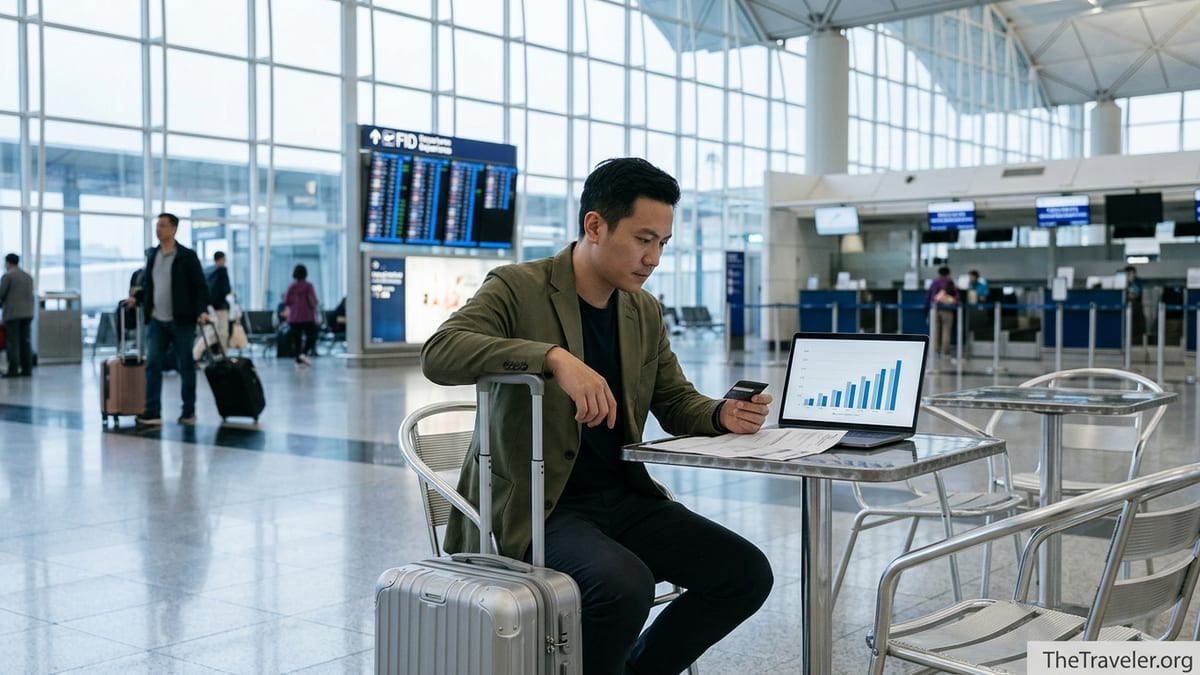
What the HSBC EveryMile Card Really Offers
The HSBC EveryMile credit card is positioned as a flexible travel card in Hong Kong, aimed at people who spend on overseas travel, flights, hotels and day to day purchases. Official HSBC materials highlight that you can earn RewardCash and then convert that into airline miles or hotel points, with headline copy suggesting you can earn miles from as low as about HKD 0.4 spent per mile when you factor in promotional earn rates at selected merchants and overseas transactions. In addition, new cardholder welcome offers often quote bonuses worth up to tens of thousands of miles for meeting a specified spending target in the first few months.
Behind the marketing, the card’s engine is RewardCash, HSBC Hong Kong’s proprietary rewards currency. You earn a percentage of your spend back as RewardCash, which can be redeemed directly against statement balances or converted to miles with more than a dozen airline partners, including Cathay Pacific’s Asia Miles, Singapore Airlines KrisFlyer and Qantas Frequent Flyer. HSBC has promoted a preferential conversion rate on its Reward+ app for EveryMile cardholders, for example 1 RewardCash converting to 20 miles or points with certain partners, which is much more generous than the base rate on other HSBC cards in Hong Kong.
For travel related spending, HSBC has also run targeted offers that boost your effective earn rate. A key example is the “Exclusive Overseas Spending Offer,” where EveryMile cardholders earn an additional layer of RewardCash for foreign currency transactions and then enjoy the preferential 1 RewardCash to 20 miles conversion on the app. Everyday spending at designated travel or lifestyle merchants can earn a higher base percentage of RewardCash, while general local spend earns at a lower rate. When combined, these features can make the card competitive for people regularly paying in foreign currencies or booking air tickets, hotels and tours.
On top of rewards, EveryMile has bundled benefits that appeal to travelers: a first year annual fee waiver, complimentary or discounted airport lounge access a limited number of times per year, and travel insurance when you charge full airfare to the card. On paper, someone flying from Hong Kong to Tokyo a few times a year, using lounges and converting RewardCash into miles for long haul redemptions, could see the card as a comprehensive travel tool. The catch is that the real value depends entirely on how you earn and redeem, and on whether ongoing fees are justified by your usage.
How Miles Are Actually Earned and Converted
The central question for a travel card is: what is the effective cost per mile you are paying through your spending? With EveryMile, this hinges on three moving parts: the RewardCash rebate percentage, any boosted rate at specific merchants or for overseas transactions, and the conversion rate from RewardCash into partner miles. HSBC’s own examples describe RewardCash earned as a percentage of spending, then illustrate how a preferential 1 to 20 conversion can translate into attractive headline “HKD per mile” figures.
Take a simple scenario. Suppose you spend HKD 10,000 on overseas hotels booked directly with the property on your EveryMile card during a promotional period that pays 1 percent RewardCash on foreign currency spend. You would earn HKD 100 in RewardCash. If, on the Reward+ app, EveryMile cardholders can convert 1 RewardCash to 20 Asia Miles, your HKD 100 becomes 2,000 Asia Miles. Your effective cost is HKD 5 per Asia Mile (HKD 10,000 divided by 2,000 miles). That is competitive but not outstanding in a market where some specialized miles cards can generate closer to HKD 3 to HKD 4 per mile on certain categories.
Now compare that with spending at a designated “everyday” or travel merchant where HSBC promotes a higher RewardCash rebate, for example an effective 2.5 percent on specific categories as detailed in their EveryMile everyday spend materials. Spend HKD 10,000 at such merchants and you could earn HKD 250 in RewardCash. Converted at 1 RewardCash to 20 miles, this equals 5,000 miles, or HKD 2 per mile. That is far more compelling, especially if you redeem those 5,000 miles as part of a long haul business class award that would otherwise cost several thousand Hong Kong dollars in cash.
Where cardholders often stumble is when the conversion path they choose is less favorable. HSBC allows RewardCash to be redeemed as statement credit or used to offset travel purchases directly in Hong Kong dollars. A typical non promotional rate is closer to HKD 1 of statement value per HKD 1 of RewardCash. Returning to our earlier example, HKD 100 RewardCash redeemed directly wipes HKD 100 off your bill. That is a clean 1 percent cashback on HKD 10,000 of spend, which might underperform simple cash back cards in the market. In contrast, funneling the same RewardCash into miles multiplies the theoretical value, provided you redeem the miles for higher value flights rather than low value redemptions such as short hops in economy where miles save you relatively little cash.
Annual Fees, Waivers and the Risk of Overpaying
The upfront proposition of the EveryMile card is attractive because the first year annual fee is typically waived for new cardholders, and the welcome bonus can be rich if you hit the initial spending threshold. The problem begins in year two. HSBC sets a standard annual fee at a level that can feel steep if you are not actively using the card for travel. Some cardholders in Hong Kong report discovering the fee only on their statement when it posts after the anniversary date, especially if they have multiple cards and rarely track the EveryMile account closely.
In practice, HSBC often ties annual fee waivers or rebates to minimum spend requirements or to ongoing relationship criteria. A traveler who charges, for instance, HKD 120,000 or more per year on the card, particularly in preferred categories, may find the bank more willing to grant a waiver when they call the hotline. Conversely, those who hold the card as a backup or only use it for a couple of trips a year can be surprised when the bank declines to waive the fee because their spend fell short of internal thresholds. Discussion threads among Hong Kong cardholders include examples of people having the EveryMile fee waived once but being refused in a later year, then instructed that the only way to avoid the charge going forward was to close the card.
To see whether you are overpaying, compare the annual fee to the value you are extracting from the card. Imagine your EveryMile annual fee is HKD 1,200 and you typically earn about 20,000 miles per year via the card. If you conservatively value Asia Miles at about 0.8 to 1.0 HKD per mile based on common economy and premium economy redemptions, those 20,000 miles are worth roughly HKD 16,000 to HKD 20,000 in flights if used well, but only if you would genuinely have bought those flights in cash. If your real usage pattern is one or two discount economy tickets on sales that cost HKD 1,500 to HKD 2,000 each, you may be effectively paying HKD 1,200 in fees to gain perhaps HKD 2,000 to HKD 3,000 of incremental value, and that is before accounting for the opportunity cost of using another card with better earn rates in your main spend categories.
The cleanest discipline is to mark your card anniversary in your calendar. A month before the fee is due, review how many miles you have earned in the last 12 months, how many you have redeemed, and what cash value those redemptions delivered for real trips, such as a Hong Kong to Bangkok weekend or Hong Kong to London visit. If your net gain after subtracting the annual fee is not decisively positive, either negotiate a waiver with HSBC by pointing to your spend, or be prepared to downsize to a no fee card and move your miles strategy elsewhere.
Foreign Transaction Fees, FX Spreads and Lounge Visits
Another underappreciated cost component of the EveryMile card is foreign currency spending. HSBC Hong Kong, like most banks, charges a foreign transaction fee on non Hong Kong dollar purchases, usually baked into the exchange rate and additional percentage fees, which can add around 2 to 3 percent to the cost of overseas transactions. Promotional campaigns that advertise boosted RewardCash for overseas spend can offset part of this, but rarely eliminate it entirely. The result is that unless you are consistently achieving close to HKD 2 per mile on those transactions through very good redemptions, you may be paying more in FX charges than you gain back in rewards.
Consider a concrete example. You book a boutique hotel in Paris charging EUR 1,000, which posts as roughly HKD 8,500 on your EveryMile card. Suppose the all in foreign transaction markup is 2.8 percent, making the real cost closer to HKD 8,738. HSBC runs a promotion granting you a 1 percent RewardCash rebate on foreign spend, so you gain HKD 87.38 RewardCash. Converted at a preferential 1 to 20 rate, that is about 1,748 miles. If those miles are worth about HKD 0.8 each in realistic economy redemptions, their value is around HKD 1,398 when used for a future flight. You have added meaningful value, but the incremental benefit is sensitive to how you redeem and whether another card without foreign transaction fees might have been more efficient for this particular charge.
Airport lounge access is another area where the perceived value can exceed the real one. HSBC has packed the EveryMile card with complimentary lounge visits via common lounge networks, sometimes capped at, for example, six free visits per year provided you meet minimum annual spend conditions or pay the annual fee in full. Travelers often assign a sticker price to these visits based on walk up rates posted at airport lounges, which can be HKD 250 to HKD 400 per visit. On that basis, six free visits look like HKD 1,500 to HKD 2,400 of value. In reality, only lounge visits you would have paid for anyway should count. If you normally grab a coffee and a snack at the gate for HKD 80, then sitting in a lounge with identical snacks is not a cash saving of HKD 300; it is closer to HKD 80 of avoided spend plus some intangible comfort.
Additionally, lounge access benefits can come with fine print: some programs require a small co payment after a certain number of complimentary visits, or only cover the primary cardholder, with guests charged separately. If you are evaluating whether to keep the EveryMile card in year two for the sake of lounge access alone, run through your upcoming trips. If you fly economy from Hong Kong to Taipei and Singapore twice a year, maybe you use four lounge visits at a realistic personal value of HKD 120 each, totaling HKD 480. That is unlikely to justify a HKD 1,200 annual fee if you are not also generating strong miles value on the card.
Real World Scenarios: When the Card Shines and When It Fails
To see the practical difference the EveryMile card can make, it is helpful to map it against common traveler profiles. Start with “Michelle,” a Hong Kong based consultant who flies to London and Singapore multiple times a year in economy and occasionally upgrades using miles. She charges HKD 200,000 per year on flights, hotels and work related travel expenses, much of it in foreign currency. If she routes a large share of that to EveryMile and concentrates on Category A merchants that earn the higher RewardCash rebate, she might capture well over HKD 4,000 in RewardCash annually. Converted at the preferential rate into Asia Miles, that could be 80,000 miles or more, enough for a return economy ticket from Hong Kong to Europe with taxes and surcharges paid in cash, or for an off peak upgrade to premium cabins. In that case, even with a HKD 1,200 annual fee and FX costs, Michelle clearly comes out ahead, particularly if she takes advantage of welcome bonuses and periodic spending offers.
Contrast that with “Eric,” a casual traveler who keeps EveryMile purely for the idea of building miles but mostly uses it to pay for local dining, supermarket runs and occasional online shopping, with only one holiday flight per year. Eric spends roughly HKD 60,000 annually on the card, mostly in non preferred categories earning the basic RewardCash rate. At 1 percent RewardCash rebate he collects around HKD 600 in RewardCash per year. If he forgets to optimize by converting to miles and instead uses the rewards as statement credit, his effective return is just 1 percent. Many no fee cards in Hong Kong now offer base cash back rates close to or above that level on major categories. Eric may then be paying a HKD 1,200 fee to receive HKD 600 of usable rewards each year, which is clearly a losing proposition.
A third scenario is “Anita,” a points enthusiast who holds multiple Hong Kong miles cards. She uses dedicated 4 miles per HKD 10 cards for online shopping and dining promotions such as those occasionally offered by HSBC’s other products or competitors, and reserves EveryMile purely for overseas transactions and big ticket travel purchases booked directly with airlines and hotels. Anita might only spend HKD 80,000 annually on EveryMile, but almost all in optimal categories and during promotional periods. She monitors the Reward+ app closely to convert RewardCash into whichever airline partner offers the best availability and value for her planned trips, like Cathay Pacific flights to Japan during shoulder season. For Anita, the card is not a standalone solution but a tactical tool in a portfolio, and its value is unlocked through active management of earn and burn strategies.
These examples illustrate a core point: the HSBC EveryMile card shines for travelers who can concentrate meaningful overseas or travel category spend, keep careful track of promotional earn rates and convert RewardCash into high value redemptions. The card fails for low spenders, casual users who default to statement credit, and holders who let annual fees renew without a clear plan. Overpaying happens not because the card is inherently bad, but because its structure rewards engaged, informed users far more than passive ones.
Maximizing Value Without Getting Trapped
If you already hold the HSBC EveryMile card or are considering applying, there are several practical habits that can dramatically reduce your chances of overpaying. First, treat miles as a planning tool rather than a surprise bonus. Before you spend aggressively on the card to chase miles, identify specific trips where you might redeem. For example, if you know you will fly Hong Kong to Osaka in the spring and Hong Kong to Sydney at year end, check typical mileage requirements and availability on your preferred airline partners, such as Cathay Pacific and Qantas. Having those targets allows you to judge whether the miles you earn through EveryMile will realistically translate into awards you will book.
Second, keep a simple spreadsheet or notes app log of your RewardCash balance, the last time you converted to miles, and your card anniversary. Review it quarterly. If your RewardCash is creeping up but your travel plans have changed, you might decide to cash out part of it as statement credit rather than risk points expiring or devaluing. HSBC can change conversion ratios or partner lineups over time, and airlines periodically raise award costs. Using your miles and points steadily for trips you take, such as annual family holidays to Thailand or regional city breaks, is almost always safer than hoarding for a once in a lifetime first class redemption that may never materialize.
Third, match the card to the right part of your spending. For many Hong Kong based travelers, the sweet spot for EveryMile is big foreign currency transactions where a strong miles earn plus the preferential conversion offsets FX fees, especially at travel merchants like airlines, hotels, online travel agencies and premium tour operators. For local day to day spend, a simpler cash back or specialized 4 miles per HKD 10 category card may yield better value. For example, using a separate card that offers boosted miles on online travel bookings while reserving EveryMile for direct airline or hotel purchases might lower your overall cost per mile.
Fourth, negotiate actively with HSBC about fees and benefits. In markets around the world, including Hong Kong, banks regularly waive or offset annual fees for profitable customers, particularly if you call and reference your total yearly spend on the card. Keep specific numbers on hand. If you can say, “I charged HKD 180,000 to my EveryMile card this year and converted RewardCash into 60,000 Asia Miles,” you have a stronger case than a vague request. If a waiver is denied and you no longer see a strong value proposition, be prepared to downgrade or cancel promptly rather than carrying the card for sentimental reasons like an unused lounge benefit.
The Takeaway
The HSBC EveryMile credit card is neither a guaranteed bargain nor a trap by default. It is a structured travel tool that can deliver excellent value for certain kinds of travelers and poor value for others. The difference depends on how much you spend in key categories, how you navigate HSBC’s RewardCash system, and how disciplined you are about annual fees and foreign transaction charges. Travelers who plan redemptions in advance, concentrate spend strategically and convert RewardCash into high value airline miles can come out ahead, especially when leveraging welcome offers and targeted overseas spend promotions.
On the other hand, casual users who rarely travel, scatter their spending across many cards or forget to convert RewardCash to miles can easily end up paying for lounge access they seldom use and annual fees they barely notice. For them, simpler products like no fee cash back cards or basic miles cards with lower complexity may offer better real world value. The safest path is to run the numbers using your own travel patterns and spending habits rather than relying on headline marketing. If the math shows that EveryMile delivers more in flights and benefits than it costs you in fees and FX, keep it as a core travel card. If not, relegate it to a niche role or step away and redeploy your spending where it works harder for your journeys.
FAQ
Q1. Is the HSBC EveryMile card worth paying an annual fee for if I only travel once or twice a year?For light travelers who take just one or two leisure trips annually and spend modest amounts on flights and hotels, the EveryMile annual fee is often hard to justify. In many cases you will earn relatively few miles, especially if much of your spending is in local currency on non travel categories, and the value of those miles plus any lounge visits may not exceed the fee. A no fee cash back card or a simpler miles card may offer better value unless you are confident you will channel enough high value foreign and travel spend through EveryMile.
Q2. How do I estimate the real value of miles earned with my EveryMile card?A practical way to estimate value is to track a specific redemption. For example, if you use 25,000 miles to book a Hong Kong to Tokyo economy ticket that would cost HKD 2,500 in cash plus HKD 500 in taxes, you are effectively getting HKD 2,000 of value from those miles, or about HKD 0.08 per mile. Compare that value against how much you spent to earn the miles and any annual fee you paid. If you had to put HKD 80,000 of spend through the card and pay a HKD 1,200 fee to get those 25,000 miles, your effective return may not be compelling.
Q3. Is it better to convert RewardCash to airline miles or to use it as statement credit?For most frequent travelers, converting RewardCash to airline miles gives higher potential value than redeeming it directly as statement credit at a roughly 1 to 1 rate in Hong Kong dollars. The preferential conversion rate for EveryMile holders on HSBC’s Reward+ app amplifies this. However, miles only outperform cash if you redeem them for flights you genuinely need at decent value per mile. If your travel plans are uncertain or you tend to book heavily discounted economy tickets where miles save you little, using part of your RewardCash as statement credit can be a safer, more transparent choice.
Q4. How do foreign transaction fees affect the value of my EveryMile rewards?Foreign transaction fees and FX spreads effectively increase the price you pay for overseas purchases, often by around 2 to 3 percent. If your RewardCash earn plus conversion to miles does not at least offset that added cost, you are paying extra for the privilege of earning miles. To check, take a representative overseas hotel bill, calculate the approximate FX fee, and compare it to the value of the miles you earned on that transaction. If the miles are worth less than the FX cost, consider using a card with lower or no foreign transaction fees instead.
Q5. Can I rely on lounge access alone to justify keeping the HSBC EveryMile card?Lounge access should be seen as a secondary perk rather than the main justification for holding EveryMile. The headline value of a lounge visit, often quoted as HKD 250 to HKD 400, overstates what many travelers would actually pay out of pocket. If you only use a few lounge visits a year and would otherwise just buy a coffee and snack, the real cash saving per visit is much lower. Unless you consistently use multiple visits and deeply value the comfort, lounge access alone rarely makes the annual fee worthwhile without strong rewards from spending.
Q6. What happens if HSBC refuses to waive my EveryMile annual fee?If HSBC declines to waive your annual fee after you ask, you can either accept the fee and continue using the card, reduce or stop using it and effectively overpay, or close or downgrade the account. Before deciding, review how much you have spent on the card in the past year, how many miles you earned and redeemed, and what tangible value you received from those redemptions. If the card has not clearly paid for itself, it is usually better to close it or move to a no fee option than to carry it out of habit.
Q7. How does the EveryMile card compare with simple cash back cards for everyday spending?For everyday local spending like groceries, utilities and casual dining, a straightforward cash back card with no fee and a stable 1 to 2 percent return can often outperform EveryMile, especially if you redeem RewardCash as statement credit instead of miles. The EveryMile card is optimized for travelers who will convert RewardCash into miles at preferential rates and redeem those miles efficiently. If you do not regularly book award flights or track conversion opportunities, the complexity of EveryMile may not deliver better value than a basic cash back product.
Q8. Do I risk losing value if I hoard miles earned via EveryMile instead of redeeming them regularly?Yes, hoarding miles exposes you to devaluations and changes in airline award charts, partner lineups and conversion ratios. Airlines frequently adjust the miles required for common routes, and banks can change the RewardCash to miles conversion terms. If you hold a large miles balance for years without redeeming, you may find that the same trip suddenly costs far more miles than before. It is generally safer to earn miles with specific redemptions in mind and to use them regularly for real trips rather than saving indefinitely.
Q9. Should I use the HSBC EveryMile card for online travel agency bookings or only for direct airline and hotel purchases?The best strategy depends on how HSBC classifies and rewards different merchants at any given time. In some promotional periods, direct airline and hotel transactions coded as travel may earn higher RewardCash rates, making them ideal for EveryMile. Online travel agencies can sometimes code differently and may not qualify for boosted earn. Check recent HSBC communications and your own statements to see where you are actually earning higher RewardCash. In many cases it can make sense to reserve EveryMile for direct bookings that clearly fall under preferred travel categories.
Q10. If I am new to miles and points, is the HSBC EveryMile card a good first travel card?EveryMile can work as a first travel card if you are willing to learn the basics of miles valuation, track promotions and use the Reward+ app to convert RewardCash efficiently. However, its value is not automatic, and the presence of annual fees and nuanced earn structures makes it less forgiving for beginners than some entry level cards. If you prefer simplicity, starting with a no fee cash back card and adding EveryMile later, once you know your travel patterns and redemption preferences, can be a more comfortable approach.