


The HSBC EveryMile Card is pitched squarely at frequent travelers in Hong Kong who want to turn everyday spending into airline miles and hotel points. With preferential earn rates on daily transport and cafes, flexible conversions to major frequent flyer programs, and regular welcome offers, it looks compelling on paper. But once you factor in fees, lounge quality, and how you actually book flights and hotels, is the EveryMile Card genuinely worth keeping in your travel wallet, or just an attractive-looking extra card? This review breaks down the current benefits and drawbacks, using real-world travel scenarios to help you decide.
Get the latest updates straight to your inbox!
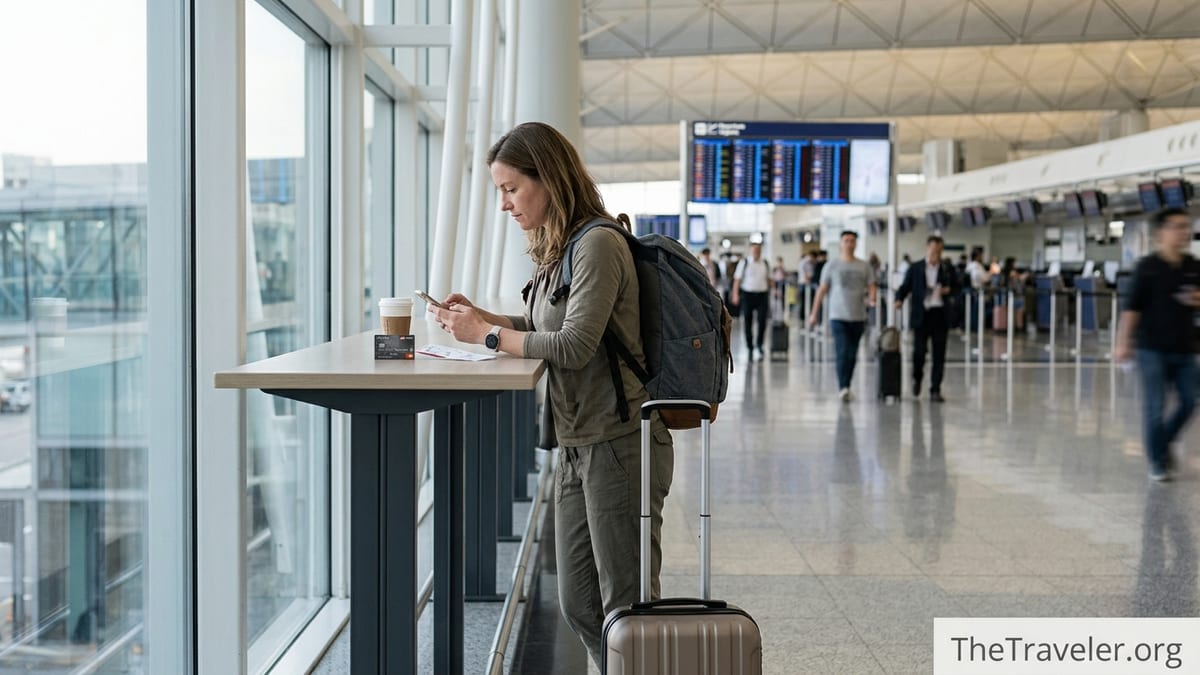
What Exactly Is the HSBC EveryMile Card?
The HSBC EveryMile Card is a Hong Kong issued travel rewards credit card designed to help cardholders earn airline miles and hotel points faster on both everyday and travel-related spending. Unlike many generic cashback cards, its reward structure is built around converting HSBC RewardCash into miles, which can then be moved into frequent flyer or hotel loyalty programs. That makes it most attractive to travelers who already value miles and are willing to track loyalty accounts rather than simply taking a flat cash rebate.
Issued on the Visa network, the EveryMile Card can be used globally wherever Visa is accepted. In practice, that means it can cover your daily MTR commute in Hong Kong, coffee runs at popular chains, and then your hotel bill in Tokyo or Paris on the same statement cycle. HSBC promotes it as a card you can keep at the front of your wallet throughout the year, not just when you buy an air ticket once or twice a year.
Crucially, the EveryMile Card earns RewardCash on all eligible spending, which can be converted into miles across a wide range of airline and hotel partners through HSBC’s Reward+ or mobile app platform. HSBC highlights that RewardCash can be turned into miles with programs such as Cathay Pacific Asia Miles, Singapore Airlines KrisFlyer, and other major carriers, so travelers are not locked into a single ecosystem. That flexibility is one of the card’s major selling points.
Because this is a Hong Kong product, almost all of the marketing, earn rates, and partner lists are calibrated to the Hong Kong market. If you are based in the United States, Europe, or Singapore, you will likely find more efficient local travel cards, but for Hong Kong–based travelers who regularly fly around Asia or to long haul destinations, EveryMile can fill a useful niche.
How the Miles Earning Structure Works in Practice
At the heart of the EveryMile Card is a higher earn rate on specific everyday and travel categories. HSBC currently promotes that spending at designated cafes and light meals, local transportation, cross-border transportation, and travel services can earn the equivalent of 1 mile per HKD2 spent, once you convert RewardCash to miles at the preferential rate. For general spending outside these categories, the rate falls to roughly 1 mile per HKD5 spent, which is more in line with standard Hong Kong rewards cards.
To understand what that means in a real itinerary, imagine you live in Kowloon and commute daily using MTR and buses, often paying for contactless fares with your HSBC EveryMile Card via a mobile wallet. If your monthly transport and coffee shop spend comes to around HKD3,000, and all of that falls into the designated everyday and travel categories, you would earn the equivalent of roughly 1,500 miles for that month. Spread across a year, that is about 18,000 miles just from your commute and casual dining, before you even add air tickets or hotel stays.
Now add a real holiday. Suppose you book a long weekend in Seoul, paying HKD4,500 for a return ticket on a full-service airline and HKD4,000 for three nights in a mid-range hotel in Myeongdong, both charged to your EveryMile Card. Airline tickets and hotel bookings often code as travel services, so between flights and hotel you might generate around 4,250 extra miles. Combined with your year of everyday spending, you could be sitting on more than 22,000 miles, enough for a one-way regional economy redemption with several Asian carriers, or a substantial discount on a longer-haul ticket once you top up from other sources.
There are limitations. Not every merchant is part of the “designated everyday spend” list, and some transactions that feel like travel, such as online bookings via certain third-party platforms, may not qualify for the highest earn rate if they are categorized differently by payment networks. Travelers who rely heavily on online travel agencies should check how those merchants are coded, or they may find they are only earning miles at the lower 1 per HKD5 rate.
Redemptions, Airline Partners, and Real-World Value
The core appeal of EveryMile is the ability to convert HSBC RewardCash into miles or points with a wide roster of partners. HSBC’s Hong Kong platform supports frequent flyer programs such as Cathay Pacific Asia Miles, Singapore Airlines KrisFlyer, and a variety of other international carriers and hotel chains, and EveryMile cardholders enjoy a preferential conversion rate that effectively works out to 1 RewardCash to 20 miles for eligible programs. In simple terms, this means your RewardCash balances stretch further when you are pursuing flight redemptions rather than pure cash rebates.
Consider a traveler planning an annual family trip from Hong Kong to Osaka. A typical full-service economy return ticket might cost around HKD4,000 to HKD5,000 per person outside major sales, while reward seats on popular routes can price around 18,000 to 25,000 miles one way in economy, depending on airline and season. If you and your partner each put your daily transport, dining, and travel spends on an EveryMile Card for a year, pooling the miles into a shared frequent flyer account, you could potentially cover one or even two one-way legs with miles and pay cash for the rest, reducing the overall trip cost by several thousand Hong Kong dollars.
The card also works well for opportunistic redemptions. For example, regionally based travelers often see promotional business-class redemptions from Hong Kong to Bangkok or Taipei in the 25,000 to 40,000 miles range one way. Someone who uses EveryMile as their primary card for both everyday categories and overseas spend could accumulate enough miles within a year or two to sample a lie-flat seat on a short-haul route, something that might otherwise feel extravagant when paid purely in cash.
For hotel stays, the calculus is more nuanced. Converting RewardCash to hotel points can offer good value at certain chains, especially during off-peak promotions or at mid-scale properties in Southeast Asia, but the value per point often fluctuates and can be lower than for premium-flight redemptions. Travelers who regularly stay at the same brand, such as Marriott or Hilton, may still find it attractive to feed their accounts with converted RewardCash, yet if you mostly book independent hotels on price rather than brand, the miles route will typically give you a clearer and more consistent value per dollar spent.
Fees, Lounge Access, and Travel Perks You Actually Feel
Like most travel cards in Hong Kong, the HSBC EveryMile Card typically carries an annual fee after an initial waiver, subject to spending requirements and promotions that change over time. Some cardholders report that HSBC is more flexible about waiving annual fees on certain products than on EveryMile, which reflects the bank’s positioning of this card as a more benefit-rich travel product. Travelers should assume there will be an ongoing cost to hold the card unless explicitly waived and should evaluate whether their annual mileage earnings and perks justify that expense.
On the foreign transaction side, EveryMile is not positioned as a zero-forex-fee card. That means overseas purchases in, for example, Tokyo, Paris, or New York will incur the typical spread and conversion fees seen on most Hong Kong credit cards. For a traveler who frequently spends overseas and values fee savings as highly as miles, pairing EveryMile with a low- or no-foreign-transaction-fee card for large foreign-currency purchases can be a smart strategy. You might, for instance, pay your European hotel bill with a low-fee global debit card but still put your local Hong Kong transport and cafes on EveryMile for the superior earn rate there.
Lounge access is one of the more controversial aspects of the card. HSBC advertises complimentary access to selected airport lounges and dining outlets via a partner network. In practice, cardholders in Hong Kong report that while the list of lounges is reasonably broad on paper, the experience can feel underwhelming compared with premium lounge networks tied to higher-tier cards or airline status. For example, travelers passing through Hong Kong International Airport might find the EveryMile-linked lounges more crowded or more basic than flagship airline lounges, with less impressive food and beverage options.
That does not mean the perk is useless. For a budget-conscious traveler flying economy to Bangkok or Taipei, getting into a quiet space with complimentary snacks and drinks before a short regional flight still has clear value, especially during peak travel periods. However, if your primary reason for getting a travel card is top-tier lounge access, there are stronger products, such as HSBC’s own premium cards or dedicated infinite-tier cards from other issuers, that may justify a higher annual fee with more comfortable lounges and broader global coverage.
EveryMile vs Other Travel Cards: How It Stacks Up
To judge whether the EveryMile Card is worth it, it helps to compare it to alternative strategies available to a frequent traveler based in Hong Kong. Locally, many banks offer co-branded airline cards tied to a single program, such as a dedicated Cathay or Asia Miles card. Those products sometimes deliver slightly higher miles per dollar on air tickets with the partner airline but lock you into one ecosystem. By contrast, EveryMile’s flexibility across multiple airlines makes sense for travelers who chase the best flight deals rather than loyalty to a single carrier.
There are also competing multi-airline travel cards and premium lifestyle cards from global banks. For example, in other markets HSBC promotes products like the Visa Infinite or TravelOne card, which offer higher earn rates on overseas spend, instant conversions within a mobile app, and more generous lounge access. A Hong Kong traveler who frequently flies in premium cabins or values concierge services might lean toward these more upmarket products if they qualify on income and are comfortable with higher annual fees. In that context, EveryMile functions more as a mid-tier miles card that bridges the gap between simple cash rebate cards and top-shelf luxury travel cards.
It is also worth comparing EveryMile to straightforward cashback cards. For a traveler who flies only once a year and rarely redeems miles, a strong cashback card that returns a flat 1 to 2 percent on all spending may offer clearer, more flexible value than chasing miles. For instance, if you spend HKD120,000 a year and earn 1.5 percent cashback, you are effectively getting HKD1,800 back, which you can apply directly against travel expenses, without worrying about blackout dates or award inventory. With EveryMile, the same spend might net you a flight redemption that is worth more or less than HKD1,800 depending on how strategically you redeem.
The sweet spot for EveryMile tends to be travelers who fly multiple times a year on economy or premium economy and are comfortable watching award charts. If you often travel from Hong Kong to regional hubs like Singapore, Bangkok, or Taipei and occasionally to long haul destinations such as London or Vancouver, and you are willing to plan redemptions in advance, EveryMile’s combination of everyday earn categories and flexible partners can provide outsized value compared with flat cashback.
Real-Life Scenarios: Who Will Benefit Most?
Consider three types of travelers to see how the EveryMile Card may perform in reality. First, the urban commuter who flies regionally a few times per year. This traveler rides the MTR or buses daily, occasionally takes taxis, and eats at chain cafes and mid-priced restaurants several times a week, mostly around HKD5,000 in monthly cardable spend. They also take two or three short trips a year to destinations like Taipei, Bangkok, or Tokyo, booking economy tickets and mid-range hotels. For this profile, putting transport and dining on EveryMile can generate a meaningful stream of miles, often enough to cover one regional ticket every year or two.
Second, the long-haul leisure traveler who takes one big family holiday per year, such as Hong Kong to London or Los Angeles. Airfares for those routes can be expensive, and award availability can be competitive. If this traveler charges a large annual spend of HKD200,000 or more, including the big trip and all local expenses, they could build a sufficient mileage balance to offset a portion of a long-haul booking or upgrade from economy to a higher cabin on one leg. The value is strongest if they are flexible on dates and destinations, for example flying in shoulder seasons or choosing nearby hubs rather than only peak nonstop flights.
Third, the infrequent flyer. Someone who rarely leaves Hong Kong and mostly uses cards for groceries, utilities, and occasional dining might struggle to extract maximum value. Miles-based cards reward those who travel enough to redeem before miles expire and who pay attention to promotions. If you are more likely to forget about your miles balance until it expires than to study award routes to Seoul or Sydney, a simpler cashback or low-fee card may be a better fit. In that case, the EveryMile Card might still be useful as a second card for specific promotions, but not necessarily worth paying an ongoing annual fee.
Another practical consideration is your tolerance for managing multiple loyalty accounts. EveryMile’s strength is its ability to feed many airline and hotel programs, but that also means keeping track of logins, expiry rules, and balances. Travelers who already maintain, say, Asia Miles and KrisFlyer accounts and comfortably move points between programs will feel right at home. Those who prefer to keep things simple may find the variety overwhelming and might derive more peace of mind from a single, co-branded airline card.
The Takeaway
For Hong Kong–based travelers who value miles and are prepared to use them strategically, the HSBC EveryMile Card can absolutely be worth it. Its enhanced earn rate on everyday categories like local transportation and cafes, combined with a competitive miles conversion rate and access to multiple airline and hotel partners, makes it a strong mid-tier travel card. Used correctly, it can turn your MTR commutes, coffee runs, and annual holidays into flights that would otherwise cost several thousand Hong Kong dollars in cash.
However, the card is not universally ideal. The annual fee, variable lounge experience, and standard foreign transaction charges mean it is not the best choice for travelers who want premium lounge comfort, ultra-low fees on overseas spending, or a totally hands-off rewards experience. It also requires a bit of homework around merchant categories and redemption options to unlock full value.
If you are an engaged traveler who flies multiple times a year, enjoys optimizing miles, and is based in Hong Kong or spends heavily there, the HSBC EveryMile Card deserves serious consideration as part of your travel wallet. If you prefer simplicity, travel infrequently, or prioritize rock-bottom overseas fees, a strong cashback card or a different travel product may serve you better. Ultimately, the EveryMile Card is most rewarding when it is one piece of a deliberate travel rewards strategy, not a card you sign up for and then forget in a drawer.
FAQ
Q1. Is the HSBC EveryMile Card available to travelers outside Hong Kong?
The HSBC EveryMile Card is primarily issued in Hong Kong and targeted at residents there. Travelers based in other regions, such as the United States or Europe, will generally not be able to apply directly and may find that HSBC or other banks offer different travel-focused cards tailored to their local markets.
Q2. How many miles can I realistically earn in a year with the EveryMile Card?
A typical urban traveler who spends around HKD8,000 to HKD10,000 per month across transport, cafes, dining, and some travel bookings could reasonably accumulate tens of thousands of miles per year, especially if much of that spend falls into the designated everyday and travel categories. The exact figure will vary based on how much you spend, which merchants you use, and how consistently you charge those expenses to the card.
Q3. Are the airport lounges included with EveryMile comparable to airline business-class lounges?
In most cases, no. The lounges accessible with the EveryMile Card tend to be contract or third-party lounges, which usually offer basic seating, simple buffet options, and standard drinks. They are a step up from waiting at the public gate area but generally fall short of flagship airline business or first-class lounges in terms of food, privacy, and amenities.
Q4. Does the HSBC EveryMile Card waive foreign transaction fees?
The EveryMile Card is not positioned as a no-foreign-transaction-fee product. When you use it overseas, your purchases are subject to standard currency conversion spreads and fees typical of Hong Kong credit cards. Travelers who prioritize minimizing overseas fees may want to pair EveryMile with a separate low-fee card for large foreign-currency transactions.
Q5. How flexible are the airline and hotel partners for mile transfers?
The card connects to a broad roster of frequent flyer and hotel loyalty programs through HSBC’s rewards platform, including major Asian and international carriers and well-known hotel chains. While the exact partner list can change, the overall structure is designed to offer flexibility, allowing you to shift RewardCash into the programs where you see the best redemption value at the time.
Q6. Is the HSBC EveryMile Card better than a co-branded airline card?
It depends on your habits. If you are loyal to a single airline and primarily fly with that carrier, a co-branded card might offer slightly higher miles on its tickets and extra perks like priority check in. If you chase the best fares across multiple airlines and want the option to move miles where you need them, the flexibility of EveryMile’s multi-partner model can be more valuable.
Q7. Can I use the EveryMile Card for large travel bookings through online travel agencies?
Yes, you can charge flights and hotels booked through major online travel agencies to the EveryMile Card, but the miles you earn will depend on how those merchants are categorized by the payment network. Some platforms code clearly as travel, which should qualify for higher earn rates, while others may not. If maximizing miles is crucial, it can be worth checking past statements or asking HSBC how specific merchants are treated.
Q8. What type of traveler gets the most value from the EveryMile Card?
The card tends to work best for frequent or semi-frequent travelers based in Hong Kong who are comfortable managing miles, have regular spending in the designated everyday categories, and take several trips per year. Travelers who enjoy planning redemptions, watching award availability, and combining the card with airline and hotel promotions are most likely to unlock outsized value.
Q9. Is it worth keeping the card if my travel plans change and I fly less often?
If you stop traveling regularly, the value of a miles-focused card can diminish quickly, especially if you are paying an annual fee. In that situation, you might use up your existing miles on short-haul redemptions or upgrades, then consider downgrading or switching to a no-fee or cashback product that better matches your reduced travel activity.
Q10. Does the HSBC EveryMile Card make sense as my only credit card?
For many travelers, EveryMile works best as part of a small mix of cards rather than the sole card in their wallet. You might, for instance, rely on EveryMile for transport, cafes, and selected travel spend while keeping a strong cashback card for non-bonused categories and a low-fee card for big foreign-currency purchases. That layered approach lets you balance miles earning with simplicity and cost control.