


More news on this day
Vertical Aerospace has completed the first piloted flight of its final full-scale VX4 prototype in the United Kingdom, a milestone that strengthens the company’s electric air taxi ambitions and expands its capacity to test next-generation zero-emission aircraft.
Get the latest news straight to your inbox!
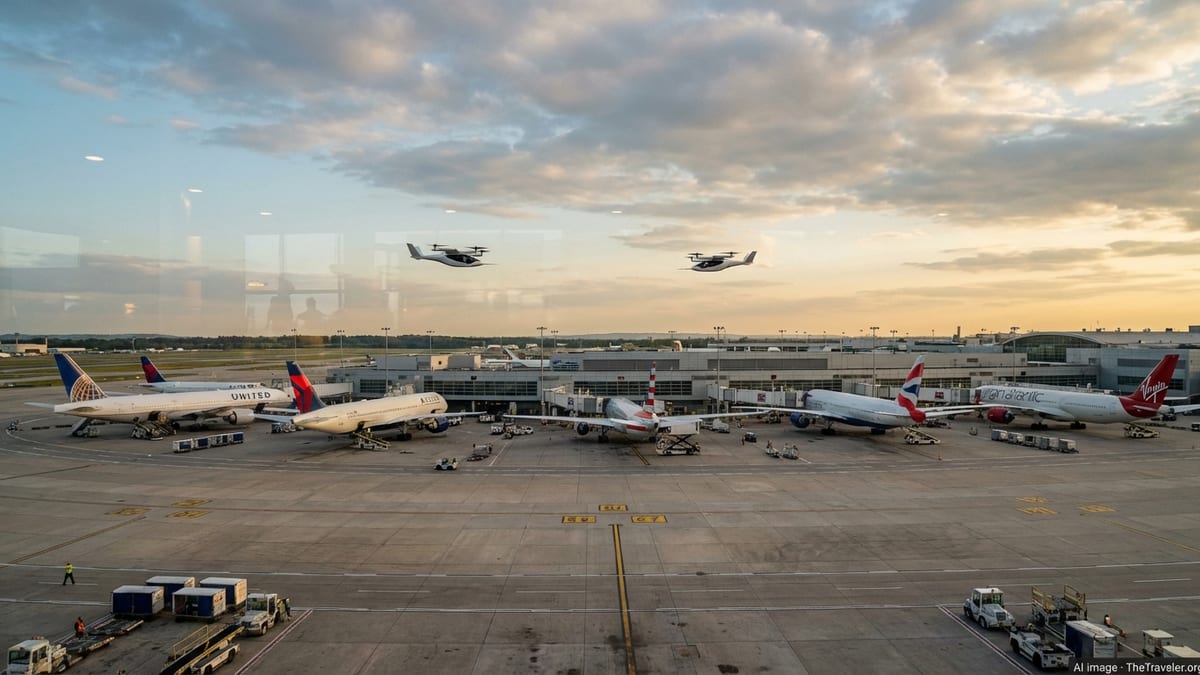
Final Prototype Takes to the Sky in the UK
Publicly available information indicates that the latest full-scale VX4 took off on its maiden piloted flight on June 5, 2026, at Vertical’s Flight Test Centre in the United Kingdom. Reports describe the flight as a controlled, thrustborne sortie that forms part of the company’s expanding piloted test campaign for the VX4 electric vertical takeoff and landing aircraft.
The aircraft is identified as Vertical’s third and final full-scale prototype, created to double the company’s flight-test capacity after earlier demonstrators logged extensive hours in tethered, hover, wingborne and transition trials. Earlier updates showed that assembly of this prototype was completed in late 2025, with commissioning and early ground tests leading up to the first flight window in early 2026.
Coverage of the event notes that the flight was conducted with a company test pilot at the controls, continuing a piloted flight test strategy that Vertical has followed for several years. This approach is presented as a way to collect certification-relevant data in real-world conditions, including handling qualities across a range of speeds, altitudes and tilt rotor positions.
According to recent business updates, the company views this new prototype as an essential bridge between technology demonstrators and the eventual certifiable air taxi, giving engineers greater freedom to experiment with systems, configurations and operating envelopes while the design of the production aircraft is finalized.
From Transition Milestones to a Growing Test Fleet
The first flight of the final full-scale prototype follows a series of high-profile test milestones for the VX4 program earlier in 2026. In April, published coverage described a full piloted transition flight in which a VX4 prototype moved from vertical, helicopter-like flight into horizontal, wingborne cruise and then back again within a single sortie.
That transition marked the culmination of a multi-phase piloted program that began with tethered hovering, progressed through free hovers and low-speed maneuvers, and then expanded into wingborne flight and transition regimes. Each phase has been carried out under a Permit to Fly from the UK Civil Aviation Authority, with the regulator overseeing the expanding test envelope.
The addition of the final prototype means Vertical now operates multiple full-scale VX4 aircraft in the air, a rarity within the emerging eVTOL sector. Industry observers indicate that this expanded fleet allows parallel test activities, including systems reliability work, high-tempo envelope expansion, and specific missions such as noise characterization and emergency procedures.
Analysts following the program suggest that the combination of transition flight achievements and the arrival of a second flying prototype positions Vertical among a small group of eVTOL developers that have demonstrated full-scale, piloted transition and are now focusing on the more routine, repetitive testing required for certification.
Implications for the Valo Electric Air Taxi and Hybrid Program
While the VX4 prototype family has been the public face of Vertical’s test activity, recent investor and technical briefings indicate that the company is now framing the piloted fleet as a technology pathfinder for its Valo production aircraft. The latest prototype is described as closely aligned with the architecture and performance targets of Valo, allowing large portions of the test data to feed directly into the certifiable design.
Company presentations and press materials also connect the VX4 test work to a broader strategy that includes a newly announced hybrid-electric variant targeting longer ranges and defense and logistics missions. The hybrid concept, outlined earlier in 2026, is intended to complement the all-electric Valo by extending operational reach beyond typical urban air mobility routes.
According to publicly available planning documents, Vertical is working toward a Critical Design Review that will lock in the configuration of the Valo air taxi. The availability of a second, more advanced full-scale prototype gives engineers additional evidence on aerodynamics, propulsion performance, battery behavior and flight controls before that design is frozen.
Industry commentary notes that Vertical, like many eVTOL developers, has adjusted its certification outlook over the past year. Timelines discussed in recent reports point toward a target around 2028 for full type certification, reflecting both the technical demands of novel aircraft and evolving regulatory frameworks in key markets.
Certification Path, Financing and Market Context
The latest flight milestone comes at a time when the advanced air mobility sector is in a critical phase, balancing ambitious entry-into-service targets with the realities of certification complexity and capital needs. Recent analyses of leading eVTOL programs highlight a pattern of schedule adjustments, including Vertical’s own shift to a later certification date compared with initial projections.
Financial disclosures and market commentary show that Vertical has been assembling multi-hundred-million-dollar financing packages to support continued development, flight testing and early manufacturing. Observers point out that the cost of reaching certification for next-generation aircraft is substantial, with investment required not only for prototypes but also for production tooling, supply chain development and safety compliance.
At the same time, Vertical continues to reference a sizeable pre-order and option book from airlines and operators interested in future electric air taxi services. While such commitments are generally conditional on certification and regulatory approvals, they are frequently cited by industry watchers as an indication of long-term demand for low-noise, zero-operational-emission aircraft in urban and regional markets.
For the wider sector, each new piloted prototype flight offers additional evidence that electric propulsion and distributed lift concepts can be scaled to full-size passenger aircraft. Vertical’s newest VX4 sortie is therefore likely to be monitored closely not only by prospective customers and investors, but also by competitors and regulators seeking real-world data to inform the next phase of electric aviation policy and infrastructure planning.
What the Milestone Means for Future Travelers
Although commercial electric air taxi operations remain several years away, developments such as Vertical’s latest piloted flight offer a glimpse of how short-haul travel could change later in the decade. The VX4 and future Valo aircraft are being positioned for routes such as city-center to airport shuttles, regional point-to-point hops and premium on-demand mobility services.
Analysts say that, if certification and infrastructure progress as planned, passengers could one day experience quieter departures from dedicated vertiports, rapid climbs to low cruising altitudes and short sector times across congested metropolitan areas. Electric propulsion and advanced flight control systems are expected to reduce operational emissions at the point of use and help manage noise footprints near urban hubs.
For now, the first piloted flight of Vertical’s final full-scale prototype represents another technical step rather than an immediate change to airline schedules. However, it deepens the pool of real-world test data and extends the company’s experience with full-scale electric aircraft, both of which are seen as essential precursors to carrying paying passengers.
As the test campaign continues, travel industry observers will be watching how Vertical and other eVTOL developers navigate certification hurdles, scale up manufacturing and work with airports and cities to integrate electric aircraft into existing transport networks. The success or setbacks of these efforts are likely to shape the pace and form of electric aviation for travelers worldwide.