


More news on this day
Viking has welcomed its 13th ocean ship into the fleet, a newbuild constructed by Fincantieri in Ancona, Italy, lifting the company’s total ocean capacity to 12,226 passengers and signaling another milestone in the line’s measured premium-growth strategy.
Get the latest news straight to your inbox!
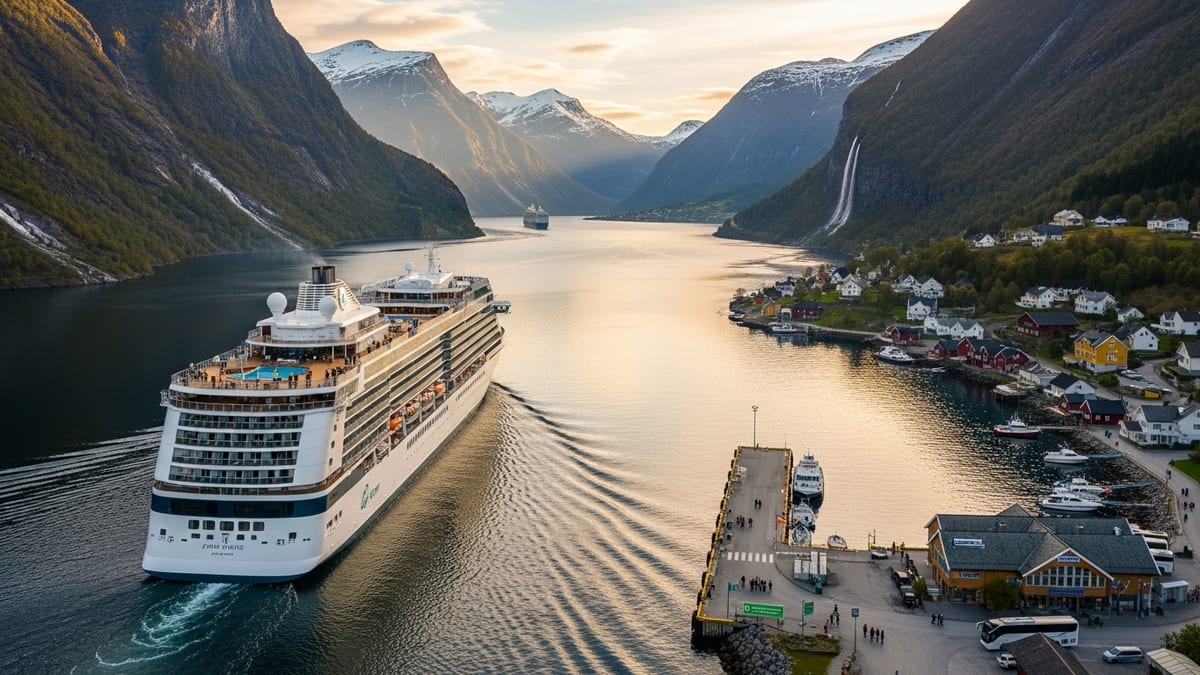
New Ancona Delivery Marks a Fresh Milestone
The newest Viking ocean vessel was formally delivered at Fincantieri’s Ancona yard in late May 2026, according to industry coverage of the handover. The ship follows the line’s familiar all-veranda, mid-size blueprint and slots into the existing class without major changes in exterior profile, reinforcing Viking’s preference for a consistent fleet rather than a mix of disparate designs.
Reports indicate that the ship carries just under 1,000 guests at double occupancy, which brings Viking’s total ocean capacity to 12,226 passengers across 13 ships. That figure reflects a decade of expansion since the brand’s first ocean ship debuted in 2015, and it highlights how a series of similar-sized vessels can collectively rival the berth count of much larger individual megaships operated by mass-market competitors.
Publicly available information shows that Viking continues to work almost exclusively with Fincantieri on its ocean fleet. The Italian builder has become closely associated with the line’s identity, producing vessels that prioritize balcony cabins, ample outdoor space and a relatively low passenger count compared with mainstream cruise ships of similar length.
While full technical specifications for the 13th ship mirror previous sisters, industry databases suggest a gross tonnage in the mid-50,000 range and crew complements aligned with earlier units. This keeps the ship firmly within the upper premium segment rather than the very large resort-style category that dominates many contemporary newbuild orders.
From 10,000 Berths to a 12,226-Passenger Ocean Fleet
Viking crossed the 10,000-berth threshold in 2025 with the delivery of its 12th ocean newbuild, a milestone tracked by trade publications that monitor global cruise capacity. The latest delivery moves that benchmark further, with total ocean capacity now reported at 12,226 guests, an increase of more than 20 percent in roughly a year.
Financial and regulatory filings for Viking’s listed parent company show that the ocean division has been a key driver of revenue growth, supported by high occupancy and strong advance bookings. The addition of another ship provides more inventory to meet demand while preserving the line’s preference for longer, destination-focused itineraries rather than very short, high-volume sailings.
Compared with rivals that deploy ships carrying well over 4,000 guests each, Viking’s approach distributes capacity across multiple smaller units. For travelers, that typically translates into fewer passengers on board, a higher ratio of balcony cabins and a quieter onboard atmosphere, while still delivering a significant global footprint when all 13 ocean ships are taken together.
The increased capacity also supports a growing range of regional programs. By adding another vessel of similar size and design, Viking can fine-tune deployment without introducing a one-off prototype that would complicate fleet operations, provisioning and crew training.
Orderbook Extends Growth Through the Next Decade
Although the newest delivery marks the 13th ocean ship currently in service, publicly available orderbook data shows that Viking’s expansion is set to continue through at least 2031. Multiple ocean newbuilds are under contract with Fincantieri, including ships scheduled for 2026, 2027 and beyond, some of which are expected to incorporate advanced propulsion and energy systems.
Among the most closely watched projects are Viking Mira and Viking Libra, both slated for 2026 delivery, and additional vessels due later in the decade. Earlier announcements have highlighted that Viking Libra is designed to be capable of operating on hydrogen in certain modes, signaling the brand’s interest in lower-emission technologies as regulations tighten and consumer expectations shift.
Corporate disclosures indicate that by 2031 Viking expects to operate a combined fleet of more than 20 ocean and expedition ships, alongside a large river-cruise division. Within that broader context, the arrival of the 13th ocean ship is one step in a long-term capacity plan that has been gradually accelerated via amended shipbuilding contracts and new options.
Industry analyses point out that Viking’s contracted capacity represents a sizable share of new berths entering the luxury and upper-premium ocean segments over the rest of the decade. This gives the company significant influence over deployment patterns in destination-intensive cruising, particularly in Europe, the Mediterranean and increasingly in longer world and grand voyages.
Design Consistency and Onboard Experience Remain Central
Viking’s ocean ships share a nearly identical layout, and the 13th vessel continues that pattern. Publicly available deck plans show an all-balcony accommodation mix, multiple dining venues without assigned seating, and a spa and thermal area that is included in the cruise fare, features that have become hallmarks of the brand’s positioning.
By keeping to a standard platform, Viking can replicate a familiar onboard experience from ship to ship, which appeals to repeat guests moving between itineraries. Reports from past deliveries indicate that new vessels typically introduce only incremental refinements, such as refreshed interior palettes or small adjustments to public spaces, rather than radical redesigns.
From an operational perspective, uniformity simplifies crewing and maintenance, as staff can transfer between ships with minimal retraining. It also allows the company to roll out upgrades, such as revised lounge concepts or new dining menus, consistently across the entire ocean fleet, including the latest addition.
For ports, the ships’ size and configuration mean that Viking can access some destinations that are more challenging for very large vessels. The 13th ship adds another unit with this same footprint, which may open additional options for shoulder-season and off-peak deployments as port infrastructure and regulations evolve.
Competitive Implications in the Premium Cruise Market
The arrival of Viking’s 13th ocean ship comes at a time when the premium and luxury cruise sectors are seeing renewed investment and new entrants. Several established lines are expanding their own boutique-style fleets, while hotel and rail brands are moving into small-ship cruising, intensifying competition for affluent travelers.
Market commentary suggests that Viking benefits from a clear and consistent brand message, focused on culturally oriented itineraries, minimal onboard upselling and a largely adult clientele. The increased capacity to 12,226 ocean berths strengthens that position by allowing the line to add departures in high-demand regions without substantially changing its product.
At the same time, the company faces the challenge of maintaining strong pricing and high load factors as more ships join the fleet. Analysts following the sector note that Viking’s booking curves have remained robust, with a significant share of capacity often sold well in advance, a trend that supports ongoing investment in additional tonnage.
As the 13th ship enters regular service and future vessels move through construction at Fincantieri yards, observers will be watching how Viking distributes its growing capacity between established itineraries and newer routes. The latest delivery, raising fleet capacity to 12,226 passengers, suggests that the line intends to remain a central player in the premium ocean cruise market for the foreseeable future.