


More news on this day
Thousands of airline passengers across the United States faced long lines, missed connections and overnight airport stays as a new wave of cancellations and delays rippled through North Carolina, Georgia, Texas, Massachusetts, Florida, New York and California, disrupting operations at major carriers including American Airlines, Delta Air Lines, JetBlue and Southwest.
Get the latest news straight to your inbox!
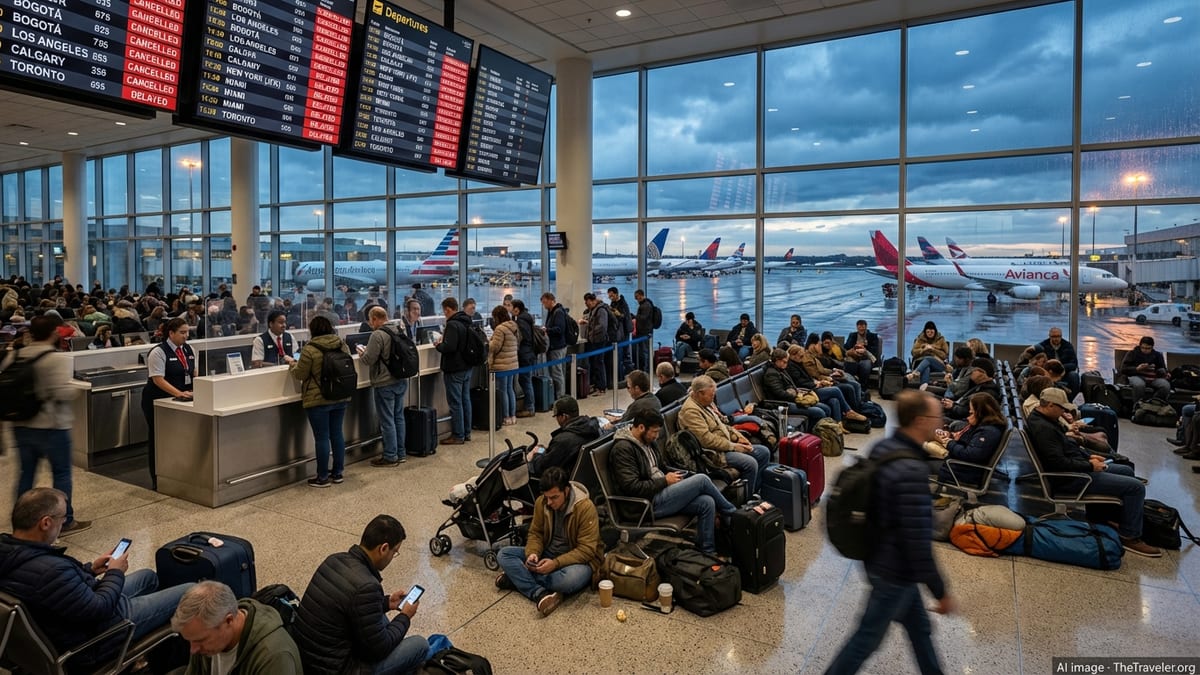
Disruptions Mount Across Key US Hubs
Tracking data from major aviation analytics platforms shows at least 376 flights canceled and more than 800 delayed in a single day across the affected states, creating bottlenecks at some of the country’s busiest airports. The pattern echoes previous weather and operational shocks that have repeatedly tested airline and airport resilience over the past several seasons.
In the Southeast, flight activity into and out of hubs in North Carolina and Georgia has been particularly vulnerable. Past storm systems have repeatedly triggered ground delay programs in Atlanta, where even a brief stoppage at Hartsfield Jackson can leave hundreds of flights backed up and cause rolling disruptions across airline networks for days. Similar dynamics are now appearing, with passengers reporting hours long waits at gates and crowded rebooking counters.
Further west, operations in Texas have also been hit. Dallas Fort Worth International and Dallas Love Field are critical points in the networks of American Airlines and Southwest, meaning local outages or slowdowns quickly spill over into cities nationwide. Recent telecommunications and weather issues in the region have shown how a localized problem can leave aircraft and crews out of position, complicating efforts to restore schedules quickly.
In the Northeast, Massachusetts and New York continue to experience recurring air travel turbulence whenever storms or strong winds pass through. Previous winter weather events brought thousands of cancellations at New York area airports and Boston Logan within just 24 hours, and the latest round of disruptions again underlines how tightly packed schedules at these hubs can unravel when conditions deteriorate.
Major Carriers Struggle to Contain Cascading Delays
Publicly available data indicates that the current wave of cancellations and delays has hit the country’s largest carriers hardest. American Airlines, Delta Air Lines, JetBlue and Southwest all operate dense schedules through the affected states, making them particularly exposed to any disruption that knocks aircraft or crews out of their planned rotations.
Industry records from recent years provide a clear illustration of how quickly such problems can scale. During the CrowdStrike related IT outage in 2024, Delta Air Lines ultimately canceled more than 7,000 flights over five days, affecting over a million passengers. Likewise, the 2022 Southwest Airlines scheduling crisis saw thousands of flights canceled nationwide as crew and aircraft positioning broke down across the network.
Even on a smaller scale, once a hub experiences a ground stop or capacity reduction, airlines begin to face difficult choices about which departures to operate, which to delay and which to cancel outright. In practice this often means that flights in and out of busy leisure markets in Florida and California, or shorter haul trips along the East Coast, experience knock on effects for hours after the initial problem has eased.
For travelers booked on American, Delta, JetBlue or Southwest, the impact is not limited to a single flight. Tight connections mean that one canceled leg can unravel an entire itinerary, leaving passengers stranded far from their destination with limited rebooking options if subsequent flights are already near capacity.
Weather, Technology and Staffing Combine to Create a Perfect Storm
Recent aviation seasons have highlighted how overlapping stresses on the system can quickly lead to widespread disruption. Severe weather remains one of the main triggers. Winter storms in the Midwest and Northeast earlier this year brought thousands of cancellations in a matter of hours, while high winds, heavy rain and even unusual heat patterns on the West Coast have forced airlines to scale back operations for safety reasons.
Alongside weather, technology failures have emerged as a critical vulnerability. The global IT outage linked to a faulty software update in 2024 disrupted Microsoft based systems used by multiple airlines and airports, causing extensive delays and cancellations and leaving passengers stranded across the United States. Similar communications and systems glitches at major hubs in Texas and other states have also demonstrated how dependent airlines are on complex digital infrastructure.
Staffing pressures continue to compound the problem. Airlines that trimmed fleets and workforces during the pandemic have rebuilt capacity unevenly, and public reports have noted recurring shortages of pilots, flight attendants and ground personnel at certain carriers. When weather or IT issues arise, these staffing gaps make it more difficult to recover quickly, since spare crews and backup aircraft are in shorter supply.
These factors interact in ways that passengers feel directly. A single storm cell over a hub airport can trigger a ground delay program, which leads to missed crew connections and duty time limits, which then require more cancellations, even after the weather has largely passed. Once disruptions reach that stage, recovery often takes days rather than hours.
Impact on Passengers in North Carolina, Georgia, Texas, Massachusetts, Florida, New York and California
The geographic spread of the current flight problems means that travelers across multiple regions are experiencing similar challenges at the same time. In North Carolina and Georgia, where connecting passengers rely heavily on large hub airports to reach smaller cities, cancellations can mean scant alternatives until airlines work through backlogs.
In Texas, the effect is magnified by the role of Dallas Fort Worth and other large airports as gateways for cross country and international travel. Delays there ripple westward into California and eastward toward the Southeast and Northeast, dragging out the disruption for passengers trying to reach or depart from airports in Los Angeles, San Francisco and other major California cities.
Travelers in Massachusetts and New York face their own set of pressures. Boston and New York area airports already operate near capacity on busy days, and previous winter storms and high wind events have rapidly produced hundreds of cancellations. When disruptions hit again, passengers often encounter crowded terminals, limited hotel availability and difficulty reaching airline call centers once call volumes spike.
In Florida, where leisure travel demand remains strong and seasonal weather can be volatile, the knock on effect of disruptions in other hubs is quickly felt. Flight reductions in the Northeast or central United States can strand vacationers at Orlando, Miami, Tampa and other airports as aircraft and crews fail to arrive on schedule for return legs.
What Travelers Can Expect in the Coming Days
Based on patterns from recent disruption events, travelers in the affected states can expect some lingering effects even after the worst of the cancellations eases. Aircraft and crews will need time to be repositioned, and backlogs of passengers whose earlier flights were canceled will compete for open seats on already busy routes.
Published guidance from airlines and airport operators during previous major weather events advises passengers to arrive early at the airport, monitor flight status frequently and be prepared for last minute gate or schedule changes. Travelers with flexible plans often have better outcomes if they rebook through larger hubs with more daily departures, even if that adds a connection.
Passenger rights in the United States vary depending on the cause of the delay or cancellation. Federal rules set limits on how long aircraft can remain on the tarmac with passengers onboard and require airlines to provide certain forms of assistance in extended delays, but policies for compensation, hotel vouchers and meal support differ by carrier. Public consumer guidance recommends that travelers review airline contract of carriage policies before departure and retain receipts for unforeseen expenses.
With storm systems, IT failures and staffing constraints all placing pressure on the aviation system, analysts expect that episodes of widespread cancellations and delays will continue to pose challenges for US travelers. For now, the combination of grounded flights and extended delays across North Carolina, Georgia, Texas, Massachusetts, Florida, New York and California serves as another reminder of how quickly air travel plans can unravel when multiple pressure points converge.