


More news on this day
The ocean ship Viking Yi Dun has departed Shanghai, marking the close of a distinctive chapter in which the former Viking Sun sailed as a Chinese-flag vessel on high-profile domestic and coastal itineraries aimed at reviving cruise tourism and drawing international travelers back to China.
Get the latest news straight to your inbox!
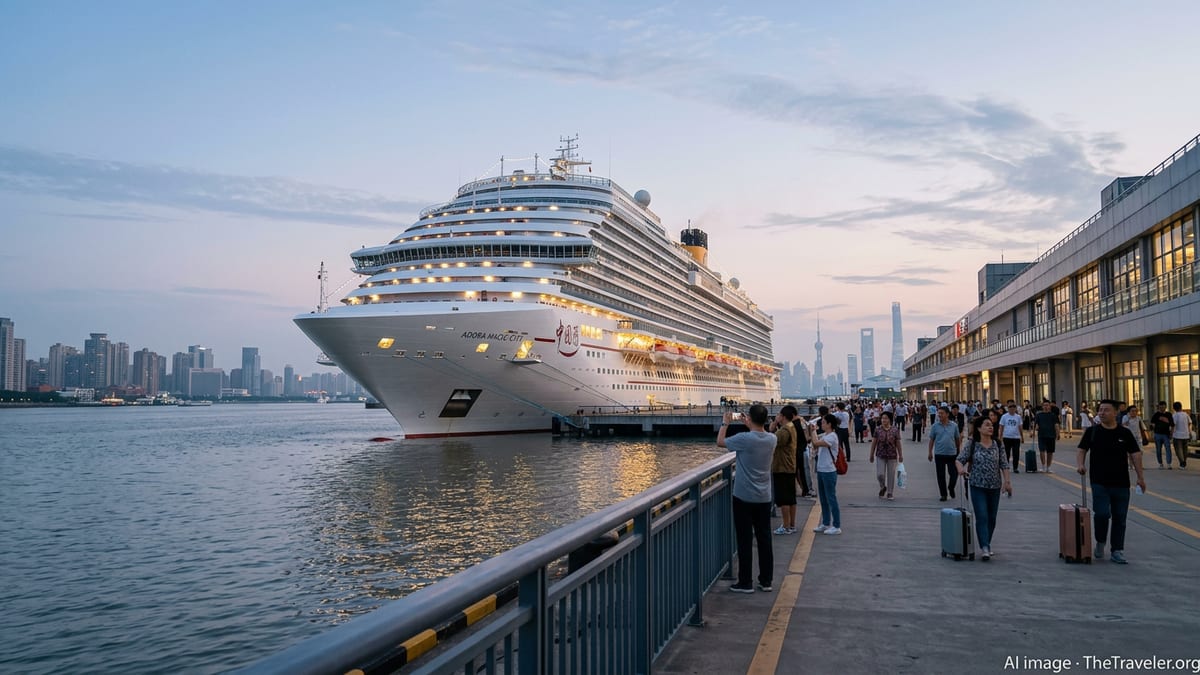
A Ship That Helped Reopen China’s Cruise Market
Viking Yi Dun began its Chinese-flag era after being transferred from Viking’s international fleet and re-registered through a joint venture with China Merchants, positioning the 930-passenger vessel as a flagship for the country’s nascent high-end cruise segment. Public information shows that the ship, originally launched as Viking Sun in 2017, was rebranded for the Chinese market and became widely cited as the first Chinese-flag luxury cruise ship dedicated to international guests on domestic routes.
The ship played a visible role as China restarted cruise activity in stages following the global pause in passenger sailings. Industry coverage indicates that Zhao Shang Yi Dun, as the vessel was known locally, was among the early ships cleared to participate in pilot programs from Shanghai, helping to rebuild confidence in cruising and to re-establish Shanghai as a leading homeport in Asia.
As travel restrictions eased, Viking Yi Dun was shifted toward itineraries specifically designed for foreign travelers, combining China’s coastal ports with inland city programs. These sailings were presented as a way for overseas guests to see rarely visited islands and lesser-known ports alongside major gateways such as Shanghai, Beijing and Hong Kong, reinforcing the ship’s status as a showcase for inbound tourism.
From Shanghai Showcase to Global Redeployment
The recent departure of Viking Yi Dun from Shanghai effectively concludes its tenure under the Chinese flag and signals the ship’s transition back into broader deployment planning. While detailed forward schedules have not been disclosed through official fleet announcements, industry watchers have noted that the vessel’s coastal program has wound down, with its place in the Chinese market now viewed as a completed phase rather than an ongoing assignment.
Reports indicate that the ship’s Shanghai-based operations had already been narrowing in scope, following a concentrated period of late 2024 and 2025 departures that focused on South China Sea and East China Sea sailings. Travel trade and consumer reports described voyages that linked Shanghai and Hong Kong via ports such as Xiamen, Zhoushan and Dongtou, emphasizing cultural excursions, lectures and Chinese-inspired onboard programming tailored to international guests.
With that series of sailings now effectively wrapped up, observers interpret Viking Yi Dun’s departure as part of a wider realignment of capacity within Viking’s global network. The company has continued to grow its ocean and river fleet in other regions, and redeploying a 930-guest ship away from a single-country program is seen as consistent with efforts to balance demand across Europe, Asia and emerging long-haul markets.
A Milestone Moment for Chinese-Flag Cruising
The end of Viking Yi Dun’s Chinese-flag era is being viewed by analysts as a symbolic milestone in the evolution of China’s cruise ambitions. When the vessel was first repositioned and re-registered, it represented an experiment in pairing an internationally recognized brand and design with a Chinese flag, Chinese port infrastructure and a product marketed outward to overseas guests rather than primarily to domestic travelers.
According to published coverage in Chinese and international media, the ship’s presence helped demonstrate that China-based cruises could be operated at a high service level while appealing to a global audience. It also provided a practical test of how domestic port regulations, customs processes and tourism partnerships could support more complex itineraries aimed at visitors arriving from North America, Europe and other parts of Asia.
Industry commentary suggests that this experiment contributed to Shanghai’s positioning as a leading hub for inbound cruise tourism. The city’s long-term plans to build itself into a primary entry point for foreign travelers relied in part on high-profile vessels that could generate attention and repeat visitation. Viking Yi Dun’s seasons under the Chinese flag aligned with those ambitions, even if the ship’s assignment ultimately proved time-limited.
Changing Conditions in China’s Cruise and Tourism Landscape
Viking Yi Dun’s redeployment also reflects the shifting dynamics of China’s broader tourism and cruise landscape. Inbound travel has been influenced by new visa policies, evolving air connectivity and competition from destinations across Asia and Europe that are courting long-haul travelers. Cruise lines planning multi-year deployments increasingly weigh those external factors alongside port access, regulatory frameworks and expected onboard spending.
Public data from tourism research bodies points to a gradual recovery in inbound travel to China, aided by expanded visa-free entry arrangements for selected nationalities and the return of international airline capacity to key cities. At the same time, cruise companies have remained cautious about dedicating too much tonnage to a single market, particularly where demand can be sensitive to geopolitical developments and health-related protocols.
Within this context, the conclusion of Viking Yi Dun’s Chinese-flag operations may be seen less as a retreat from China and more as a recalibration. Viking continues to promote itineraries featuring Chinese ports and land extensions, but appears to be favoring more flexible regional routings instead of exclusively domestic coastal seasons centered on one ship and one flag registration.
Legacy and Future Prospects for China-Focused Voyages
Although Viking Yi Dun has now departed Shanghai, its impact on the perception of cruising in China is expected to endure. Travel advisors and early guests have described the ship’s China seasons as a rare opportunity to explore coastal regions that had previously seen little international cruise traffic, while enjoying a familiar Scandinavian-inspired onboard environment.
The ship’s Chinese-flag chapter has also provided a template for how future partnerships between global cruise brands and Chinese stakeholders might be structured. Observers note that cooperation between foreign operators, domestic investors and local tourism bureaus remains central to any long-term expansion of China-focused cruise products, whether those take the form of newbuilds, chartered tonnage or additional re-flagged vessels.
As cruise demand continues to recover across Asia, attention will now turn to how other ships and brands step into the space that Viking Yi Dun helped to define. For travelers who sailed during its Chinese-flag era, the vessel’s quiet departure from Shanghai marks the end of a distinctive experiment in cross-border cruise collaboration, and underscores how quickly deployment strategies can evolve as market conditions change.