


More news on this day
Across Europe’s high country, historic mountain railways are finding new relevance as travelers seek slower, climate-conscious ways to reach summits, fjords and remote valleys while riding locomotives that often predate mass aviation.
Get the latest news straight to your inbox!
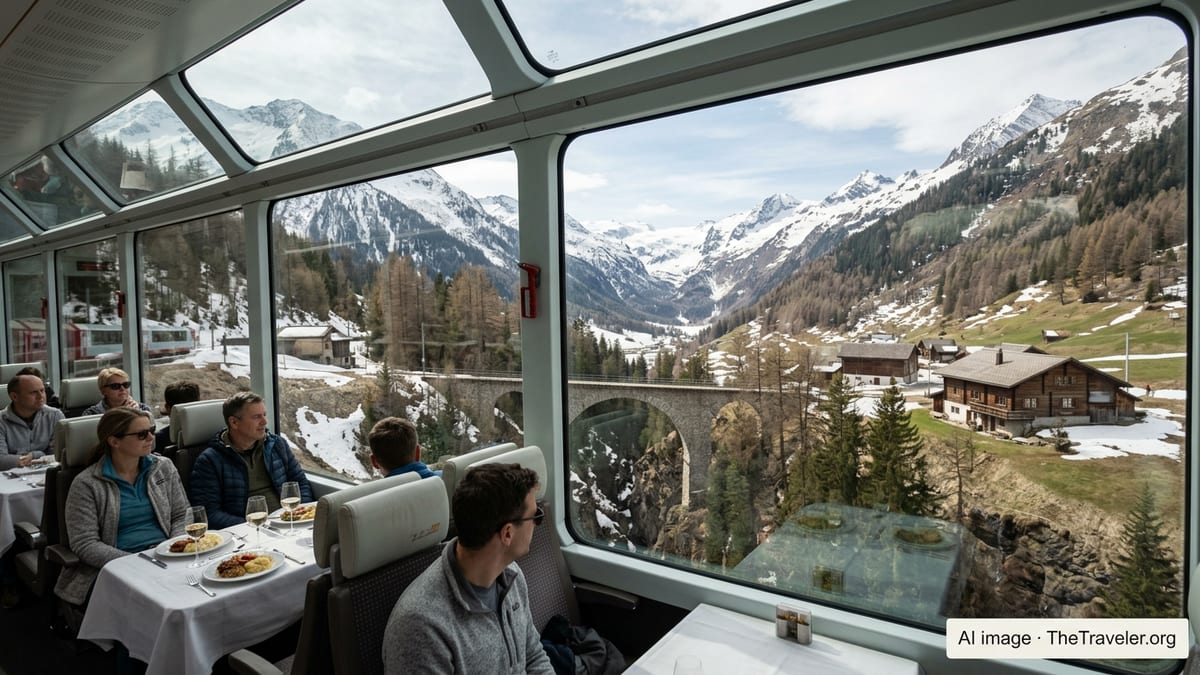
Alpine Rack Railways Revive Steam-Era Summit Travel
In Switzerland, classic rack railways are seeing renewed attention from international visitors who want a nostalgic climb into the Alps powered by steam rather than high-speed cables. Publicly available information on the Brienz Rothorn Railway shows that it is regarded as the oldest steam cogwheel railway still operating in the country, carrying passengers from the lakeside village of Brienz to the 2,244-meter Brienzer Rothorn summit on an 80-centimeter-gauge rack line that opened in the late 19th century.
Tourism boards around Lake Brienz highlight the line’s open carriages, steep gradients and views over turquoise water and surrounding peaks as key draws for summer travelers. Current timetables promoted for the 2026 season indicate regular steam services between early June and late October, with operators advising passengers to check for weather-related adjustments before departure, particularly in shoulder periods when alpine conditions can change quickly.
Along the route, promotional material emphasizes intermediate stops such as Planalp, where visitors step out to hillside terraces or walk short sections of the trail while locomotives take on water. Recent product descriptions also point to themed journeys like “steam sausage” trains that combine scheduled uphill rides with outdoor food stops, signaling how traditional infrastructure is being packaged for contemporary experience-driven tourism.
Despite its heritage feel, the Brienz Rothorn line operates as a modern visitor attraction with seat reservations on busy days and integration into regional rail-and-boat itineraries around Interlaken. Travel advisories and online discussions over the past two summers show that peak departures can sell out, reflecting broader pressure on popular Swiss scenic railways as international arrivals return to or surpass pre-pandemic levels.
Flåm’s Fjord Descent Becomes a Flagship Scenic Corridor
Norway’s Flåm Line, dropping from the high plateau at Myrdal to the Aurlandsfjord village of Flåm, has become one of the country’s most publicized rail journeys as global interest in fjord landscapes expands. Official route descriptions from the operator characterize the 20.2-kilometer line as Northern Europe’s steepest standard-gauge adhesion railway, with an average gradient of 5.5 percent over much of the descent and a vertical drop of around 866 meters from mountain station to sea level.
Engineering briefs and tourism portals describe a route that threads through 20 tunnels, including a spiraling bore inside the mountain designed to moderate the gradient and distribute elevation loss. Specialist rail guides note that the steepness required custom braking systems when the line opened to passengers in the 1940s, and that today’s operational rules still limit speeds to around 40 kilometers per hour uphill and 30 kilometers per hour downhill on the steepest stretches.
Recent travel information from independent rail platforms indicates that trains on the Flåm Line operate year-round, with a sharp increase in frequency between May and September to handle cruise passengers, tour groups and independent travelers connecting with long-distance services between Oslo and Bergen. Published schedules show multiple daily departures in each direction during the main season, turning the route into a backbone for “Norway in a Nutshell” style itineraries that combine rail with fjord cruises and mountain buses.
Environmental and regional development studies have pointed to the line as an example of how historic infrastructure can anchor low-emission tourism in sensitive landscapes. As interest grows in overland travel from markets such as the United Kingdom and continental Europe, recent features in rail-focused media position the Flåm descent as a key link that allows visitors to reach deep fjords without relying on domestic flights or long private car itineraries.
Rauma Line Links Fjord Villages and High Mountain Plateaus
Farther north in western Norway, the Rauma Line between Dombås and Åndalsnes is being promoted as a complementary journey to the Flåm corridor for travelers who want to combine rail with iconic driving routes and coastal ferries. Norway’s national tourism site describes the 115-kilometer line as an approximately 1 hour and 40 minute ride that moves from high mountain terrain near Dombås down through the Romsdalen valley to the fjord-front town of Åndalsnes.
Destination marketing organizations for Fjord Norway underscore the visual contrasts along the route: sheer rock walls under the Trollveggen cliff, multiple stone bridges over the Rauma River and sweeping views toward the Romsdalsfjord near the terminus. Operator information notes that trains cross a succession of bridges and pass close to waterfalls and salmon rivers, details that have helped the line gain recognition in international rail rankings and social media coverage.
While the Rauma Line functions as a scheduled regional railway, international trip planners increasingly frame it as a scenic component within longer Oslo to Ålesund or Trondheim routes. Recent travel advice shared with visitors points to coordinated connections at Dombås from the mainline Dovre Railway, allowing passengers to continue north or south on national services after completing the fjord descent. Bus links from Åndalsnes toward coastal towns and popular driving routes such as Trollstigen extend the reach of the railway into nearby mountain road networks.
Local media and tourism updates have also highlighted operational considerations for visitors, including periods of engineering work and seasonal crowding linked to cruise arrivals in Åndalsnes. In parallel with trends on the Flåm Line, the Rauma corridor is cited in regional strategies that view rail as a tool to channel visitor flows into compact hubs while reducing the number of private vehicles on narrow mountain roads.
Heritage Steam Networks Adapt to a New Visitor Boom
Beyond marquee mountain routes, heritage steam and vintage rail networks across Europe and in other regions are reporting increased passenger numbers as interest in rail-focused holidays grows. A recent annual report from Ireland’s Commission for Railway Regulation cited more than 93,000 passengers on isolated heritage networks in 2024, while a separate update from Transport Heritage New South Wales in Australia reported over 100,000 passengers on heritage trains and tens of thousands of visitors to railway museums in the 2023–24 financial year.
These figures, drawn from regulatory and sector publications, are being interpreted by tourism analysts as evidence that rail heritage is moving from niche interest to mainstream travel product. Heritage operators are responding by adding themed excursions, coordinating with regional tourism boards and upgrading booking systems that were once designed for small, enthusiast-driven audiences.
At the same time, preservation groups and transport authorities are navigating pressure on fragile infrastructure originally built for lower volumes. Recent planning documents and policy notes emphasize the need for track maintenance, bridge inspections and safety reviews as train frequencies and loads increase on lines that may run through remote or geologically complex terrain. For rack railways in alpine zones, that often means additional investment in rockfall protection and drainage, particularly after heavy rainfall events.
Industry observers also highlight the climate dimension. While heritage steam itself is energy intensive, many mountain and fjord railways form part of broader low-emission journeys that replace short-haul flights and long car legs. Rail advocates argue in published commentary that protecting and upgrading these historic lines offers a pragmatic way to shift visitor flows toward public transport while preserving living examples of early 20th-century engineering.
Planning a Vintage Mountain Rail Journey in 2026
For travelers looking to ride these historic lines in 2026, sector updates point to several practical considerations. Operators of scenic railways in Switzerland and Norway recommend advance reservations for peak summer departures, particularly on days when cruise ships call in nearby ports or major festivals are scheduled in gateway towns such as Interlaken or Åndalsnes.
Official route and tourism websites stress the importance of checking the latest operational notices before travel, as infrastructure in steep terrain can be affected by rockfalls, heavy rain or maintenance work. In Switzerland, for example, public information in recent seasons has detailed extended closures or capacity limits on certain mountain railways following storm damage, illustrating how quickly conditions can change in high-altitude corridors.
Travel planners also encourage visitors to factor in the slower pace that makes these journeys attractive. Rack railways and steep adhesion lines typically operate at modest speeds, and connections between mountain trains, fjord boats and regional buses may involve waiting times that are integral to the experience. Tourism boards increasingly frame that downtime as part of a wider “slow travel” ethos, encouraging stops in small communities along the route rather than treating rail segments as simple transfers.
With rail and cruise tourism continuing to rebound, the coming seasons are expected to test how well vintage mountain railways can balance preservation with popularity. For now, the combination of historic rolling stock, dramatic gradients and carefully curated itineraries appears to be drawing a new generation of passengers to lines that once seemed destined to be bypassed by highways and high-speed trains.
Brienz Rothorn Railway visitor information
Flåm Railway official route description