


More news on this day
A short video labeled "Mid Cruise EMERGENCY" and linked to Thai tennis player Lanlana Tararudee is circulating widely online, drawing attention not only for its dramatic tone but also for what it reveals about how modern cruise ships manage onboard incidents and communicate with passengers when plans suddenly change at sea.
Get the latest news straight to your inbox!
A Sports Name Attached to a Sea Drama
The clip, circulating under the title "Mid Cruise EMERGENCY And THIS Is What Happened Lanlana Tararudee (uOAkNyGKtv)," has attracted curiosity in part because it is tagged with the name of professional Thai tennis player Lanlana Tararudee. Publicly available tournament records show Tararudee competing on the women’s tour, but there is no indication in official sports documentation that she is directly tied to any maritime incident.
The use of a recognizable athlete’s name appears to be part of a growing pattern in online travel content, where creators pair dramatic travel scenarios with trending personalities to draw clicks. In this case, the video title suggests a serious onboard emergency without offering much context in the description, prompting viewers to seek out additional information about what actually occurred on the ship.
While the exact circumstances aboard the vessel in the clip remain limited to what is visible on screen, the footage sits within a broader wave of cruise content that often blurs the line between genuine emergency and algorithm friendly spectacle.
This ambiguity has renewed interest in how cruise operators handle real mid voyage incidents and how passengers interpret alarms, public address announcements and crew instructions in a highly curated holiday setting.
Context From Recent Cruise Incidents
Recent years have produced a steady stream of verified cruise emergencies that help frame how such situations typically unfold. Published coverage has documented medical evacuations by helicopter, serious injuries on onboard attractions and ship handling incidents in port, offering a reference point for assessing what viewers see in viral clips labeled as emergencies.
Reports highlight that health issues remain among the most common reasons for unscheduled interventions at sea, with airlifts and at sea transfers used when onboard medical teams need shore based support. Other widely viewed videos show ships encountering sudden storms or large swells, sending glassware sliding across decks and unnerving passengers even when the vessel itself remains structurally secure.
In port, separate cases have involved ships striking piers in difficult conditions or breaking away from moorings during squalls, leading to damage but typically limited injuries. These examples underscore that genuine cruise emergencies often stem from weather, mechanical issues or health crises rather than the dramatic but relatively minor disruptions that sometimes go viral online.
Against that backdrop, the Tararudee tagged video sits in a gray area between entertainment and incident report, illustrating how viewers may struggle to distinguish operational drills or localized technical problems from full scale emergencies without clear, verified information.
How Modern Cruise Ships Prepare for Emergencies
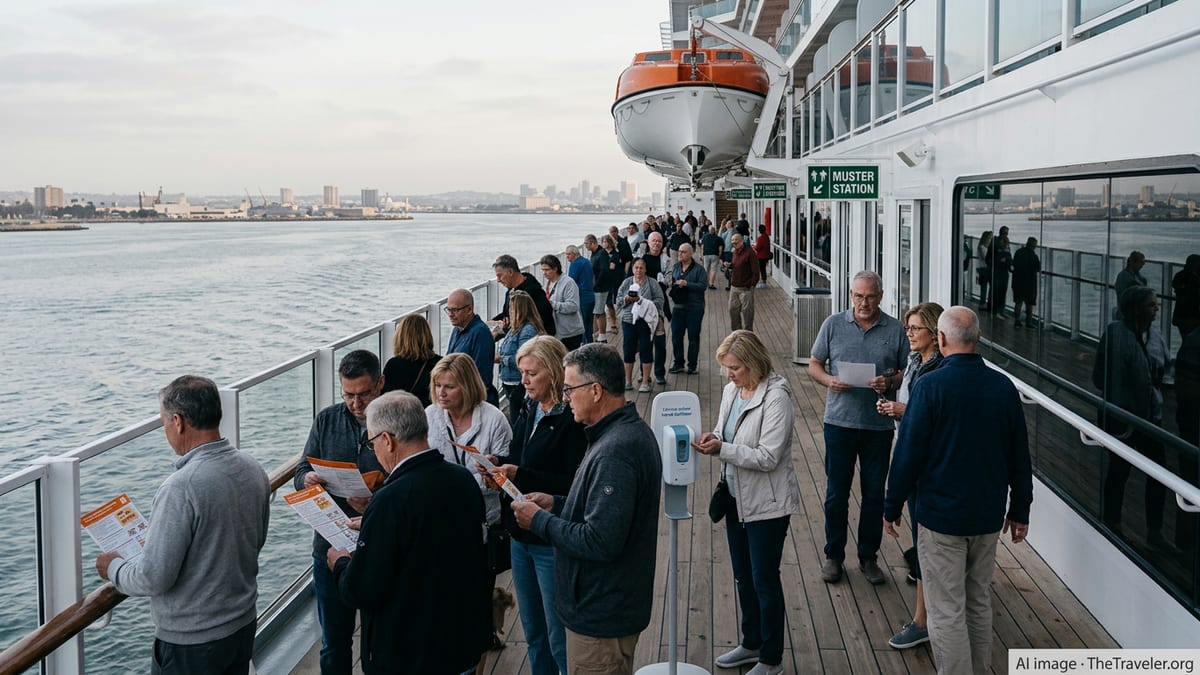
Regardless of how accurately a single viral clip reflects events on board, large cruise vessels operate under international safety rules that require structured planning for emergencies. Publicly available material from safety regulators and industry groups describes a multilayered approach that begins with mandatory muster drills for passengers and extensive training programs for crew.
Ships are built with watertight compartments, redundant power and navigation systems and fixed firefighting facilities designed to contain and manage incidents such as fires or flooding in specific areas. Lifeboats, life rafts and evacuation systems are distributed along both sides of the ship and maintained according to international standards that dictate capacity, launching procedures and regular testing.
Crew members are assigned specific roles for scenarios such as medical incidents, man overboard alerts, fire responses and abandon ship orders. Exercises and simulations are conducted on a recurring basis so that staff can practice crowd management, communication and technical response even when passengers are unaware that a drill is under way.
These layers of preparation mean that what passengers perceive as a sudden emergency can in many cases be a controlled response to an issue the crew has been monitoring for some time, whether that involves rerouting around weather, isolating a technical fault or coordinating a handover to shore based services.
Passenger Perceptions and Online Amplification
The Tararudee titled clip also illustrates how passengers interpret and share mid cruise disruptions. In many viral videos, viewers see crowded lounges, anxious faces and snippets of announcements recorded on mobile phones. Without full context, relatively routine safety measures such as closing public decks, lowering lifeboats for drills or changing course for medical reasons can appear far more dramatic than the underlying situation warrants.
Travel forums and comment sections frequently reveal a disconnect between how crews are trained to respond and how guests expect a holiday to unfold. Some passengers describe being startled by the sound of alarms or by crew members moving quickly through corridors in lifejackets, even when the situation is precautionary. Others express frustration when entertainment is paused or venues are closed during technical checks.
Once video clips are uploaded, algorithms favor the most emotionally charged titles and thumbnails. Attaching a prominent athlete’s name to a mid cruise disruption, as appears to be the case in the Lanlana Tararudee labeled content, amplifies reach even when that person has no confirmed involvement in the event.
The result is a cycle in which isolated or routine incidents can be framed as extreme emergencies, influencing public perceptions of cruise safety far beyond the original ship and sailing.
What Travelers Can Take From the Latest Viral Moment
For travelers planning a cruise, the latest viral "Mid Cruise EMERGENCY" video serves as a reminder to look beyond dramatic titles and focus on practical preparation. Publicly available safety briefings recommend paying close attention during muster drills, familiarizing oneself with the layout of the ship and noting the nearest emergency exits and lifejacket locations from cabins and common areas.
Travel guidance also emphasizes the importance of following crew instructions during any unusual situation, even if the nature of the incident is not immediately explained in detail over the public address system. Remaining calm, moving quickly but orderly and avoiding blocked corridors can help crews carry out their assigned roles effectively.
At the same time, prospective passengers can review incident statistics, safety records and independent analyses of cruise operations rather than relying solely on isolated online clips. These sources provide a more balanced picture of how often serious emergencies occur relative to the large number of voyages completed each year.
As the Lanlana Tararudee labeled video continues to circulate, it reinforces how a few seconds of footage and a striking title can shape perceptions of cruising. For many observers, it has become less a definitive account of one ship’s emergency and more a prompt to consider how prepared they would be if their own holiday at sea suddenly took an unexpected turn.