


More news on this day
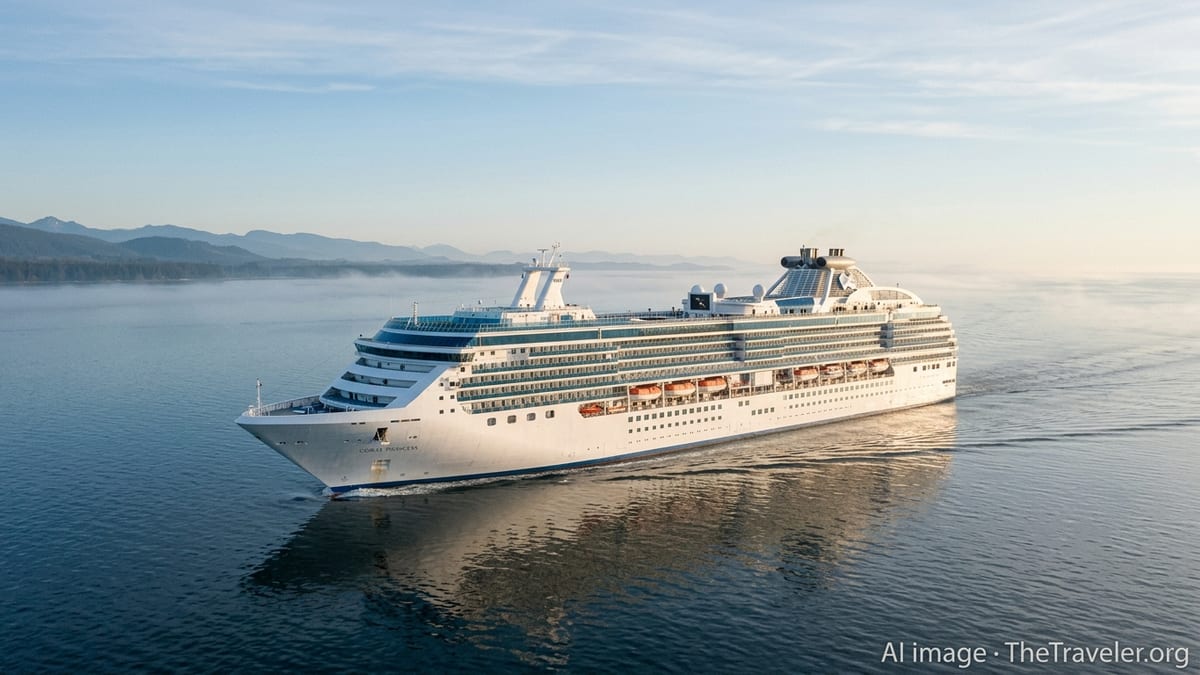
Princess Cruises is significantly expanding its presence in Singapore under a new multi-year deployment plan that will see more ships homeported in the city-state and cruise capacity in the region steadily increase toward 2030.
Get the latest news straight to your inbox!
Three-Year Deployment Deal Anchors Growth Plans
Publicly available information indicates that Princess Cruises has entered a three-year multi-ship deployment agreement with Singapore, covering the period from 2027 to 2030. The plan designates Singapore as a key homeport for Southeast Asia and wider Asia Pacific sailings, with a dedicated program of regional and long-haul itineraries.
Reports on the agreement state that at least three Princess vessels, including Diamond Princess, Sapphire Princess and Grand Princess, are earmarked for deployment from Singapore over the term of the deal. Their combined schedules are expected to support a substantial rise in passenger throughput and ship calls at Marina Bay Cruise Centre.
According to recent cruise industry coverage, the objective is to double the number of Princess sailings linked to Singapore by 2030 compared with pre-agreement levels. The expanded deployment positions the brand as one of the leading international operators using the city as a seasonal base for Asia-focused cruising.
The arrangement also aligns with Singapore’s broader tourism strategy, which places cruise tourism alongside air travel as a core driver of visitor arrivals. The new deal is framed as part of a longer-term effort to attract more premium and upscale cruise lines to use the city as a turnaround port for complex regional itineraries.
Dual-Ship Seasons Build Toward a Three-Ship Lineup
The multi-year commitment builds on decisions already announced for the 2026 to 2027 season, when Princess Cruises plans to homeport both Diamond Princess and Sapphire Princess in Singapore for part of the northern winter. Published deployment details show that the two ships will operate a mix of 10 to 42 night voyages across Southeast Asia, Japan and the broader Far East.
Industry analyses note that this dual-ship strategy effectively doubles Princess capacity in Asia compared with earlier seasons when only one vessel was typically based in the region. It also restores a pattern of twin-ship deployment that had not been seen since before the pandemic, signaling renewed confidence in regional demand.
From 2027, the new framework foresees the addition of Grand Princess alongside Diamond Princess and Sapphire Princess for selected periods. This will create a three-ship presence tied directly to Singapore, supporting a more diverse schedule of round-trip and repositioning cruises, some extending between Singapore and Japan.
The move is regarded by sector commentators as a competitive response to growing investments by rival brands in Asia, including larger vessels and dedicated year-round programs. For Princess, gradually staging capacity increases allows the line to test new itineraries while maintaining a focus on longer, destination-intensive sailings.
Longer Itineraries Target International Fly-Cruise Market
Available program details suggest that Princess will focus its Singapore-based operations on itineraries ranging from 10 to 28 days, many of them described in marketing materials as destination-rich voyages. These sailings are expected to visit key Southeast Asian ports in Vietnam, Malaysia and Thailand, along with extended routes that reach Japan and South Korea.
The emphasis on longer cruises appears designed to appeal to the international fly-cruise market, particularly travelers from Australia, the United Kingdom, North America and Europe who combine long-haul flights with regional cruise holidays. Industry reporting notes that this segment has been a core strength for Princess in markets such as Australia and the Mediterranean.
By using Singapore as a turnaround port, the line can offer itineraries that start and end in a major aviation hub, with frequent long-haul connections and streamlined pre and post-cruise stays. Travel trade commentary indicates that this hub-and-spoke model is increasingly important for cruise lines seeking to attract guests on extended itineraries.
The longer voyages also allow Princess to differentiate its product from shorter regional cruises that focus on three to five night sailings. Analysts observe that this positions the brand squarely in the premium segment, with a focus on in-depth exploration rather than quick getaway cruises.
Strategic Boost for Singapore’s Cruise Hub Ambitions
For Singapore, the expanded partnership with Princess Cruises is being interpreted within the context of its ambition to consolidate its role as a primary cruise hub in Asia. Public communications from tourism and port authorities have highlighted cruise growth as a key pillar of the city’s tourism development plans, complementing investments in attractions and hotel capacity.
Marina Bay Cruise Centre, which handles large international vessels, is expected to benefit from a higher volume of turnaround calls as more Princess ships operate from the terminal. Industry observers point out that consistent multi-year deployment helps ports justify further investments in terminal facilities, passenger processing and shore-side services.
Sector coverage indicates that Singapore is also seeking to deepen collaboration with regional ports in Malaysia, Thailand and Vietnam to support more seamless itineraries. Regular multi-port itineraries operated by brands such as Princess can encourage joint marketing, infrastructure upgrades and harmonized regulatory processes along key cruise corridors.
The focus on premium cruise deployments is widely viewed as complementary to Singapore’s positioning as a high-value destination. Travel trade commentary suggests that longer-stay cruise passengers tend to have higher onshore spending, benefiting retail, dining and attractions in and around the city.
Competitive Landscape and Outlook for Asian Cruising
The Princess deployment plan comes at a time when the wider Asian cruise market is showing signs of steady recovery and renewed investment. Major brands are gradually reassigning ships to the region, while new entrants and purpose-built vessels are targeting Asian homeports.
Analysts writing in industry publications note that Singapore faces competition from other regional cruise centers, including Hong Kong and various ports in Japan and China, which also aim to attract turnaround and transit business. Multi-year commitments from established brands are therefore seen as strategically important for sustaining Singapore’s share of regional deployments.
By committing to more ships in Singapore through 2030, Princess Cruises is positioning itself to benefit from anticipated growth in demand for longer, more immersive itineraries across Asia. Travel industry reporting suggests that rising middle-class incomes within the region, combined with strong interest from long-haul markets, could underpin a robust pipeline of cruise demand in the coming years.
While the exact mix of ships and itineraries may evolve, the current agreement signals a clear long-term intent: to use Singapore as a principal springboard for exploring Southeast Asia and beyond. For travelers, this is expected to translate into a broader array of voyage options, more frequent departures and an expanding network of ports accessible from one of Asia’s most connected cities.