


More news on this day
Summer travel plans across Europe were severely disrupted as more than 1,300 flights were delayed and at least 80 cancelled in a single day, with major hubs in Spain, Italy, France, Türkiye and Switzerland reporting widespread knock-on effects for carriers including Air France, Turkish Airlines, ITA Airways and Iberia.
Get the latest news straight to your inbox!
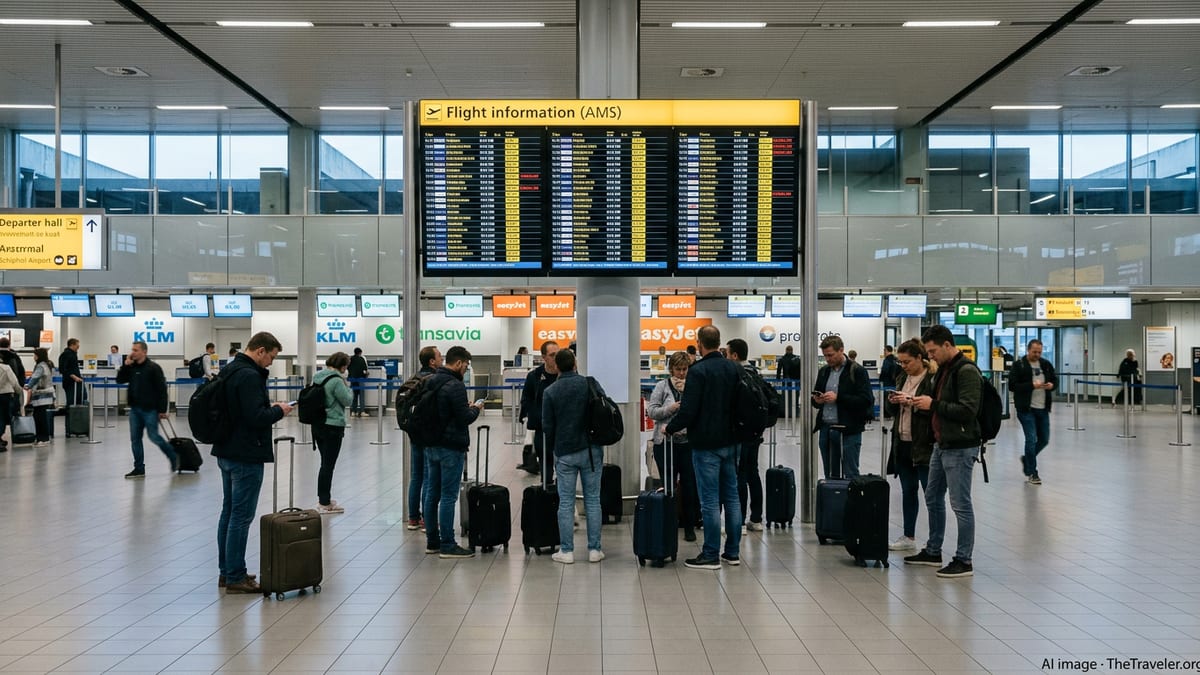
Network Bottlenecks Ripple Across Key European Hubs
Operational data from Europe’s air traffic network indicates that a combination of air traffic flow management restrictions, staffing constraints and storm-related weather patterns produced a surge of disruption, with 1,379 flights delayed and 83 cancelled across the continent. The impact has been concentrated at major hubs such as Madrid-Barajas, Rome Fiumicino, Istanbul, and Zurich, where dense schedules and tightly timed connections magnified the effect of each hold and ground delay.
While the absolute numbers remain below the worst days recorded during previous summers, reports show that delay minutes per affected flight are creeping higher, suggesting that once disruption starts it is harder for airlines and airports to recover. Network performance briefings for early June already pointed to a delicate balance, with southern European states bearing a disproportionate share of en route delay as traffic climbs toward seasonal peaks.
The current spike appears to reflect that pressure moving from forecasts into reality. Capacity reductions on certain sectors, combined with localized thunderstorms, have led to flow restrictions over parts of France and the western Mediterranean, slowing traffic bound for Spanish and Italian hubs and pushing aircraft into extended holding patterns or last-minute reroutes.
This network-wide stretching of resources means even airports not directly under severe weather or staffing pressure can feel the strain. Publicly available flight-tracking snapshots for the day show rotations slipping out of place across secondary cities in Germany, the Balkans and the Nordic region as late inbound aircraft arrive behind schedule and crews exceed duty limits.
Madrid, Rome, Istanbul and Zurich Face Punctuality Setbacks
Madrid-Barajas has been among the most visible flashpoints. According to aviation performance dashboards, Spain is already one of the largest contributors to en route delay in Europe this season, driven by capacity limits and controller shortages. When thunderstorms and traffic congestion converged over the Iberian Peninsula, Iberia and other carriers at Madrid saw a wave of late departures, missed connections and a cluster of cancellations on intra-European sectors.
Rome Fiumicino experienced similar strain as ITA Airways and partner airlines navigated a compressed schedule through busy mid-morning and late-afternoon banks. In Italy, demand has rebounded strongly on both domestic and leisure routes, and industry updates suggest that even modest flow restrictions in neighboring airspace can quickly back up departures, especially on eastbound routes toward Greece and Türkiye.
Istanbul’s role as a bridge between Europe, the Middle East and Asia made the Turkish hub particularly sensitive to the day’s disruptions. Turkish Airlines has been operating an expansive network from its main base, and any delay on European feeder legs can cascade into long-haul services. Live tracking during the disruption period showed several flights from western Europe arriving late into Istanbul, compressing ground times and forcing schedule juggling on onward connections.
Zurich, meanwhile, has faced its own capacity limits this summer as Swiss and partner carriers rebuild traffic. Switzerland’s airspace also sits at a crossroads for north-south flows between Germany, Italy and the wider Mediterranean. When delay regulations were introduced on adjacent sectors, that traffic was metered more tightly, forcing departures from Zurich to adapt and contributing to the tally of delayed flights recorded for the day.
Air France, Turkish, ITA and Iberia Among Affected Carriers
The disruption cut across airline business models, affecting traditional network carriers and low-cost operators alike. Flag carriers such as Air France, Turkish Airlines, ITA Airways and Iberia were especially exposed because they rely heavily on hub-and-spoke structures where a single late arrival can imperil dozens of onward connections.
Publicly available schedules and status boards for Paris Charles de Gaulle showed Air France facing a mix of long departure delays and selective cancellations on short-haul services, particularly those feeding into already constrained southern corridors. Many of those flights connect into the same airspace segments that were under flow restrictions for traffic to and from Spain, Italy and Türkiye.
Iberia and its partners at Madrid had to consolidate some frequencies and reroute passengers through alternative hubs when rotations became unstable. Aviation data services tracking the day’s performance listed multiple Iberia departures to European capitals running significantly behind schedule, with some later sectors dropped altogether once it became clear that aircraft and crews could not be turned around in time.
Turkish Airlines and ITA Airways had similar challenges aligning aircraft and crew availability with rapidly changing slot allocations. When holding times stretched and arrival waves shifted, some late-evening flights in and out of Istanbul and Rome were removed from the schedule, contributing to the total of 83 cancellations reported across the European network.
Structural Strains: Staffing, Capacity and Weather Vulnerability
Aviation performance reports for 2025 and 2026 have consistently highlighted structural vulnerabilities in Europe’s air traffic management system. Industry analyses from organizations such as Eurocontrol and IATA point to sustained traffic growth outpacing investments in controller staffing and sector capacity, particularly in France, Spain and parts of Germany. As a result, traffic management restrictions are now a regular feature of busy days, not just responses to exceptional events.
Weather remains another key factor. Thunderstorms across the Iberian Peninsula and the Alpine region can shut down departure routes or force aircraft into narrow lanes of usable airspace, effectively reducing capacity even when staff are available. On the day that saw 1,379 delays and 83 cancellations, publicly available radar images and pilot reports indicated convective weather along several major trunk routes linking Madrid, Paris, Milan, Zurich and central Europe.
Technical and security concerns have added another layer of complexity. Recent analyses of satellite navigation interference in parts of Europe and the Middle East show that carriers and air traffic managers are increasingly required to build extra buffers and contingency procedures into flight plans. While this may not be the direct cause of any one delay, it reduces flexibility in a system that is already running close to its limits during peak hours.
These constraints mean that seemingly routine disruptions, such as a short-lived storm cell or a temporary sector staffing shortfall, can lead to disproportionate knock-on effects. The figures recorded for today’s delays and cancellations illustrate how quickly punctuality can deteriorate once those factors combine.
Travelers Confront Longer Journeys and Uncertain Connections
For passengers across Europe and beyond, the operational picture translated into long queues, missed connections and unexpectedly extended journeys. Travelers passing through Madrid, Rome, Istanbul and Zurich reported extended ground holds, last-minute gate changes and tight rebookings as airlines worked within limited capacity on remaining flights.
Public guidance issued by airports and consumer groups emphasizes the importance of allowing extra connection time through affected hubs, especially when itineraries involve multiple legs across busy parts of European airspace. With average delay per disrupted flight rising, even a modest hold at departure can quickly jeopardize onward connections, particularly for long-haul return segments to North America, Asia or Africa.
Indicators from aviation intelligence portals suggest that, as the peak summer season progresses, similar days of disruption are likely when traffic, weather and staffing pressures coincide. While the tally of 1,379 delayed and 83 cancelled flights is still short of the worst-case scenarios modeled for extreme events, it underlines how fragile the recovery-era network can be when pushed close to capacity.
Passengers planning trips in the coming weeks are being encouraged by travel advisories and consumer advocates to monitor flight status closely, consider earlier departures into key hubs, and build contingency time into itineraries that rely on tight European connections, particularly through Madrid, Rome, Istanbul, Zurich and the main French hubs.