


More news on this day
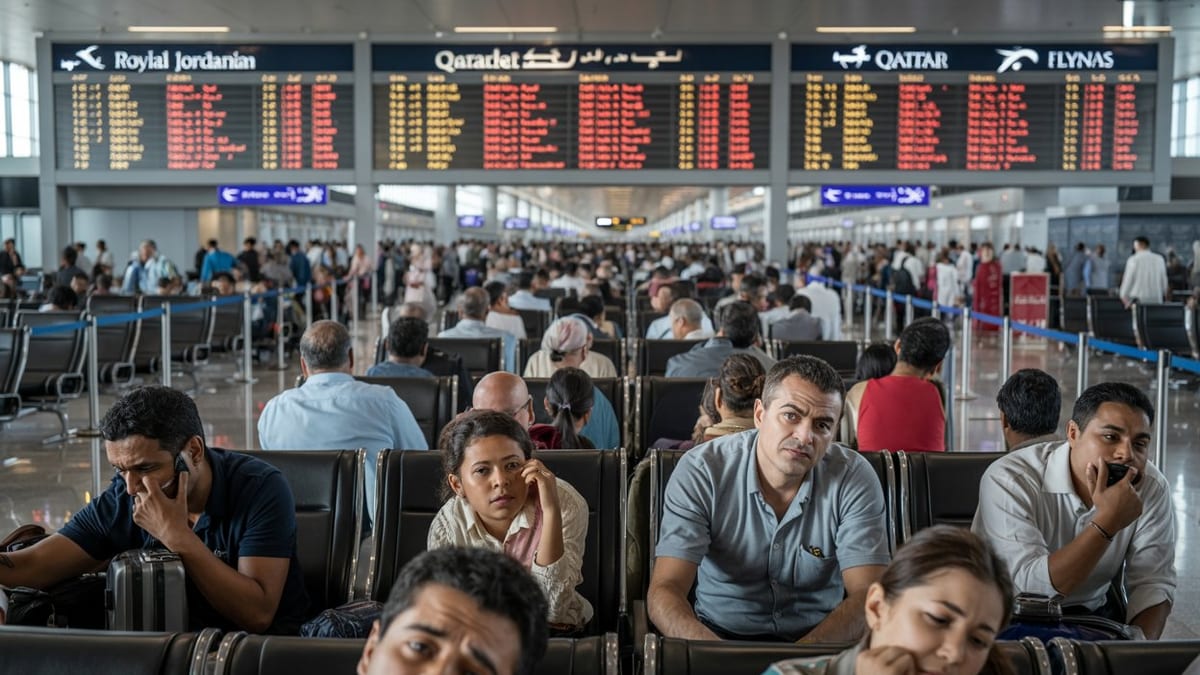
Travelers departing from Montreal-Pierre Elliott Trudeau International Airport on June 8 faced a difficult start to the week after a wave of disruptions left dozens of flights delayed or cancelled, snarling connections across Canada, the United States, Europe, and the Middle East.
Get the latest news straight to your inbox!
Dozens of Flights Affected Across Major Carriers
Operational data for June 8 indicates that Montreal-Trudeau saw at least 63 delayed departures and 11 outright cancellations over the course of the day, affecting a mix of domestic, transborder, and long haul international routes. The impact extended well beyond Quebec, with ripple effects for connecting passengers in hubs such as Toronto, Ottawa, New York, Paris, Amsterdam, and Doha.
Among the airlines most visible on departure boards were Air Canada and its regional partner Jazz, which together operate a large share of the airport’s Canadian and U.S. transborder schedules. KLM and its alliance partners, along with other European and Middle Eastern carriers, were also part of the disruption picture as long haul flights into and out of Montreal encountered delays.
Publicly available flight trackers show that both narrowbody and widebody aircraft were affected, from short hops linking Montreal to Ottawa and New York to overnight services to major European gateways. While some routes ultimately departed late, others were cancelled outright, forcing passengers to seek alternative itineraries or overnight accommodation.
North American Routes See Tight Schedules Unravel
Within Canada and the United States, frequent short haul services bore much of the visible strain. Regional operations flown by Jazz under the Air Canada Express brand connect Montreal to cities such as Ottawa and other Eastern Canadian destinations on tight turnarounds. When one leg falls behind schedule, subsequent rotations can quickly be pushed back or pulled from the schedule entirely.
On June 8, departure information for several Montreal Ottawa and Montreal New York flights showed extended delays, with some regional services facing multi hour setbacks. Travelers relying on these short segments to connect to evening transatlantic or transcontinental flights encountered elevated risk of misconnecting, especially where minimum connection times were already tight.
Publicly available reports from recent weeks have highlighted increased sensitivity in Canada’s regional network to issues such as crew availability, aircraft positioning, and weather en route. When these factors converge on a busy travel day, operational buffers can erode rapidly, contributing to cascades of delays that are felt across multiple provinces and neighboring U.S. states.
European and Mediterranean Links Disrupted
The disruption at Montreal-Trudeau was not confined to short haul flying. Long haul services linking Quebec to Europe also experienced knock on effects, complicating travel to France, the Netherlands, Greece, and beyond. Flight tracking data for recent days show a pattern of extended delays on some Montreal Europe services, including departures to Paris, Brussels, and other continental hubs.
Air France and KLM, which jointly coordinate a number of transatlantic schedules within their alliance, were among the carriers affected through shared operations and codesharing arrangements. When an Air France flight operating on behalf of KLM or other partners departs late from Paris for Montreal, it can challenge connection windows for travelers continuing from Quebec to onward destinations such as Amsterdam, Athens, or the Greek islands.
Air Canada’s own transatlantic network, which includes links from Montreal to major European cities, has also seen individual flights operating with notable delays on some recent dates. According to publicly available performance histories, several routes have recorded average delays of close to or exceeding one hour on certain rotations, underscoring the tight margins under which long haul operations are currently functioning.
Global Reach of the Disruptions
Because Montreal-Trudeau serves as a key Atlantic gateway, delays and cancellations there can quickly assume a global dimension. Passengers scheduled to connect through Montreal on itineraries between smaller Canadian cities and major overseas destinations such as Doha, Athens, or Paris may find that even a modest delay on an inbound feeder flight can jeopardize a carefully timed onward leg.
On June 8, travelers heading to or from countries including the United States, France, the Netherlands, Greece, and Qatar faced elevated uncertainty as schedules shifted throughout the day. Some international flights ultimately departed on time or with moderate delays, but the reduced predictability made it more difficult for passengers to plan ground transport, hotel stays, and business commitments at their final destinations.
The interconnected nature of modern airline alliances means that issues affecting one carrier’s operations at Montreal can reverberate across partner networks on both sides of the Atlantic. A delayed Montreal departure operated by a North American airline can, for example, cause passengers to miss carefully coordinated connections to KLM services in Amsterdam or to onward legs operated by European partners into the eastern Mediterranean or the Gulf region.
What Passengers Can Expect in the Coming Days
With the busy summer travel season gathering pace, the situation at Montreal-Trudeau highlights the limited room for error in tightly scheduled networks. Publicly available guidance from airlines and travel advisers continues to emphasize the value of building longer connection times where possible, especially when routing through major hubs on itineraries that combine regional and long haul segments.
Passengers whose June 8 flights from Montreal were delayed or cancelled may be eligible for various forms of assistance under Canadian and foreign air passenger protection regimes, depending on the cause of the disruption and the operating carrier. Information published by consumer advocates stresses the importance of keeping boarding passes, receipts, and written confirmation of delays or cancellations when seeking reimbursement or compensation.
Travel planners note that, while the cluster of 63 delays and 11 cancellations at Montreal-Trudeau represents a notable spike for a single day, it also reflects broader pressures on global aviation, from crew scheduling and aircraft utilization to volatile jet fuel costs and airspace congestion. For now, passengers departing from or connecting through Montreal are being encouraged by publicly available travel advisories to monitor flight status frequently on day of travel and to be prepared for schedule changes on short notice.