


Lemmenjoki National Park in Finnish Lapland is one of Europe’s largest wilderness areas, yet it remains surprisingly accessible if you know which tours and river trips to book. From wooden riverboats cruising to remote waterfalls to guided gold panning and day hikes through reindeer country, there are several excellent ways to experience this wild corner of the north without needing advanced expedition skills. This guide walks you through the standout Lemmenjoki tours and outdoor experiences, how they work in practice, and what to expect for timings, prices and comfort levels.
Get the latest updates straight to your inbox!
Why Lemmenjoki Is Special for River Trips and Wilderness Tours
Lemmenjoki National Park stretches across more than 2,800 square kilometres of Lapland, west of the village of Inari. The Lemmenjoki River runs like a spine through the park, flanked by spruce forest, open fells and remote side valleys. For visitors, that long, navigable river is the key: it makes it possible to penetrate deep into genuine wilderness on a simple wooden boat instead of a multi-day expedition on foot.
The park has long been associated with small-scale gold prospecting, and you still pass active claims and rough cabins along parts of the river. Several local Sámi and Lappish family businesses now combine traditional river transport with guided visits to goldfields, easy hikes and wilderness lunches by the fire. This keeps the atmosphere low-key and authentic compared to more commercialised Lapland attractions closer to major resorts.
Most organised experiences start from Njurgalahti, the small harbour area at Lemmenjoki village, or from nearby lakeside villages such as Menesjärvi. Summer season for river tours typically runs from early June to late September, with the busiest weeks around July and early August when Finns are on holiday. Outside that window, snow, ice and low water levels can restrict boat traffic, so it is worth checking operators’ latest schedules when planning.
While you can visit Lemmenjoki independently, the park’s size, sparse services and limited road access make guided river trips and package tours a smart choice for first-time visitors. They allow you to see the most impressive stretches of river and waterfalls in a single day or weekend, without worrying about navigation, boat rental or where to find open wilderness huts.
Classic Lemmenjoki Riverboat Trips to Ravadas Falls
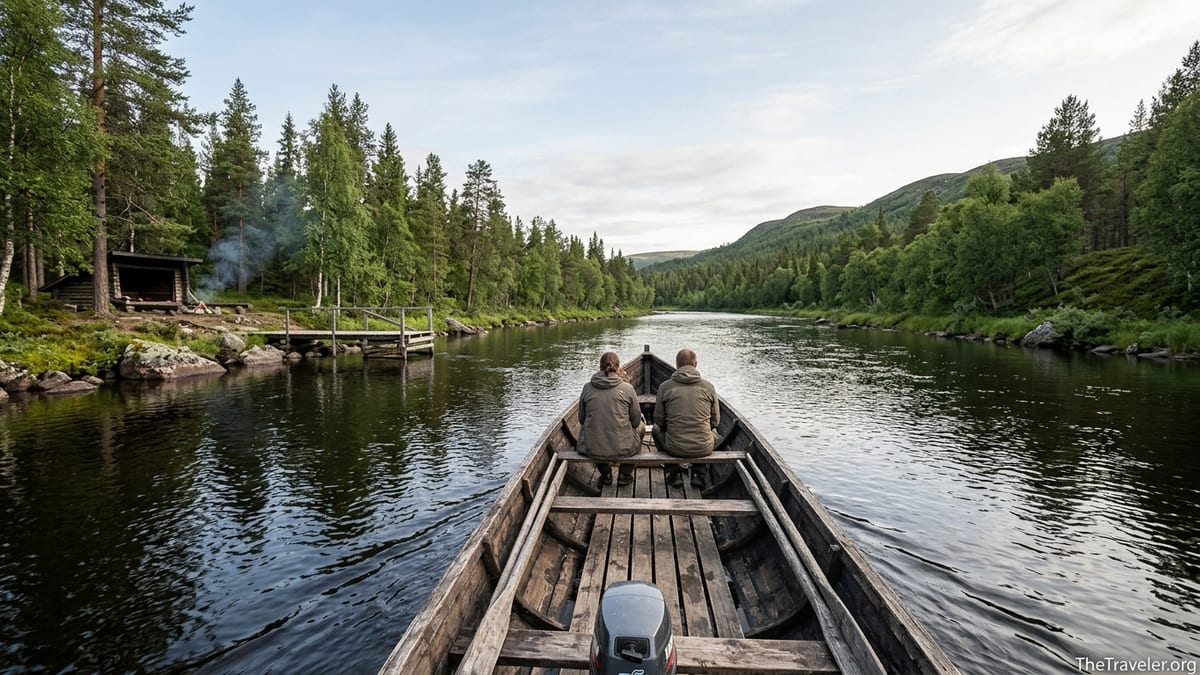
The signature Lemmenjoki experience is the riverboat trip from Njurgalahti to the Ravadas Falls area. Local outfits based at Lemmenjoki Holiday Village Ahkun Tupa offer daily departures in summer to both the falls and the historic gold panning areas along the upper river. These wooden riverboats are long, narrow craft designed for shallow Lapland rivers, usually with bench seating and basic rain protection.
A typical Ravadas excursion is marketed as a half-day tour lasting around three to four hours. The boat follows the winding Lemmenjoki upstream, passing reindeer grazing areas, spruce-clad banks and occasional simple cabins. Near the falls, passengers disembark for a short unguided or lightly guided walk to viewing points and campfire sites. Many tours include coffee and grilled sausages over an open fire, so you may find yourself sipping campfire coffee from a tin mug while watching the rapids thunder through the ravine.
Prices vary by operator and inclusions, but you can expect a standard Ravadas boat trip in peak season to cost in the region of 60 to 90 euros per adult, with discounts for children. Some operators advertise separate one-way “boat taxi” services up the river for hikers, which can be slightly cheaper and more flexible on timing. When comparing options, check whether the quoted price includes refreshments, guiding at the falls and national park fees, or if those are extra.
In practice, these river trips are suitable for most travellers with basic mobility. Boarding is from simple jetties and riverbanks, and the walk to the falls is on marked paths, though roots and mud can make it uneven. Dress for changing weather even in July: waterproof shell layers and a warm fleece are more important than looking good in photos. Mosquitoes can be intense during still, warm spells, so insect repellent and a light head net are useful to pack.
River Trips With Gold Panning & Sámi Cultural Experiences
Many travellers are drawn to Lemmenjoki by its gold rush history. Small-scale gold panning and claim working continues today under tightly regulated, mostly manual methods, and a handful of family-run tours let visitors see this side of the park up close. Operators based around Njurgalahti and Menesjärvi, such as Paltto Elämysretket and other local Sámi-run companies, typically offer combined river, gold and culture days that feel more personal than larger coach excursions elsewhere in Lapland.
A classic format is a full-day “gold and river” trip. You travel by boat up the Lemmenjoki or one of its tributaries to a small gold claim site, often a simple clearing with sluice boxes, tarps and basic camp buildings. There, your hosts demonstrate traditional panning techniques and let you try washing gravel in a pan yourself. Most visitors only find tiny specks, but the main draw is hearing stories about winters on the claim, the early gold rush and how regulations now favour low-impact, manual methods.
These days often include a wilderness lunch of salmon or reindeer cooked over open fire, plus time to talk about Sámi culture and reindeer herding, which remains an important livelihood in the region. Some tours incorporate storytelling about Sámi place names along the river, or short walks to lávvu (traditional tent) sites and old grazing lands. Expect to pay more than for a simple Ravadas cruise: a full-day river, gold and culture package with lunch commonly comes in somewhere around 120 to 180 euros per adult, depending on group size and inclusions.
For visitors travelling in winter or shoulder seasons when boats are not running, hotels and guesthouses around Menesjärvi and Inari sometimes run gold-themed day trips by road to historic areas and museums, where you learn about Lemmenjoki’s role in Lapland’s gold rush and try indoor panning troughs. While these are further from the national park itself, they can be a good compromise if you are visiting in March or April for skiing and still want a taste of the gold story.
Guided Hikes, Wilderness Huts and Overnight Adventures
Although riverboats are the easiest way to reach Lemmenjoki’s interior, hiking remains the park’s soul. Marked trails radiate from Njurgalahti and Lemmenjoki village into longer loop routes that connect a string of open wilderness huts and reservable cabins. For experienced backpackers, these can form multi-day circuits of 50 to 80 kilometres, but guided options make shorter taster trips accessible even if you have never wild-camped before.
Local guides and small tour companies in the Inari and Menesjärvi area offer overnight and two-night treks that combine one-way river transport with a hike back along marked routes. A common itinerary is to ride upriver in the morning, then hike via Ravadas or Morgamoja back toward Njurgalahti, overnighting in an open hut or tent and finishing beside the harbour the following afternoon. Open wilderness huts in Lemmenjoki are simple log buildings with bunks, a stove and basic equipment, shared by whoever arrives; guides help you understand the etiquette and find less-crowded options.
Prices for guided overnight treks usually include river transport, guiding, most camping equipment and some or all meals. As a rough indication, a two-day, one-night hut-to-hut trek in Lemmenjoki might cost in the ballpark of 250 to 400 euros per person for small groups. If you are travelling with your own tent and cooking gear, guiding-only rates can be lower, especially outside the July peak.
When considering an overnight tour, be realistic about your fitness. Lemmenjoki terrain is often boggy with boardwalks, and elevation gain can surprise those expecting flat forest. Even relatively short days of 10 to 15 kilometres can feel demanding with a pack. Good waterproof boots, trekking poles and a willingness to hike in rain will make a significant difference to your comfort. Booking with a local guide means someone else monitors weather, river levels and hut capacity while you focus on enjoying the wilderness.
Where to Stay: Holiday Villages, Cabins and Wilderness Hotels
Unlike some more developed Finnish national parks, Lemmenjoki has no large resort centre inside the park boundaries. Instead, services cluster in small villages around the edges, particularly Lemmenjoki village at Njurgalahti harbour and Menesjärvi about 8 kilometres away. Choosing the right base can make your tours and river trips logistically much simpler.
At Njurgalahti itself, Lemmenjoki Holiday Village Ahkun Tupa provides simple cabins, camping facilities and a restaurant right beside the boat jetty, which is extremely convenient if you plan to join early-morning river excursions or return late from an evening cruise. Slightly further away, traditional Sámi homesteads like Lemmenjoen Lumo and other small family-run lodges along the river combine accommodation with their own adventure programs, giving you direct access to boat tours and guided hikes starting from the doorstep.
Menesjärvi, on the lakeshore a short drive from Njurgalahti, has a wilderness hotel and several cabins that appeal to travellers seeking more comfort and activities beyond Lemmenjoki itself. From here, it is practical to combine a Lemmenjoki river trip one day with other Lapland experiences the next, such as lake fishing, bear-watching hides in neighbouring wilderness areas or autumn aurora photography.
For budget-conscious travellers and experienced hikers, mixing nights in commercial accommodation with nights in open huts or tent camping inside the national park works well. You might, for example, stay at a holiday village in Njurgalahti for the first night, join a river taxi to a starting point upriver, spend two nights hiking hut-to-hut, then return to a cabin or room for a final shower and sauna. Local tour operators are generally happy to advise on this kind of semi-guided plan if you book at least one river service or guided day with them.
When to Go and How to Plan Your Lemmenjoki Tours
The best time for Lemmenjoki river trips and hiking tours is roughly from mid-June to early September, when the river is navigable, trails are snow-free and local companies operate regular departures. June brings long days and fast-flowing water, July is typically warmest and busiest, while late August and early September offer autumn colours and cooler nights that reduce mosquito numbers. Outside this window, snow, ice and short daylight hours make river traffic impractical and guided programs much more limited.
Reaching Lemmenjoki usually involves travelling first to Inari or Ivalo. Many visitors fly into Ivalo Airport and continue by rental car; the drive to Lemmenjoki village takes around one and a half to two hours depending on conditions. Without a car, it is sometimes possible to use regional buses or pre-booked taxi transfers to reach Njurgalahti or Menesjärvi. Once at your base, operators can pick you up for tours or you can walk to the harbour if staying nearby.
Because operators are small and group sizes intentionally limited, it is wise to reserve your preferred river tours and overnight programs well in advance for July and early August, particularly if you need specific dates to match flights. In shoulder seasons like early June or mid-September, schedules may be more flexible but departures can also be cancelled if there are too few participants or river levels are not suitable, so building an extra buffer day into your itinerary is helpful.
When comparing tours, pay attention not only to price, but also to group size limits, language of guiding, what meals are included and whether thermal clothing or rain gear is provided. Some family-run outfits take just 6 to 10 passengers per boat and focus on storytelling in Finnish, while others actively cater to international guests with English-speaking guides and printed information about local nature and culture.
Responsible Travel in a Fragile Arctic Environment
Lemmenjoki’s size and sparse visitor infrastructure make it feel like endless wilderness, but the environment is still vulnerable. The park is important for semi-domesticated reindeer, migratory birds and fragile fell vegetation, and many goldfields and cultural sites are small-scale operations living side by side with tourism. Choosing responsible tours and behaving considerately has a real impact here.
Look for operators who clearly follow national park guidelines: sticking to official routes, respecting gold prospectors’ working claims and using established fire sites. On the river, responsible captains keep speed reasonable to avoid bank erosion and disturbance to nesting birds. If a tour includes gold panning, it should focus on manual techniques with pans and simple sluice boxes rather than heavy machinery, reflecting current regulations inside the park.
As a visitor, you can contribute by packing out all your rubbish, using composting toilets at huts and boat jetties where available, and avoiding walking on sensitive lichen-covered fell tops outside marked trails. In summer, keep an eye out for reindeer, especially near the riverbanks where herds may cross; give them plenty of space and follow your guide’s advice on when to remain still or move past quickly.
Finally, remember that Lemmenjoki is Sámi homeland as well as a national park. Many place names, stories and livelihoods here long predate tourism, and the most meaningful tours are often those led by local families. Booking with local Sámi or Lappish-owned companies, buying handicrafts directly and listening respectfully to guides’ perspectives helps ensure that tourism income supports the communities who know this river best.
The Takeaway
Lemmenjoki National Park offers a rare combination of true wilderness and accessible experiences. By basing yourself in Njurgalahti or Menesjärvi and booking one or two well-chosen tours, you can travel deep upriver by wooden boat, stand beside remote waterfalls, try your hand at gold panning and sleep in simple wilderness huts, all within the space of a few days.
Start with a classic half-day Ravadas Falls river trip to get your bearings, then consider adding a gold and culture day or an overnight hike that uses river transport one way. Choose locally run operators that limit group sizes and share authentic stories about gold, reindeer and Sámi life, and plan your visit for the June to September window when boats and trails are fully open.
With realistic expectations about weather, simple facilities and the physicality of hiking, Lemmenjoki can be the highlight of a Lapland journey: a place where you experience stillness, big skies and the quiet rhythm of one of Finland’s great wilderness rivers.
FAQ
Q1. How long do typical Lemmenjoki riverboat trips last?
Most standard Lemmenjoki riverboat tours to Ravadas Falls run for around three to four hours, including time ashore to walk to viewpoints and enjoy a campfire break.
Q2. Do I need previous hiking experience to join a Lemmenjoki tour?
No. Many river cruises and short guided walks are suitable for beginners with basic mobility. Longer overnight hikes require moderate fitness but not advanced mountaineering skills.
Q3. What does a Lemmenjoki gold panning tour usually include?
A typical gold panning tour includes boat transport to a claim site, demonstrations of traditional panning, a chance to try it yourself and often a simple wilderness meal by the fire.
Q4. When is the best month to visit Lemmenjoki for river trips?
July and early August generally offer the warmest weather and the most frequent boat departures, while June and early September can be quieter but slightly cooler.
Q5. Can I stay overnight inside Lemmenjoki National Park?
Yes. You can stay in open wilderness huts, reservable cabins or your own tent at marked sites. Several guided tours combine river transport with one or two nights in the park.
Q6. Is Lemmenjoki suitable for families with children?
Short riverboat tours and easy walks near Njurgalahti are popular with families. Younger children should be supervised closely on jetties, in boats and near campfires and waterfalls.
Q7. How much should I budget for a day tour in Lemmenjoki?
As a general guide, half-day river trips often cost around 60 to 90 euros per adult, while full-day river, gold and culture packages are typically more.
Q8. What clothing should I bring for summer tours?
Bring waterproof layers, a warm fleece, sturdy shoes or boots, a hat, insect repellent and, if you are sensitive to bites, a lightweight mosquito head net.
Q9. Are Lemmenjoki tours available outside summer?
River-based tours are mostly limited to the snow-free months. In late winter and early spring, some accommodation providers offer alternative gold and culture experiences by road or on snow.
Q10. How far in advance should I book Lemmenjoki tours?
For July and early August it is wise to book several weeks, and ideally a couple of months, in advance, especially for full-day or overnight programs.