


More news on this day
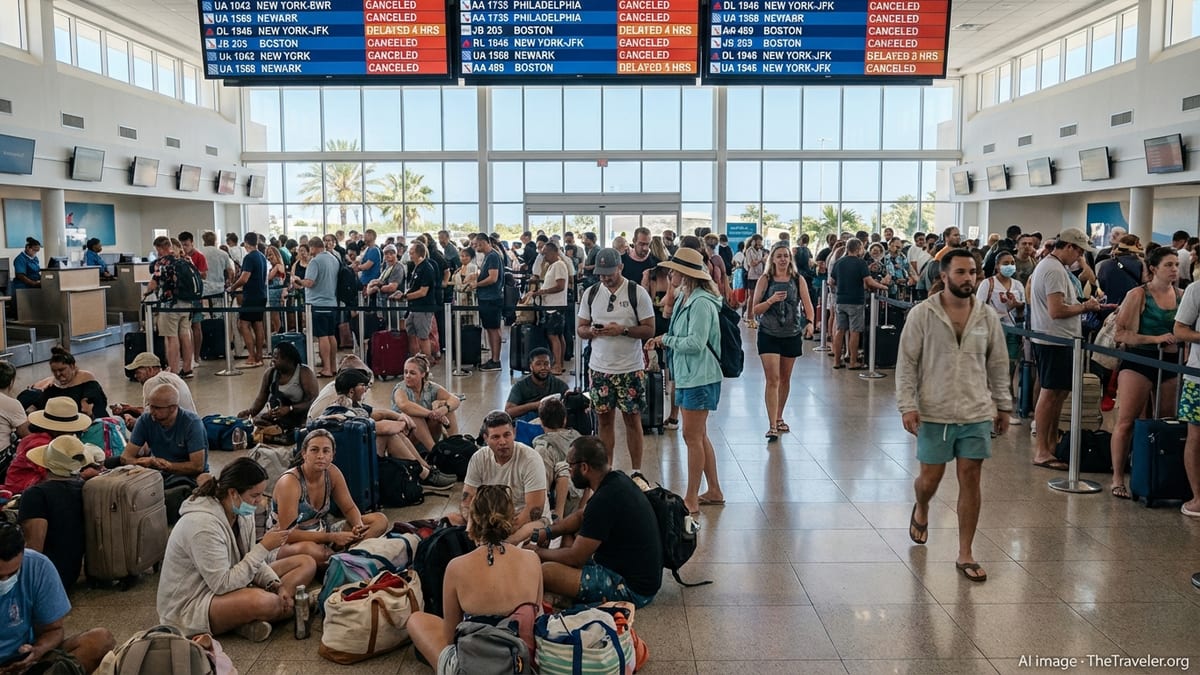
A large-scale power failure across parts of the Caribbean has left thousands of visitors facing grounded flights, darkened resorts and patchy communications, as foreign embassies activate contingency plans to help citizens stranded in popular beach destinations.
Get the latest news straight to your inbox!
Power Grid Fragility Meets Peak Travel Season
Publicly available regional assessments describe electricity reliability as a persistent weak point for Caribbean tourism, with some islands experiencing multiple outages each year and many lasting several hours at a time. Analysts note that repeated disruptions are increasingly intersecting with peak travel periods, magnifying the impact on international visitors who depend on stable power for flights, accommodation and digital services.
Recent economic reviews for the wider Caribbean highlight that blackouts can quickly spill over into tourism performance, contributing to reduced visitor arrivals and a deterioration of the on-the-ground experience when outages affect hotels, restaurants and tour operators. In destinations where tourism represents a substantial share of gross domestic product, prolonged loss of power can ripple through local employment, government revenue and recovery budgets, especially when it coincides with hurricane season.
Energy systems in the region face a mix of aging infrastructure, fuel supply constraints and exposure to hurricanes and coastal flooding. While several governments and development banks have invested in new plants and grid upgrades in recent years, including renewable projects, the scale of current disruptions underscores how vulnerable visitor-dependent economies remain when a major system failure or cascading outage occurs across multiple islands at once.
Climate outlooks for the current season point to hotter seas and high humidity, conditions that can drive electricity demand for cooling just as storms and heavy rain threaten aboveground lines and coastal facilities. This combination heightens the risk that blackouts will coincide with high occupancy in resorts, cruise calls and airlift, increasing the number of travelers directly affected when the lights go out.
Resorts in the Dark and Flights Thrown Off Schedule
Initial reports from affected islands describe a patchwork of resort experiences, with some large hotels switching to on-site generators to maintain partial service, while others face complete shutdowns of air conditioning, elevators and water pumps. In one recent Caribbean case, a resort that lost its dedicated power plant was forced to close its hotel operations and relocate dozens of guests to alternative properties until electricity could be restored, underscoring how quickly a local outage can upend visitor plans.
Airports across the region are designed to operate with backup systems, but extended grid failures can still disrupt radar, check-in, baggage handling and terminal cooling. Flight schedules become vulnerable when ground systems must be powered down or when fuel supply logistics are interrupted, leaving travelers facing rolling delays or last-minute cancellations. For visitors attempting to connect onward to North America or Europe, the sudden loss of power can sever the digital tools they rely on to rebook flights or contact airlines.
Smaller islands and outer cays, where tourism often depends on a handful of guesthouses and a single small airstrip or ferry dock, can be even more exposed. A regional blackout and communications breakdown can cut off card payment networks, online reservation systems and basic lighting for piers and runways. In such areas, visitors may find themselves unable to withdraw cash, confirm bookings or receive updated travel information until grid power and data networks are restored.
Local tourism boards and hotel associations in several Caribbean destinations have spent recent seasons refining crisis playbooks, including standard operating procedures for securing generators, prioritizing critical systems such as refrigeration and water pressure, and coordinating guest relocation when properties cannot safely remain open. The latest blackout is providing a new test of how these contingency measures perform when multiple islands confront simultaneous disruptions.
Embassies Activate Crisis Protocols for Stranded Citizens
Foreign embassies and consulates across the Caribbean maintain standing crisis-response frameworks designed for events ranging from hurricanes to civil unrest and infrastructure collapse. Publicly available guidance from diplomatic services explains that assistance can include helping citizens replace lost documents, providing information on local conditions and, in exceptional circumstances, coordinating departure options when commercial travel is severely disrupted.
With the current blackout affecting both transport and communications, consular teams are relying on pre-established channels such as registration systems, warden networks and embassy websites to push updates about airport operations, curfews, and known hotel closures. Published advisories emphasize that embassies do not function as travel agencies and generally cannot offer routine transportation inside a country, but they can help citizens understand what commercial options remain and what to expect if departure assistance becomes necessary.
In previous Caribbean crises triggered by severe storms and infrastructure failures, foreign missions have coordinated with local authorities, airlines and, in some cases, charter operators to move stranded tourists from heavily damaged or inaccessible islands to regional hubs once runways and ports were deemed usable. Current reports suggest a similar pattern is emerging, with diplomatic posts prioritizing the consolidation of citizens in locations where power, security and onward air links can be more reliably maintained.
Many embassies also use major disruptions to remind travelers about the importance of enrolling in alert systems before or shortly after arrival. These platforms allow consular staff to send targeted security and logistics updates during events such as blackouts, including information on meeting points, documentation requirements for emergency travel documents, and any cost-recovery obligations associated with government-coordinated evacuation flights.
Traveler Options While Waiting for Power and Flights
For visitors currently stuck in affected destinations, the first decision is often whether to remain in place at a functioning hotel or attempt to move to a different part of the island or another island entirely. Publicly available travel advisories for Caribbean countries generally recommend that travelers shelter where basic services and security are stable, especially if airports are operating on limited schedules and road conditions are uncertain.
Where resort generators are functioning, guests may still face restrictions on air conditioning, hot water and elevator usage, as properties ration fuel and prioritize vital systems such as lighting, refrigeration and communications equipment. Travelers are being advised via tourism board updates and embassy alerts to conserve device batteries, share charging ports where available, and monitor lobby notice boards or reception desks for printed updates when wireless networks are unstable.
If local transport and ferry services remain intermittent, it can be difficult for tourists to reach embassies or centralized assistance points in person. In response, some tourism ministries and visitor assistance programs in the region maintain dedicated hotlines and traveler support units that can coordinate with accommodation providers to relay information or, in urgent cases, arrange escorted transfers once conditions allow. Travelers are encouraged to verify the contact details of these services through official government or tourism board channels before making plans.
Travel insurance has become a focal point in this crisis, as policies differ sharply on whether nationwide power failures and related flight disruptions qualify for trip interruption or delay benefits. Consumer advocates recommend that stranded visitors document conditions with photos, written statements from accommodation providers, and any airline communications regarding cancellations, so they can substantiate claims once they return home. Policyholders are also urged to contact insurers directly by phone, if available, rather than relying solely on mobile apps that may not function during extended outages.
Planning Future Caribbean Trips in an Era of Energy Risk
The current blackout is intensifying discussion about how travelers can better assess infrastructure risks when planning Caribbean vacations. Regional tourism and development reports increasingly encourage visitors to research the resilience of their chosen destination, including whether major resorts advertise backup generation capacity, water storage and clear crisis-communication practices.
Some Caribbean governments and hotel associations are promoting certification schemes and building codes that reward properties investing in more resilient energy systems, such as solar plus battery installations and hardened microgrids. While these projects are still unevenly distributed across the region, they point toward a model in which key tourism zones can maintain essential services even if the national grid experiences severe disruption.
Travel planners and airlines are also adjusting, with route development decisions taking into account the reliability of destination infrastructure and the speed at which airports and hotels have historically bounced back from previous shocks. Industry research shows that destinations able to restore power quickly and communicate clearly after hurricanes or grid failures tend to recover visitor confidence sooner than those where outages and uncertainty linger for weeks.
For now, the blackout is serving as a stark reminder that postcard-perfect beaches exist within complex and sometimes fragile systems. As embassies work to assist stranded citizens and local tourism operators navigate an unexpected shutdown, the episode is likely to accelerate both infrastructure investment discussions within the region and a more risk-aware approach among travelers weighing where, and when, to book their next Caribbean escape.