


More news on this day
Widening protests over living costs, housing pressures and education policy are rippling across multiple European countries this week, disrupting transport and raising questions about when national foreign ministries will escalate to formal travel warnings for affected destinations.
Get the latest news straight to your inbox!
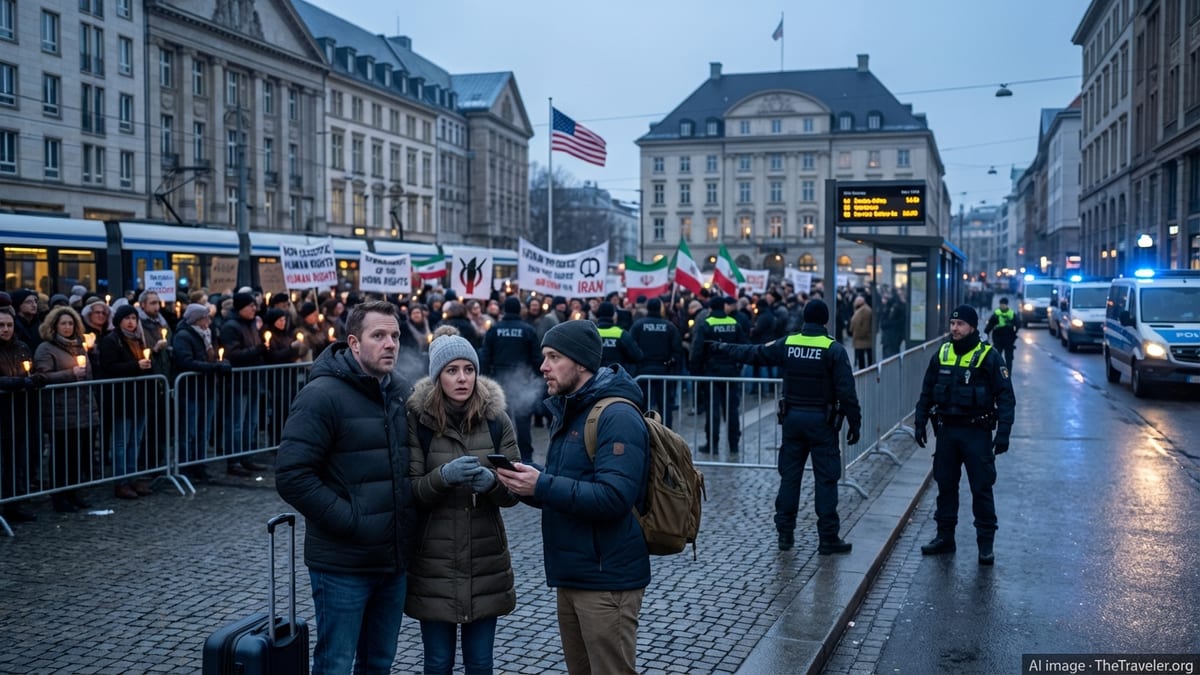
Unrest Moves Beyond France Into a Broader European Wave
Publicly available information shows that the latest phase of unrest was triggered in France, where large student-led marches on 17 October 2026 were followed by nighttime rioting, significant property damage and thousands of arrests in major cities including Paris, Lyon and Marseille. Demonstrations that began around school conditions and economic hardship have widened into broader expressions of frustration over prices, housing and access to public services.
Coverage of events in Italy, Spain, Belgium and Portugal indicates that similar grievances are now on display across much of the continent. Reports highlight marches in Brussels against austerity measures, housing rallies in Madrid and combined student and labor actions in Rome and Milan. In several locations, peaceful daytime gatherings have been followed by isolated clashes with security forces, vandalism and arson.
Local media and international observers have drawn connections between these protests and a wider sense of strain following months of rising fuel and food prices, along with sharp increases in urban rents. While the specific triggers differ by country, the result for travelers is a patchwork of large public gatherings, spontaneous road blockages and heavy police deployments in central districts of major cities.
Despite the turbulence, many tourism services remain open and operating. Hotels, restaurants and cultural attractions in cities such as Paris and Rome continue to receive visitors, with disruption tending to be concentrated around known protest routes, transport interchanges and symbolic public squares rather than across entire metropolitan areas.
Travel Advice Tightens in Europe, But Warnings Are Uneven
Some European governments have moved quickly to update travel advice for neighboring states. Germany, for example, has recently revised its guidance for trips to France, highlighting the risk of further protests and urging visitors to remain alert, avoid demonstrations and expect short-notice disruption to transport and city-center access. Similar messages have been issued in advisories relayed to citizens of countries including the Netherlands and the Czech Republic.
Other national services that monitor international security conditions, such as those in Ireland, Australia and New Zealand, have also refreshed their pages for France and selected European destinations in recent days. These notices generally stop short of advising against travel, but they underline the possibility of sudden protests, recommend staying away from large gatherings and encourage travelers to monitor local news and official social media channels for updates on planned marches or strikes.
By contrast, several foreign ministries outside Europe have so far framed the unrest in more cautious terms. Public statements from authorities in Asia and the Middle East, for instance, refer to the situation as one that warrants heightened awareness rather than a formal escalation to restrictive travel levels. Advisories from these countries often emphasize that flights are continuing, airports remain open and border procedures are functioning normally, while still urging citizens to avoid protest sites and to register contact details with embassies where this is available.
For travelers, this divergence in messaging means that the perceived level of risk may depend heavily on which advisory system they consult. While no major outbound country has announced a broad ban on travel to Western Europe over the protests, the language in some warnings points to an environment that can change quickly, especially around weekends and politically sensitive dates.
Key Hotspots and Disruption Risks for Visitors
In France, information from government bulletins and travel advisories highlights Paris, Marseille, Lyon, Toulouse and Nantes as cities that have seen repeated demonstrations in central districts. In the capital, large gatherings have been reported around Place de la République, Nation, Bastille and major boulevards linking student-heavy neighborhoods with government and financial areas. On protest days, visitors can expect closures of selected metro stations, tram interruptions, diversions to bus routes and rolling traffic stoppages as marches pass.
Italy has experienced a parallel wave of activity, particularly in Rome, Milan, Turin, Bologna and several port and logistics hubs in the south. Reports describe student marches converging on ministries and central squares, along with sporadic blockades near airports and freight terminals. Announcements from Italian authorities indicate that national and local strikes are likely to compound these patterns later in October, with rail, metro and regional bus services particularly exposed to walkouts and slowdowns.
Further west, Spanish cities such as Madrid and Barcelona have hosted large housing and cost-of-living marches, some of which have evolved into semi-permanent protest camps in prominent plazas. In Belgium, demonstrations in Brussels have drawn tens of thousands of people at peak moments, passing by government buildings and European Union institutions. Travelers staying close to these districts report that access to hotels, museums and business venues can be temporarily limited by security cordons and rolling road closures.
Published coverage also points to growing, if more localized, protest activity in Portugal and the Netherlands, where demonstrations are often scheduled in advance and publicized through municipal notices and activist networks. Although on-the-ground accounts suggest that many events remain peaceful, the presence of masked groups and the use of fireworks or projectiles in a minority of marches increase the possibility that a previously calm gathering may deteriorate with little warning.
Foreign Ministries Weigh When to Escalate
The current situation raises questions about when foreign ministries decide to shift from general caution to explicit travel warnings. Advisory systems commonly use tiered levels, with early stages focused on awareness and later stages reserved for serious security threats or sustained violence. At present, many Western European destinations remain at baseline or moderate tiers for most outbound markets, reflecting both the economic importance of travel and an assessment that unrest is still geographically limited.
Open-source policy documents indicate that governments usually consider several factors before raising alert levels, including the frequency of violent incidents, the targeting of foreigners, the reliability of local policing and emergency services, and whether unrest is likely to affect critical infrastructure such as airports and intercity rail corridors. In the current protests, most recorded incidents have occurred between domestic groups and national authorities, with limited evidence of visitors being directly targeted.
Some governments have nonetheless chosen to issue event-specific alerts rather than broad warnings. These targeted updates flag dates on which unions, student movements or civil society coalitions have called for nationwide action, allowing travelers to adjust plans without changing entire itineraries. By focusing on particular weekends or high-profile gatherings, ministries aim to balance the need for precaution with a desire to avoid unnecessarily deterring travel.
Given the fluid nature of the protests, foreign ministries are signaling that advisory pages can change with little advance notice. Travelers planning imminent trips are therefore encouraged by publicly available guidance to recheck destination-specific information shortly before departure, and again during their stay, rather than relying solely on the status that applied at the time of booking.
Practical Guidance for Travelers Heading to Protest-Affected Cities
For those already booked to visit Europe in the coming weeks, existing advisories and destination guides offer a range of practical measures that can reduce exposure to disruption. These include allowing extra time when traveling to or from airports and major train stations, checking transport operator websites or apps on the morning of travel, and confirming any time-sensitive bookings such as tours, restaurant reservations or event tickets.
Travel risk bulletins recommend identifying in advance the main squares, boulevards and university districts in each city that serve as traditional gathering points for marches, and planning accommodation and sightseeing routes that minimize the need to cross these areas on days when protests are advertised. Visitors are also urged to carry photo identification, keep copies of travel documents securely backed up and maintain contact details for their embassy or consulate in case they need assistance.
Insurance and security advisories further suggest that travelers avoid photographing or filming protests, refrain from engaging in political debates during demonstrations and move calmly away at the first sign of tension, such as the arrival of riot-control units or the use of fireworks and flares. In crowded locations, stepping into a side street, café or shop can provide a short-term refuge until the main body of a march has passed.
Although images of burning vehicles and clashes make headlines, the broader picture presented by current reporting is one of targeted disruption rather than generalized collapse in safety. Visitors who stay informed, remain flexible with their plans and heed evolving public guidance are still reaching and enjoying European destinations, even as governments assess whether the widening protests warrant more forceful travel warnings in the days ahead.