


More news on this day
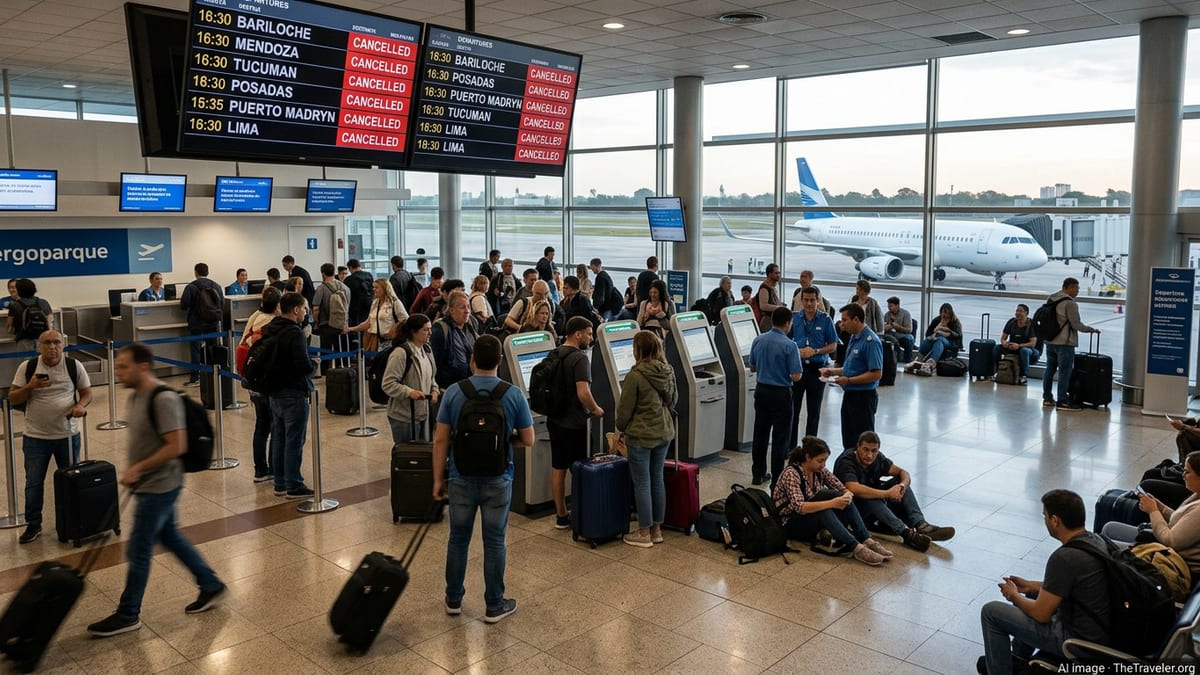
Domestic air travel in Argentina has been heavily disrupted as a combination of severe winter weather and labor unrest among ground-handling staff triggers widespread cancellations and delays at Buenos Aires’ Aeroparque Jorge Newbery, the country’s busiest hub for internal flights.
Get the latest news straight to your inbox!
Stormy Weather Triggers Wave of Domestic Disruptions
Published coverage from Argentine media indicates that strong winds and persistent rain affecting central regions of the country since July 2 have led to significant disruption for cabotaje services at Aeroparque Jorge Newbery. Reports describe early-morning delays spreading through the day as low clouds and gusty crosswinds forced airlines to slow operations and extend separation between takeoffs and landings.
By the evening of July 2, multiple departures to key domestic destinations such as Córdoba, Mendoza, Bariloche and Salta had been canceled outright, while others were rescheduled into the late-night and early-morning hours. Passengers already checked in for affected flights were asked to remain in the terminal while carriers worked through revised departure slots and adjusted crew schedules.
On July 3, as weather conditions gradually improved, some normality began to return to Aeroparque’s schedule, although residual delays remained visible across many mid-morning and afternoon services. Real-time tracking data for domestic routes into and out of the airport showed knock-on effects from the previous day’s interruptions, with aircraft arriving late from the interior and subsequently departing behind schedule back to Buenos Aires.
Aeroparque, located close to Buenos Aires’ city center on the Río de la Plata shoreline, is especially exposed to wind and low cloud. Aviation observers note that winter storm systems commonly prompt temporary capacity restrictions at the airfield, with even short-lived closures or reduced runway acceptance rates quickly cascading into wider schedule disruption for domestic travelers.
Labor Action by Ground-Handling Staff Compounds Delays
The weather-related disruption has coincided with a separate source of disturbance at Aeroparque: industrial action by workers from Intercargo, the state-owned company responsible for ramp and baggage-handling services for many airlines. According to a municipal notice from Bahía Blanca and other local reporting, a surprise work stoppage that began around July 2 affected departure procedures and baggage delivery for flights operating at Jorge Newbery.
The measure reportedly slowed aircraft turnaround times, particularly for carriers that rely heavily on Intercargo for check-in support, loading and unloading of baggage, and pushback services. As a result, flights that were otherwise cleared for departure under improving weather conditions still experienced extended holds at the gate, while arriving passengers faced protracted waits at baggage carousels.
Publicly available information suggests that several thousand passengers may have been stranded or significantly delayed by the combination of labor action and unsettled weather. Images and descriptions on social channels and local outlets show crowded departure halls, with travelers queuing to receive updated itineraries, meal vouchers or rebooking options from airline customer-service desks.
The latest disruption follows a broader context of union measures and negotiations in Argentina’s aviation sector over recent years, where work-to-rule actions, limited stoppages and short-notice strikes have periodically impacted services at both Aeroparque and Ezeiza International Airport.
Key Domestic Corridors and Regional Links Affected
Flight-status aggregators and schedule data indicate that Aeroparque’s most frequented domestic routes, including services to Iguazú, El Calafate, Mendoza, Bariloche, Ushuaia, Córdoba and northern provincial capitals, saw a mix of outright cancellations and rolling delays. These corridors are vital for Argentina’s tourism industry as well as for business and government travel, meaning disruptions at Jorge Newbery quickly ripple across the national network.
Several airlines operating from Aeroparque, among them Aerolíneas Argentinas and low-cost competitors, adjusted timetables and consolidated some departures to manage aircraft and crew availability. In some cases, passengers initially holding tickets for daytime flights were reprotected onto later services or rerouted via alternative domestic airports when seats were available.
Information from route-planning platforms shows that Aeroparque’s domestic operations are closely interlinked with regional international services to neighboring countries. As aircraft and crews rotate between short regional hops and internal sectors, delays in cabotaje operations can spill over into flights connecting Buenos Aires with cities in Chile, Brazil, Paraguay and Uruguay, although the most acute disruption in early July has centered on Argentina’s internal network.
For many travelers, the combined weather and labor issues have raised concerns about tight connections within Aeroparque, particularly for those attempting same-day links from Patagonia or the northwest to onward flights departing Buenos Aires. Travel forums in recent months have frequently pointed to the risk of missed connections when even routine short delays occur at the city-center airport.
Passenger Experience Strained as Airport Urges Early Arrival
Separate from the immediate disruption, airport information services monitoring Aeroparque operations advise passengers to arrive well ahead of departure during periods of irregular operations. Guidance updated in early July recommends planning to be at the airport at least two hours before domestic flights and three hours before international or regional departures, reflecting increased processing times during congested periods.
Travelers caught in the latest wave of interruptions have reported long lines at check-in counters and security checkpoints as airlines rebook customers and adjust seat assignments. Limited gate capacity for domestic flights, combined with the need to hold some aircraft on the ground while weather conditions stabilize or while ground-handling staff resume full duties, has further constrained movement through the terminal.
While Aeroparque has in recent years received recognition from industry groups for its upgrades and passenger amenities, the events of early July underscore the vulnerability of a high-intensity, single-runway urban airport to external shocks. When ground-handling capacity tightens at the same time that adverse weather reduces the pace of landings and takeoffs, even modest disruptions can quickly translate into hours of additional travel time for passengers.
Consumer advocates and travel commentators in Argentina continue to advise domestic flyers to monitor airline notifications closely, allow generous buffers between connecting flights, and keep flexible plans when traveling through Aeroparque during the winter season, when both climatic instability and industrial actions are more likely to intersect.
Upcoming Maintenance Closure Adds Further Uncertainty
Looking ahead, published advisories highlight that Aeroparque Jorge Newbery is scheduled to suspend operations for approximately 48 hours in late August to accommodate runway maintenance. Notices circulating in aviation bulletins and travel-industry communications describe a planned closure spanning August 25 to August 27, with all arrivals and departures temporarily shifted to alternative airports in the Buenos Aires metropolitan area.
Airlines have begun adjusting their schedules around the closure window, and some carriers have already alerted passengers to future changes in departure airports or times for trips falling within those dates. The planned shutdown is part of ongoing infrastructure work intended to maintain runway safety and accommodate continued growth in domestic traffic, but it will also compress a considerable volume of flights into a short period before and after the closure.
For travelers who have already faced cancellations and delays at Aeroparque in early July, the prospect of another period of disruption linked to maintenance work and related schedule changes adds to the complexity of planning winter and early spring itineraries. Industry analysts suggest that the preventive work, while disruptive in the short term, is aimed at reducing the likelihood of unplanned closures or restrictions later in the year.
With Aeroparque serving as a critical gateway between Buenos Aires and the rest of Argentina, the combination of recent weather impacts, labor measures and upcoming runway works underscores the importance for airlines and regulators of coordinating contingency plans and communicating clearly with the traveling public.