


More news on this day
Weather conditions around Costa Rica’s main international gateway, Juan Santamaría International Airport near San José, are causing a series of flight delays and schedule disruptions at the start of June’s green season.
Get the latest news straight to your inbox!
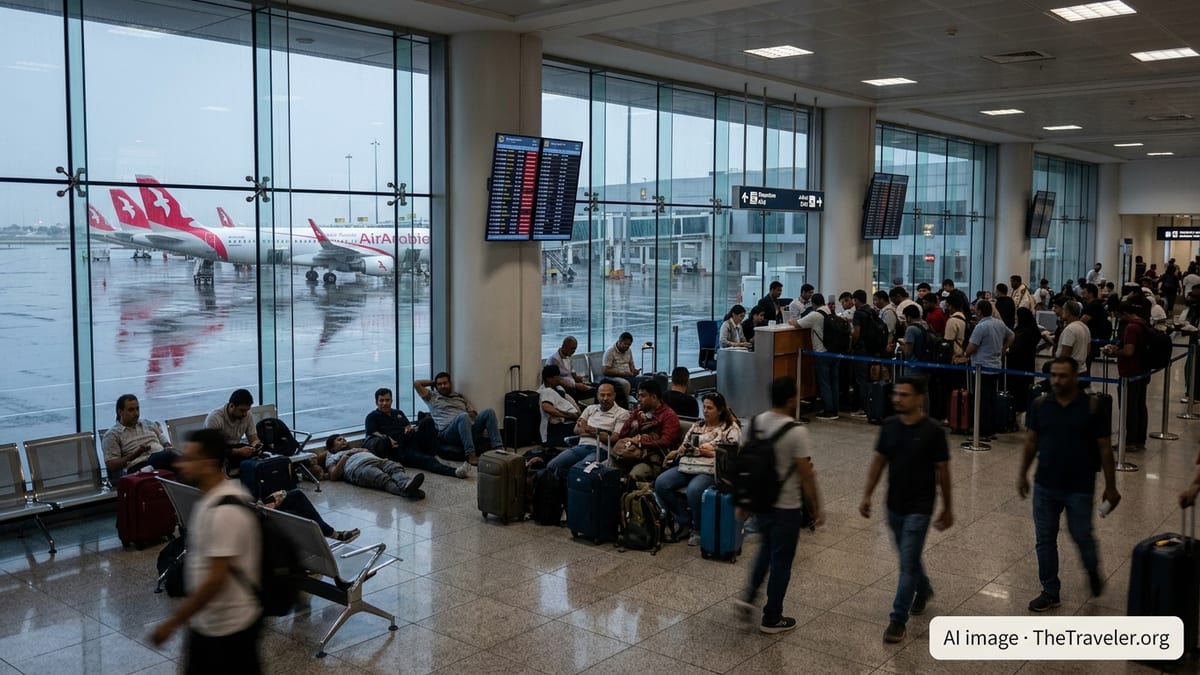
Afternoon Storms Trigger Delays and Diversions
Publicly available flight tracking data and local media coverage indicate that operations at Juan Santamaría International Airport have been slowed at various points this week by deteriorating afternoon weather, including low clouds, rain showers and reduced visibility on approach. Several arriving jets have held in stacks outside the Central Valley or diverted to alternate airports when conditions briefly dropped below preferred landing limits.
Live timetable information for San José shows that a number of flights arriving from North American gateways such as Orlando and other regional hubs have been running behind schedule, with delays typically ranging from 20 minutes to more than an hour. In several cases departure slots from origin airports have been pushed back to avoid periods of heavier rain and convection around the Costa Rican capital.
Local news reports from previous weather events at the airport describe a pattern that is repeating in early June, with aircraft assigned additional holding patterns or temporary ground stops when thunderstorms build over the surrounding mountains. According to published coverage, some services have been required to divert to Liberia’s Daniel Oduber Quirós International Airport or to remain on the ground at origin while conditions stabilize in the Central Valley.
Operational updates from airport concessionaire Aeris in earlier episodes of adverse weather highlight that decisions on whether to attempt an approach or delay a landing rest with individual airlines and flight crews. That framework appears to be in place again as carriers weigh forecast storm cells against crew duty limits and passenger connections.
Green Season Patterns Challenge Flight Operations
June marks the heart of Costa Rica’s green season, when a regular daily rhythm of weather becomes established across much of the country. Travel guides and meteorological summaries describe mornings that are often bright and relatively calm, followed by clouds building around midday and showers or thunderstorms in the afternoon, particularly in the interior highlands surrounding San José.
Climatological data published for Juan Santamaría International Airport show that the early wet-season months can bring frequent episodes of low cloud and heavy rain, especially after midday. These conditions do not usually shut the airport for long periods, but they can complicate arrival and departure sequencing, especially for narrow gaps between connecting flights and for airlines operating tight turnarounds.
Weather briefings for pilots flying into the airport emphasize rapid changes in ceiling and visibility and the impact of nearby terrain on wind patterns. The location of the airport in a basin ringed by mountains can accelerate gusty winds and funnel storm cells along predictable corridors, which in turn may require instrument approaches, longer spacing between aircraft and occasional go-arounds that further ripple through the schedule.
Recent hourly forecasts for the airfield point to this familiar cycle, with high humidity, towering clouds and bursts of rain in the afternoon hours. Even when storms are short-lived, the need to reset traffic flows and reposition aircraft can extend passenger delays well beyond the duration of the weather itself.
Impact on Travelers and Airlines
For travelers, the practical result has been a run of longer-than-expected waits at gates and on board aircraft, as well as late arrivals into the Central Valley that compress onward connections to domestic flights or ground transfers. Travel forums and advisory sites focused on Costa Rica note that passengers are being advised to allow more time between international arrivals at San José and connections to regional carriers or shuttle departures.
Airlines serving the airport are using a mix of tactics to cope with the instability, including schedule padding on routes that consistently cross afternoon storm windows and the use of holding patterns or speed reductions en route to reach San José during more favorable weather. In cases where storms are forecast to be persistent, some carriers have opted to delay boarding at origin so that passengers wait in terminals rather than on taxiways or in airborne holding stacks.
The disruptions come at a time when traffic through Juan Santamaría International Airport remains high, reflecting Costa Rica’s strong position as a regional tourism hub. Published statistics identify the airport as the country’s busiest, handling a majority of international visitors. That concentration means that even modest weather-related slowdowns can be felt across hotel check-in patterns, tour departures and car rental logistics.
Travel planners monitoring this week’s conditions have reiterated long-standing guidance for the green season: where possible, schedule arrivals into San José earlier in the day, leave generous buffers for connections, and be prepared for last-minute gate changes or departure time revisions when storm clouds build over the Central Valley.
How Costa Rica’s Main Hub Manages Adverse Weather
Juan Santamaría International Airport operates with modern navigation aids and instrument approach procedures designed to keep traffic flowing during periods of reduced visibility or precipitation. Aeronautical publications for Costa Rica outline protocols for runway use, minimum visibility requirements and coordination between air traffic services and airlines when delays exceed specific thresholds.
Past incident reports and service notes from the airport highlight that temporary suspensions of operations can occur when lightning is detected close to the field, when rainfall significantly reduces braking action on the single runway, or when cloud bases drop below prescribed minima. In such cases, arriving aircraft may be placed in holding patterns, diverted, or directed to delay departure from origin airports to avoid congestion in the airspace around San José.
Regional aviation briefings characterize Costa Rica’s weather as highly variable over short distances, with conditions at the capital’s airport sometimes differing sharply from those on either coast. This variability gives airlines flexibility to divert to alternate fields on the Pacific or Caribbean sides when necessary, though doing so introduces further delays for refueling, crew planning and eventual repositioning back to San José.
Industry analyses of delay causes in Latin American airspace consistently assign a significant share of unplanned schedule disruption to weather factors. The current pattern at Costa Rica’s main airport aligns with that broader trend, underscoring the sensitivity of tightly timed international networks to even short bursts of tropical convection.
Advice for Upcoming Arrivals and Departures
With meteorological outlooks indicating a continuation of typical green-season conditions over the Central Valley, travelers heading to or from San José in the coming days are being encouraged by travel advisories to monitor flight status frequently and to remain flexible with plans. Same-day connections to remote coastal regions or mountainous areas may be particularly vulnerable if afternoon departures from Juan Santamaría are pushed back.
Specialists in Costa Rica itineraries often recommend booking the final night of a trip in the San José area rather than on the coasts during the rainy months, reducing the risk that a weather-related delay at the main airport causes a missed international departure. That guidance is again proving relevant as thunderstorms and low clouds add minutes and sometimes hours to flight times this week.
For those already in transit, the key tools remain airline mobile applications, airport information displays and announcements in departure lounges. Publicly accessible flight-tracking platforms also provide a near real-time view of holding patterns, diversions and revised arrival estimates for aircraft bound for San José.
While current delays have largely been measured in minutes rather than days, the pattern serves as an early-season reminder that Costa Rica’s lush landscapes are sustained by frequent rain, and that the same weather systems that draw visitors to its national parks can also complicate the journey to and from the country’s primary international gateway.