


More news on this day
Powerful monsoon storms and a string of typhoons have triggered widespread flight disruptions across Asia in recent days, with thousands of delays and cancellations reported at major hubs from Shanghai to Jakarta as airlines adjust schedules around volatile weather systems.
Get the latest news straight to your inbox!
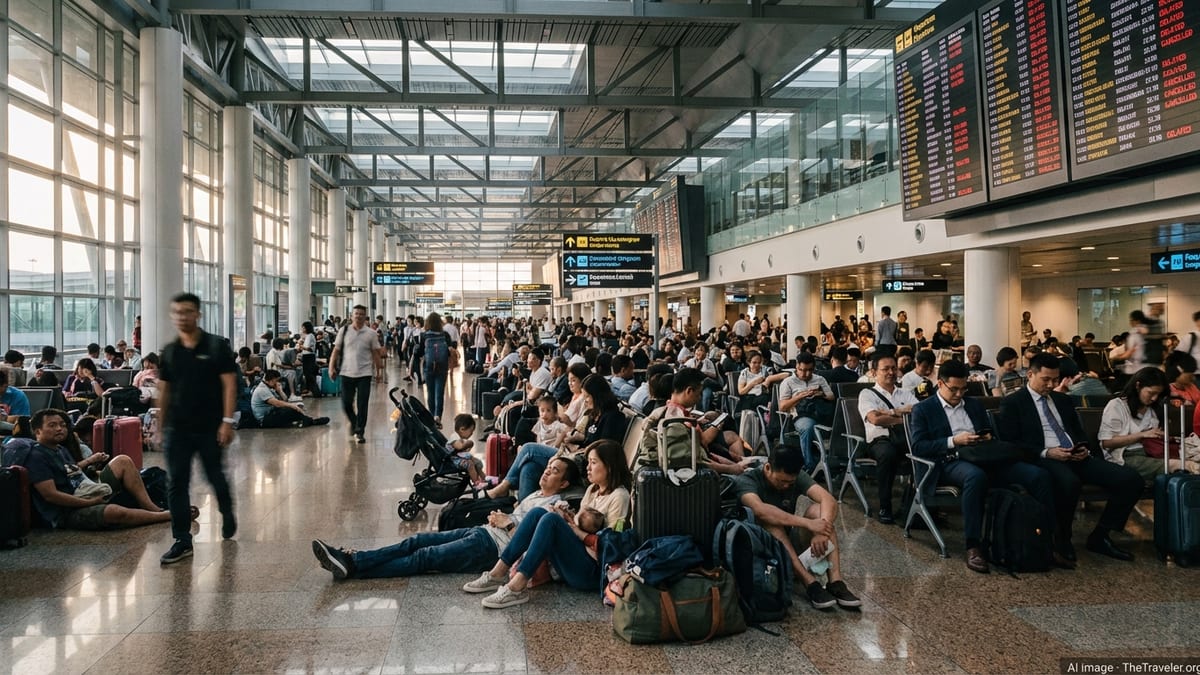
Storm Systems Converge On Key Asian Gateways
Air travel across Asia has come under renewed strain in August 2026 as active monsoon conditions and multiple typhoons disrupt operations at some of the region’s busiest airports. Regional climate outlooks for June to August had already pointed to a near to stronger than usual southwest monsoon over much of Southeast Asia, increasing the likelihood of heavy rainfall and weather-related disruption at transport hubs.
Those forecasts have coincided with a series of tropical systems tracking across the western Pacific and the East China Sea. Publicly available airline advisories show carriers in East and Southeast Asia adjusting timetables or cancelling services outright on days when storm tracks intersect major flight corridors. Heavy rain bands and strong crosswinds around these systems have affected not only coastal airports but also inland gateways that sit beneath active monsoon cloud belts.
The disruptions are unfolding against a backdrop of already busy summer schedules for Asia-Pacific aviation, with slot coordinators reporting strong demand for international take-off and landing rights at key airports even as operators try to preserve buffers in their networks.
Thousands of Delays and Hundreds of Cancellations in a Single Day
Operational data compiled by aviation-tracking and travel advisory platforms indicate a sharp spike in weather-driven disruption around 20 August 2026. One analysis of same-day flight movements across Asia reported 4,501 delays and 210 cancellations concentrated at major hubs including Shanghai, Delhi and Jakarta, as thunderstorms and heavy monsoon rain reduced visibility and forced temporary runway or airspace restrictions.
At coastal hubs along the East China Sea and South China Sea, typhoon-related conditions have added to the disruption. In early August, Taiwanese airlines announced targeted cancellations on routes to Okinawa as Typhoon White Dolphin approached, while subsequent coverage from Hong Kong highlighted cancellations and schedule changes on services linking the city with eastern China as another storm system neared the Zhejiang coast.
Similar adjustments have been visible further south. In late July, Singapore-based coverage documented cancellations of services between Singapore, Shenzhen and Hong Kong due to deteriorating conditions associated with Typhoon Noul, with airlines advising customers to monitor digital channels for evolving flight status as the storm track and wind field shifted.
Typhoons Bavi, Noul and White Dolphin Disrupt Regional Networks
Several named storms have played a direct role in the recent wave of cancellations. In early July, AirAsia issued a public advisory warning that flights to and from selected East Asian destinations might be affected between 10 and 12 July as Typhoon Bavi moved through the East China Sea. The airline signalled that the situation was fluid and that additional adjustments could follow as wind strength and storm proximity changed around key airports.
Later in the month, Typhoon Noul affected operations around the Pearl River Delta. Singapore-based reporting on 26 July detailed how Singapore Airlines cancelled flights serving Shenzhen and selected services from Hong Kong, citing weather conditions linked to Noul. The carrier directed travellers to its flight status pages, indicating that other routes might also be impacted if the typhoon’s effects on crosswinds and storm bands expanded.
In early August, Typhoon White Dolphin triggered further adjustments in North Asia. Aviation news from Taiwan described how local airlines cancelled flights to Okinawa for 8 August, a move that temporarily cut a popular leisure corridor at the height of the summer holiday period. Combined, these overlapping storm events have complicated crew rosters and aircraft rotations across multiple networks, contributing to knock-on delays even on routes far from the typhoons’ cores.
Monsoon Rains Intensify Disruptions in South and Southeast Asia
While typhoons have drawn attention around the western Pacific rim, monsoon dynamics are driving disruption further inland. India-focused weather briefings for mid to late August describe an active spell of the southwest monsoon over eastern, central, northwestern and parts of southern India, with particularly heavy rain over states such as Odisha. Satellite assessments in mid-August also showed dense cloud bands stretching from eastern Uttar Pradesh through Bihar to the Bay of Bengal, signalling unsettled conditions over key domestic air corridors.
These patterns have practical implications for airports in cities such as Delhi, Kolkata and smaller regional hubs that rely on visual cues in addition to instrument procedures during arrivals and departures. Persistent downpours reduce runway throughput and can trigger ground delays as apron operations pause to protect staff and equipment from lightning or microburst risks.
Farther southeast, the stronger-than-average monsoon projected for parts of maritime Southeast Asia has increased the frequency of convective storms around metropolitan airports like Jakarta and Manila. Travel forums in the Philippines during early August carried multiple first-hand accounts of passengers experiencing weather-related delays at Manila’s main airport amid sequences of stormy days, illustrating how quickly localised squalls can ripple through tightly timed schedules.
Airlines Balance Safety, Capacity and Recovery
Across the region, airlines are relying on a combination of advance planning and day-of-operations adjustments to navigate the volatile conditions. Prior climate outlooks from regional and global meteorological bodies highlighted the potential for intense rainfall episodes and strong monsoon winds through August, giving network planners a general sense of the risk environment even before specific storms formed.
In practice, operators have used rolling schedule changes, selective route suspensions and flexible rebooking options to manage the impact. For example, Filipino low-cost carrier Cebu Pacific has implemented temporary network adjustments and route suspensions on several international services during the current northern summer period, citing broader operational challenges but navigating them in parallel with seasonal weather risks in its home region.
Slot coordinators and airport authorities are also grappling with how to maintain reliability amid these pressures. At Sydney, an important gateway between Asia and Oceania, the local slot coordinator reported a 4 percent cancellation rate for allocated slots in the northern summer 2026 season, attributing the figure to a mix of schedule adjustments and operational constraints even as demand for international slots continues to climb.
For travellers, the confluence of monsoon storms and typhoon activity means that even routine itineraries may face last-minute changes. Publicly available advisories consistently urge passengers flying through Asian hubs over the coming weeks to monitor airline apps and airport information channels closely, build additional buffers into connecting itineraries and remain prepared for schedule shifts if weather conditions deteriorate along their route.
NomadLawyer: Asia aviation gridlock report, 20 August 2026
WMO / ASEAN Climate Outlook Bulletin June–August 2026
AirAsia travel advisory on Typhoon Bavi