


More news on this day
Wellington is advancing a major overhaul of regional rail, with a new fleet of battery-electric trains set to replace aging diesel-hauled services and significantly cut emissions on key routes to Wairarapa and Manawatū from 2029.
Get the latest news straight to your inbox!
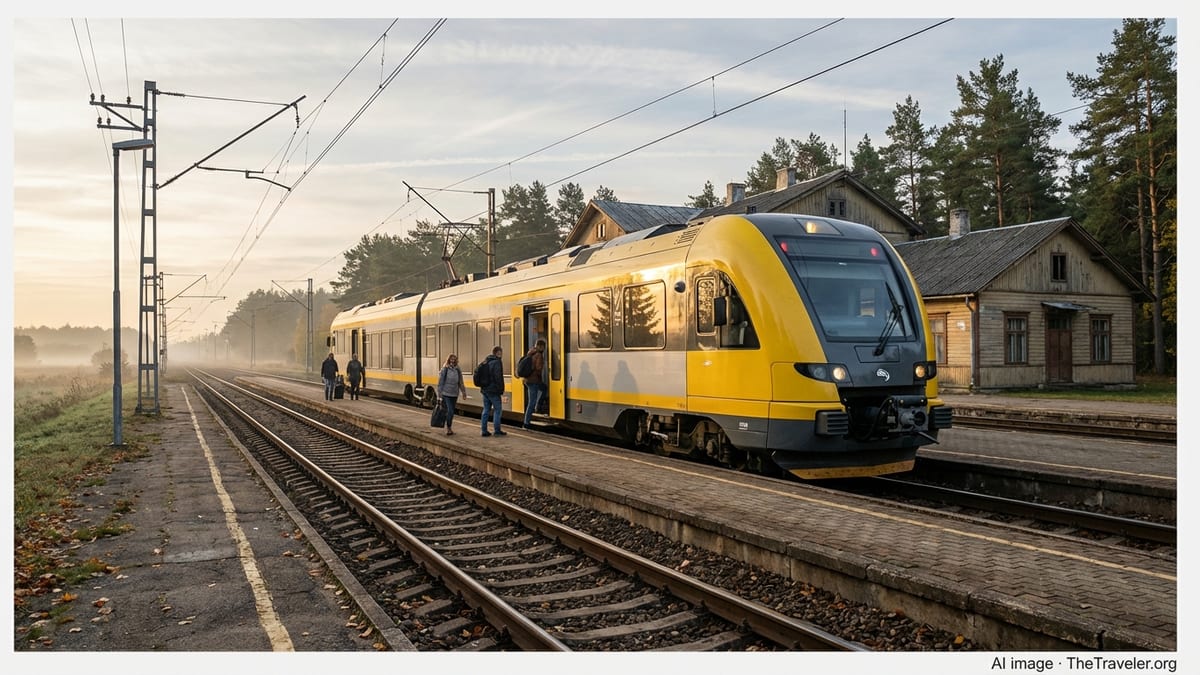
New Tūhono Fleet to Replace Diesel Regional Services
Publicly available information from Metlink and KiwiRail shows that the Lower North Island Rail Integrated Mobility (LNIRIM) programme will introduce “Tūhono,” a fleet of 18 battery-electric multiple unit trains purpose-built for Wellington’s regional network. The five-car sets will operate as through services from Wellington to Masterton via the Wairarapa Line and to Palmerston North via the Kāpiti and Manawatū corridors, replacing current diesel locomotive-hauled trains on the Wairarapa Connection and Capital Connection routes.
According to Metlink’s project material, the Tūhono trains are designed as battery-electric multiple units that draw power from Wellington’s existing 1,600-volt DC overhead system where it is available, then switch to on-board batteries beyond the electrified sections. This configuration allows the trains to run on both electrified and non-electrified track without requiring continuous new overhead wiring, extending high-capacity electric services much further into the lower North Island than today’s electric network allows.([metlink.org.nz](https://www.metlink.org.nz/news-and-updates/projects-timeline/lnirim-north-island-rail-connection?utm_source=openai))
Government statements and coverage of the project indicate that French manufacturer Alstom has been contracted to supply the 18 trainsets as New Zealand’s first dedicated battery-electric regional passenger fleet. The contract follows several years of feasibility work and procurement, in which Greater Wellington Regional Council sought independently powered electric multiple units as an alternative to renewing the existing diesel carriages.([beehive.govt.nz](https://www.beehive.govt.nz/release/all-aboard-new-electric-trains-lower-north-island?utm_source=openai))
Public documentation from KiwiRail notes that from 2029 the Tūhono fleet will progressively replace diesel locomotives on the Wairarapa and Manawatū lines, enabling more frequent, quieter and faster services while reducing the operational complexity of running mixed diesel and electric fleets through Wellington Station.([kiwirail.co.nz](https://www.kiwirail.co.nz/our-network/our-regions/wellington/?utm_source=openai))
Significant Investment to Support a Shift to Low-Carbon Rail
The battery-electric train rollout is underpinned by a funding package from central and local government. Ministry of Transport material on LNIRIM reports that the programme received more than NZ$450 million in Crown funding in Budget 2023, part of a wider effort to modernise regional rail and support decarbonisation objectives. Subsequent government announcements describe a total deal exceeding NZ$1 billion when regional council contributions and supporting infrastructure are included.([transport.govt.nz](https://www.transport.govt.nz/assets/Uploads/ProposedPolicysettingsthatmayimpactthefutureofrailinNewZealand.pdf?utm_source=openai))
KiwiRail’s regional network updates describe parallel investment in Wellington’s rail infrastructure, including upgrades to substations, overhead lines and signals to accommodate higher service frequencies and the power needs of the new fleet. The company notes that government funding is allowing the extension of the existing 18 traction substations to 23 across the region and a broader “Future Rail” programme focused on renewing overhead power systems, improving tunnels and reinforcing reliability on heavily used commuter corridors.([kiwirail.co.nz](https://www.kiwirail.co.nz/media/kiwirails-plan-to-power-up-trains-equals-less-carbon-emissions/?utm_source=openai))
Budget material released in 2026 confirms that the government is continuing to support metropolitan and regional rail through additional allocations for overdue renewals in Wellington and Auckland. This ongoing funding is intended to ensure that new rolling stock like the Tūhono fleet can operate on a network that meets modern standards for resilience and capacity, reducing the risk of disruptions that have affected Wellington services in recent years.([transport.govt.nz](https://www.transport.govt.nz/news/budget-2026-transport-initiatives?utm_source=openai))
Regional emissions monitoring published by Greater Wellington highlights why these investments are being framed as climate infrastructure. The council’s reporting shows that transport remains one of the largest sources of emissions in the region, and that shifting more trips from private cars to public transport is central to local climate plans. The Tūhono trains are presented within that context as a way to provide higher quality rail alternatives for long-distance commuters who currently rely on congested highways.([gw.govt.nz](https://www.gw.govt.nz/environment/climate-change/regional-emissions-monitoring/?utm_source=openai))
How Battery-Electric Trains Will Transform Passenger Experience
Project information from Metlink describes the Tūhono fleet as a step change in passenger comfort and amenity compared with the aging diesel carriage sets they replace. The new trains are planned to feature level boarding at more stations, improved accessibility for mobility-impaired passengers, and modern interiors designed for longer regional journeys. Increased capacity on peak services is expected to address longstanding crowding on the Wairarapa Connection in particular, where passenger numbers have grown faster than the available carriages.([metlink.org.nz](https://www.metlink.org.nz/news-and-updates/projects-timeline/lnirim-north-island-rail-connection?utm_source=openai))
The battery-electric configuration is also expected to change the character of travel through sensitive sections of the network. With the new trains operating quietly in electric or battery mode, reports indicate that conditions will improve in the long tunnels and steep gradients of the Rimutaka section of the Wairarapa Line, where current diesel emissions restrict passenger movement between cars. Commentary in public forums and supporting documents notes that battery operation should eliminate exhaust fumes in tunnels, allowing more flexibility around on-board facilities.([reddit.com](https://www.reddit.com/r/newzealand/comments/1ebpvkl?utm_source=openai))
Project timelines published by Metlink outline a progression from design and manufacturing through to extensive testing on New Zealand’s narrow-gauge tracks. The first Tūhono units are expected to arrive for testing ahead of a staged entry into service around 2029, with a full enhanced timetable to follow by 2030. This phasing allows existing diesel services to continue running while infrastructure upgrades are completed and crews are trained on the new technology.([gw.govt.nz](https://www.gw.govt.nz/assets/Documents/2024/11/Transport-Committee-28-November-2024-Order-Paper.pdf?utm_source=openai))
Authorities involved in the project have signalled that the Tūhono fleet is being designed to cope with Wellington’s challenging geography and weather, including strong winds on exposed coastal sections and the demands of frequent stops on steep gradients. The work draws on international experience with battery-electric and bi-mode trains while adapting the technology for New Zealand’s 1,067-millimetre gauge and mixed-voltage environment.([metlink.org.nz](https://www.metlink.org.nz/news-and-updates/projects-timeline/lnirim-north-island-rail-connection?utm_source=openai))
Decarbonisation Goals and the Role of Rail in the Lower North Island
KiwiRail’s sustainability strategy emphasises that rail generally produces significantly fewer emissions than road transport, both for freight and passengers. Company reports estimate that rail on average generates about 60 percent fewer greenhouse gas emissions than heavy road freight, and that metropolitan commuter rail in Auckland and Wellington already avoids hundreds of thousands of tonnes of emissions each year by providing an alternative to car travel. The introduction of battery-electric regional trains is framed as an extension of this advantage into longer-distance commuting markets.([kiwirail.co.nz](https://www.kiwirail.co.nz/media/latest-data-confirms-rail-as-lower-carbon-option-for-moving-freight/?utm_source=openai))
The North Island decarbonisation study commissioned by KiwiRail found that electricity, delivered either through overhead wires or battery-electric rolling stock, is the most effective low-carbon propulsion system for the network. The study notes that with the right investment, the rail sector can achieve early emissions reductions by focusing electric services on core corridors and feeder lines. Within this framework, Wellington’s Tūhono fleet represents a high-profile example of using battery technology to push electric operations beyond existing electrification without waiting for continuous overhead expansion.([kiwirail.co.nz](https://www.kiwirail.co.nz/who-we-are/sustainability/environment/north-island-decarbonisation-study/?utm_source=openai))
Regional planning documents from Greater Wellington and Horizons councils show that the new trains are intended to support wider mode-shift efforts across the lower North Island, including better integration with local bus networks and park-and-ride facilities. The expectation set out in these documents is that improved comfort, reliability and frequency on the Wairarapa and Manawatū routes will encourage more commuters to choose rail over driving, contributing to reduced congestion on State Highway 1 and State Highway 2 as well as helping to meet climate targets.([app.metlink.org.nz](https://app.metlink.org.nz/news-and-updates/news/future-rail?utm_source=openai))
As the Tūhono fleet moves from procurement to delivery, Wellington’s experience is being closely watched by other regions investigating similar battery-electric solutions. Feasibility work for additional regional services, including potential connections further north, cites the Lower North Island programme as a reference case for how modern battery-equipped electric trains can reshape travel patterns on legacy rail networks while advancing national decarbonisation goals.([ltp.gw.govt.nz](https://ltp.gw.govt.nz/assets/Documents/2024/08/Regional-Trains-Feasibility-Study-Waikato-080824.pdf?utm_source=openai))
Sources: Metlink LNIRIM / Tūhono overview; New Zealand Government LNIRIM announcement; KiwiRail Wellington region network update; KiwiRail environment and emissions information; Ministry of Transport LNIRIM funding summary