


More news on this day
Norway’s Hafjell and Kvitfjell resorts in Gudbrandsdalen reported a 43% year‑on‑year increase in international guest nights in the 2023–24 winter season, positioning the valley as a standout example of how higher‑latitude and snow‑secure European ski areas are attracting more overseas visitors while many mid‑altitude destinations grapple with erratic conditions.
Get the latest news straight to your inbox!
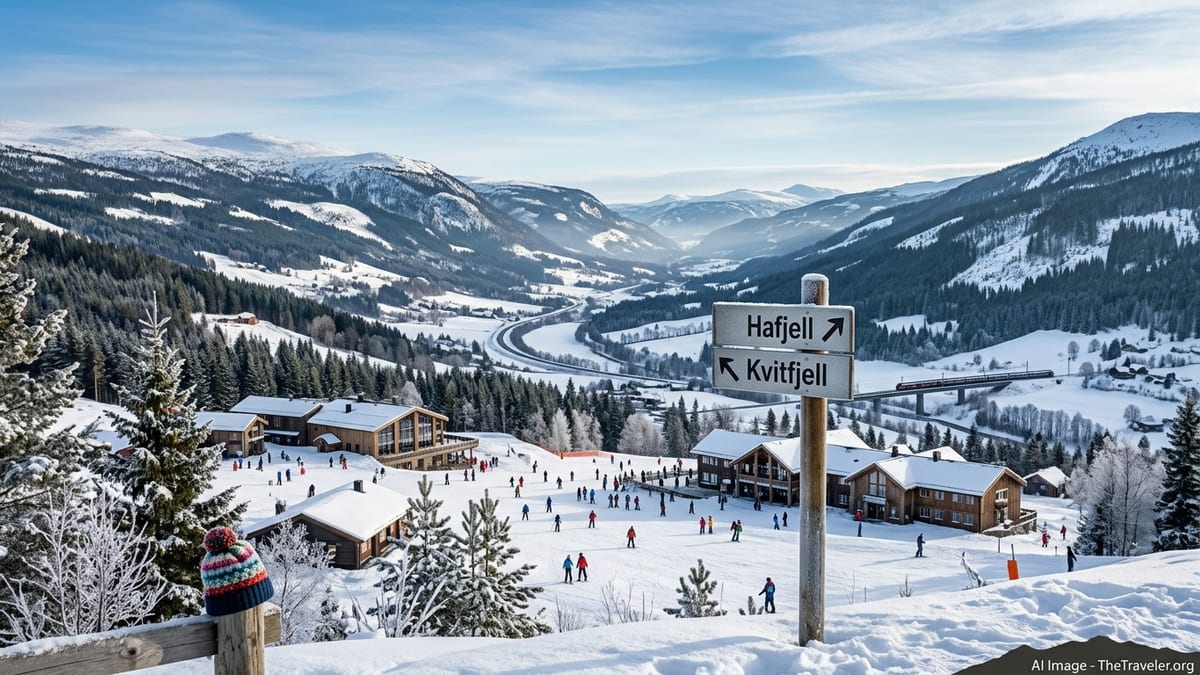
A "formidable" rise in foreign guests for Gudbrandsdalen
In a 19 April 2024 press release, operator Kvitfjell Alpinanlegg, part of the Alpinco group, reported that international guest nights at Hafjell and Kvitfjell rose by 43 percent in the 2023–24 winter season compared with 2022–23. The company described the increase as formidable and noted growing interest from European industry players who see Gudbrandsdalen as a reliable, snow‑secure alternative when conditions are volatile elsewhere.
The release focuses on percentage growth and does not disclose total guest‑night numbers, average length of stay or detailed booking curves for the two resorts. It does, however, emphasize that weekday business outside peak Norwegian holiday periods increasingly depends on international travelers who can travel when domestic demand is lower, strengthening the economics of running lifts and services through more of the season.
According to the operator, visiting skiers repeatedly cited guaranteed snow cover and natural winter landscapes as key reasons for choosing Hafjell and Kvitfjell, and in some cases for switching from Alpine destinations. The statement frames this as a demand response to perceived snow uncertainty at lower altitudes further south, without claiming a specific cause beyond geography and typical climate.
Gudbrandsdalen’s broader visitor base and year‑round appeal
Separate destination analysis for Gudbrandsdalen prepared for NHO Reiseliv and Innovation Norway shows that the region registered about 7.9 million guest nights in 2023 across all types of accommodation, including hotels, camping, second homes and short‑term rentals. This is a full‑year figure and covers both winter and summer visitors, although Hafjell and Kvitfjell are identified as major hubs for second homes and tourism in the valley.
The same analysis links these 7.9 million guest nights to several billion kroner in turnover and thousands of local jobs, underlining that snow tourism is embedded in a wider visitor economy that also includes hiking, cycling and cultural travel. For potential visitors, this means that the infrastructure built around ski tourism, from accommodation capacity to dining and transport services, increasingly supports a broader calendar of activities beyond the core winter months.
Nationally, Statistics Norway has reported record levels of foreign guest nights at Norwegian accommodation establishments in 2023 and 2024, confirming that the surge at Hafjell and Kvitfjell is taking place against a backdrop of rising international interest in Norway rather than in isolation. However, available official statistics do not yet single out Hafjell and Kvitfjell for the 2024–25 or 2025–26 seasons, so the 43 percent figure for 2023–24 remains the latest confirmed season‑specific result for these two resorts.
Other European resorts also report strong recent seasons
Hafjell and Kvitfjell are not alone in posting solid numbers in challenging winters. In France, SATA Group, which operates Alpe d’Huez, Les 2 Alpes and La Grave, described the 2023–24 season as exceptional in terms of weather, attendance and economic performance. Group leadership reported record‑breaking results for a third consecutive winter and highlighted average daily visitor peaks of around 24,000 people during high‑season periods at its flagship areas.
Local reporting from the Oisans region notes that Alpe d’Huez alone accounted for around 1.9 million skier days in 2023–24, with a further 1.4 million at Les 2 Alpes, underlining that certain large, high‑altitude domains can still grow even as nearby, lower‑lying resorts struggle. These French figures are not directly comparable to the Hafjell and Kvitfjell data, which refer to guest nights rather than skier days, but together they point to a pattern in which elevation, snow management and infrastructure investment help select destinations withstand warmer spells.
Recent editions of Savills’ Ski Resilience work, which combine climate and market indicators, also highlight how factors such as altitude, latitude and snow‑retention measures influence long‑term robustness. While Hafjell and Kvitfjell are not individually profiled in the most recent public summaries, Scandinavian ski areas as a group are described as holding relatively stable positions in resilience rankings, reflecting colder average temperatures even at modest elevations.
What the shift means for travelers choosing snow‑reliable resorts
For skiers and snowboarders planning trips after several unpredictable European winters, the Hafjell and Kvitfjell figures signal that more visitors are actively seeking destinations perceived as snow‑secure. Both resorts combine modern lift systems with extensive artificial snowmaking and a growing menu of off‑slope options, from family‑oriented activities to dining and spa facilities, which makes longer stays more viable when weather deters all‑day skiing.
At the same time, travelers weighing a switch from traditional Alpine hubs need to account for practical trade‑offs. Flying or taking trains to Norway from major European cities typically involves longer journey times and, in many cases, higher transport costs than traveling to central Alpine gateways. Airport transfers from Oslo to Gudbrandsdalen are straightforward but still add time and expense compared with short hops to some French, Swiss or Austrian resorts.
Looking ahead to bookings for winter 2026–27 and beyond, prospective visitors should watch for updated regional statistics from Innovation Norway and NHO Reiseliv, as well as fresh season reports from resort operators, to confirm whether the sharp 2023–24 growth at Hafjell and Kvitfjell is sustained. With climate and snow conditions varying sharply by altitude and geography, checking recent snowfall history, lift operations data and any new resilience assessments before committing to flights or long‑stay rentals remains advisable.