


More news on this day
American Airlines is planning a sweeping upgrade of its cabins that will bring larger, high-resolution seatback entertainment screens, expanded power options and refreshed seating across parts of its widebody and narrowbody fleet, signaling a shift back toward built-in inflight entertainment after years of emphasizing passengers’ personal devices.
Get the latest news straight to your inbox!
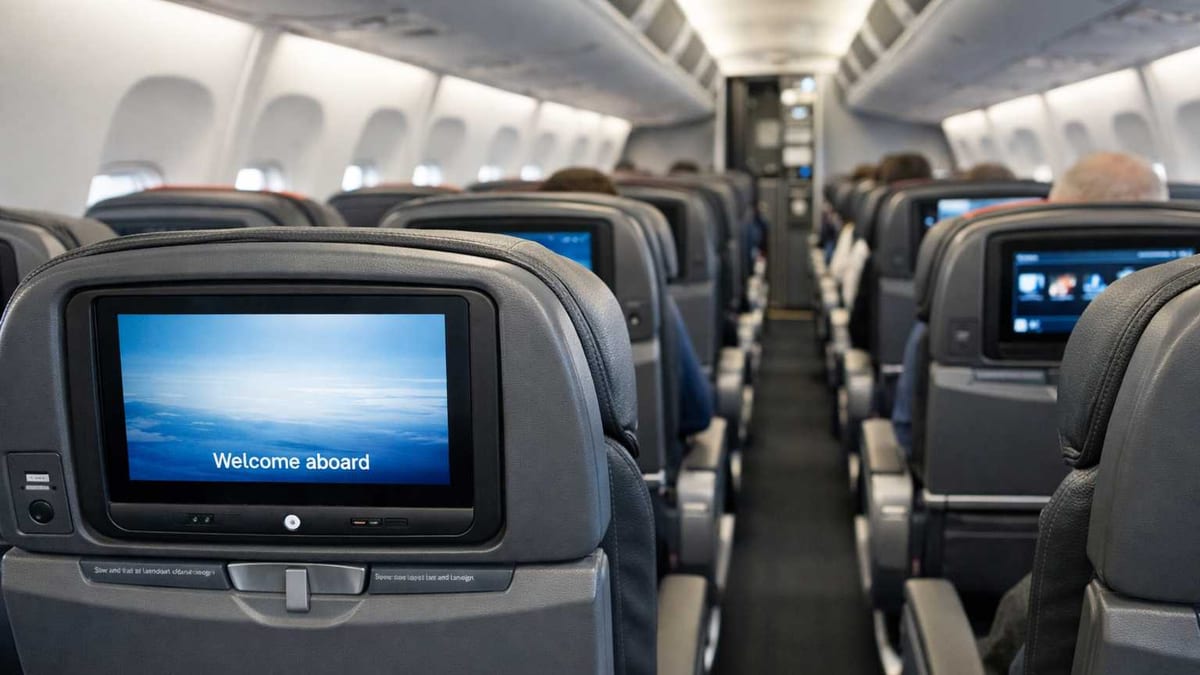
Reversal of a no-screens strategy
The new initiative marks a notable change in direction for American, which spent much of the past decade removing seatback entertainment from many domestic aircraft in favor of streaming content to phones, tablets and laptops. Publicly available information and industry commentary indicate that customer perception of cabins without screens has remained a persistent challenge, especially on longer flights where competitors offer embedded systems.
According to recent coverage of the announcement, American now plans to equip its mainline narrowbody fleet with modern in-seat systems as aircraft are delivered or retrofitted, bringing the experience closer to what passengers already see on newer Boeing 787-9 and forthcoming Airbus A321XLR jets. Those aircraft feature individual screens in every cabin, and the updated strategy extends that model to a far larger share of the network.
The decision comes as U.S. rivals have moved in the opposite direction of American’s earlier approach, promoting large, high-definition displays as a core part of their onboard product. The shift suggests that passenger demand for an integrated entertainment option, even when personal devices are available, remains strong enough to influence major fleet-planning choices.
Larger 4K displays and more power at every seat
American’s latest generation of cabins is centered on larger, higher-quality screens than those previously installed on many of its aircraft. Company materials on new Boeing 787-9 deliveries and the A321XLR program describe 4K or 4K-style seatback monitors in Main Cabin, with larger-format displays in premium cabins, positioning the airline among the leaders in screen size on narrowbody aircraft.
Beyond resolution, the physical dimensions of the screens are set to increase. Reports on the A321XLR interior, for example, point to seatback monitors of more than 13 inches in Main Cabin on that aircraft, while premium seats receive significantly larger displays. The narrowbody retrofit plan aims to align many domestic cabins with this newer standard, replacing the perception of small or absent screens with a more modern look and feel.
The upgrades are designed around an ecosystem of inflight connectivity and power. Recent documentation on American’s long-haul cabins highlights USB-C and AC outlets at each seat, along with Bluetooth audio support for wireless headphones. Extending similar capabilities to a broader slice of the fleet is intended to let passengers charge devices, connect wirelessly and browse a deep content library without juggling cables or external batteries.
Widebody experience sets the template
American’s widebody fleet has effectively served as a test bed for many of the features now slated for wider deployment. The airline’s latest Boeing 787-9 configuration, introduced on international routes, already offers 4K QLED screens and upgraded power options in Main Cabin, paired with new premium seating and amenities in Flagship-branded cabins. Publicly available descriptions of that aircraft note a more cohesive visual design and a stronger emphasis on the entertainment system as part of the overall experience.
Similarly, inflight product information on the airline’s Boeing 777-300ER and other long-haul aircraft indicates that Main Cabin travelers have had access to individual screens even as some domestic narrowbodies shifted toward bring-your-own-device streaming. By using these widebody layouts as a reference, American can standardize elements such as content menus, user interfaces and accessibility features across more of its network.
The move also responds to a broader industry pattern in which long-haul innovations eventually migrate to shorter routes. Enhanced seatback displays, intuitive touch interfaces and more responsive hardware debuted first in premium-heavy widebody cabins; American’s new plan effectively accelerates that technology cascade to high-demand domestic markets and select transcontinental flights.
Competitive pressures on U.S. carriers
The renewed focus on seatback screens arrives amid a wave of cabin investment across U.S. airlines. United has unveiled new 787-9 interiors that feature large 4K OLED displays in premium cabins and expanded screen sizes in economy, while Delta has promoted high-definition entertainment systems and consistent power access as points of differentiation. Industry reports suggest that American’s latest announcement brings it more squarely into that competitive frame.
Seatback entertainment has become a visible symbol of an airline’s broader approach to comfort and service, even when many passengers continue to rely on their own devices. Analysts and aviation commentators frequently note that the presence of a modern screen at each seat influences travelers’ impressions during booking, boarding and the crucial first few minutes after sitting down.
By pairing larger displays with additional premium seats and refreshed soft-product offerings, American is attempting to balance revenue optimization with passenger appeal. The carrier has previously drawn criticism for dense cabin layouts and limited legroom on some narrowbodies; aligning those interiors with more advanced entertainment options may help offset negative perceptions and retain higher-yield customers who have alternatives on key routes.
Rollout timeline and passenger impact
Details emerging from publicly available materials and industry coverage point to a multi-year rollout, with new deliveries entering service first and retrofits following in phases. Upcoming Airbus and Boeing narrowbody aircraft are expected to arrive already equipped with the new screens, while existing jets will be modified during scheduled maintenance visits, a process that typically stretches over several years for a fleet as large as American’s.
For passengers, the upgrades will not appear everywhere at once. Travelers on flagship international routes and select transcontinental services are most likely to encounter the new interiors early, particularly on aircraft like the 787-9 and A321XLR that have been highlighted in recent product announcements. Over time, more domestic flights are expected to feature the updated cabins, though some older configurations may remain in service during the transition.
Even an incremental rollout, however, could meaningfully change the onboard experience for tens of millions of customers annually. Larger, brighter screens, reliable power and a unified entertainment platform reduce friction points that have long frustrated travelers, such as dead batteries, awkward device stands or inconsistent streaming quality. For an airline seeking to distinguish itself in a crowded U.S. market, the return of the seatback screen in an upgraded form underscores how visible cabin features can shape loyalty in subtle but powerful ways.