


Type "flight to Paris" or "hotel in Miami" into a search engine and there is a good chance one of the first results you see will belong to Expedia Group. You may not realize it, because that result might say Expedia, Hotels.com, Orbitz, Travelocity, or Vrbo. Yet behind many of the biggest names in online travel sits a single company whose technology, marketing power, and partnerships help determine what trips millions of people book every day. Understanding what Expedia Group is and how it works is one of the keys to understanding modern online travel.
Get the latest updates straight to your inbox!
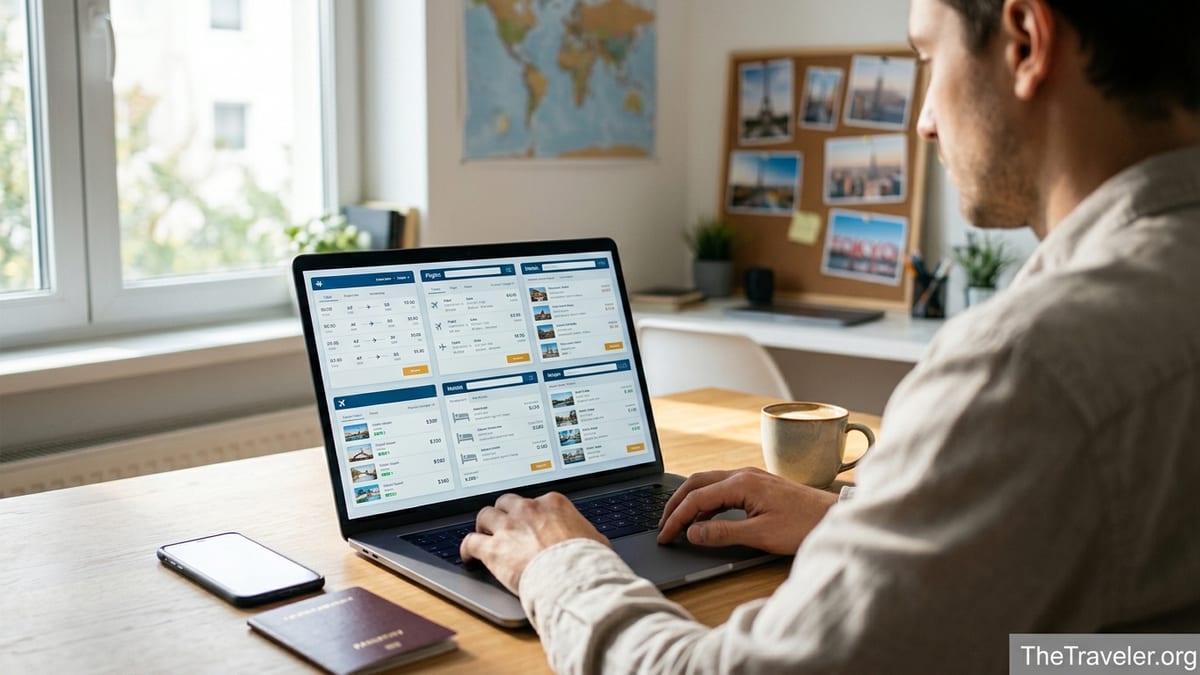
From Single Website to Global Travel Powerhouse
Expedia started life in the mid‑1990s as a small online booking site spun out of Microsoft. Over the next two decades, it expanded aggressively, buying or building dozens of brands while online travel quickly replaced traditional high‑street agencies for everyday bookings. Today, Expedia Group is a Seattle‑based travel technology company that runs one of the world’s largest collections of online travel brands, serving travelers in more than 200 countries and territories.
Most travelers first meet the company through its consumer sites. Expedia.com is the flagship brand in North America, focused on bundling flights, hotels, car rentals, and activities. If you booked a long weekend to Las Vegas that combined round‑trip flights, a three‑night hotel stay on the Strip, and an airport shuttle into a single package, there is a good chance you did it on Expedia.com. Other brands target specific niches, like Hotels.com for accommodations or Vrbo for vacation rentals.
Behind the public‑facing websites sits a vast technology stack and supplier network. Expedia Group connects hundreds of airlines, hundreds of thousands of hotels and vacation rentals, and major car rental and cruise companies into a single searchable, bookable system. A typical search for "New York to Rome in October" might pull real‑time fares from several legacy airlines, low‑cost carriers, and codeshares, then pair them with hotel availability from big chains, independent boutique properties, and vacation rentals across Rome.
By scaling this infrastructure and brand portfolio, Expedia Group has become one of just a few global giants that dominate online travel. Industry research regularly lists it alongside Booking Holdings and, in some segments, Airbnb as controlling a large share of worldwide OTA (online travel agency) booking value. That concentrated power is a big part of why the company is so influential: a change in Expedia’s strategy can ripple through everything from hotel pricing to destination marketing.
The Brands Travelers Actually See
One reason Expedia Group feels invisible is that its name often hides behind better‑known consumer brands. The group owns and operates Expedia, Hotels.com, Vrbo, Travelocity, Orbitz, Hotwire, Wotif, Ebookers, CarRentals.com, and several smaller regional brands. It has also held stakes or partnerships with metasearch players such as Trivago. Each brand is positioned slightly differently so that, taken together, they cover a huge range of traveler needs and preferences.
Consider accommodations. A traveler booking a business overnight in Chicago may prefer Hotels.com because of its straightforward interface and familiar hotel‑only focus. Someone planning a family reunion at a lake in Michigan might head to Vrbo, which specializes in full homes, cabins, and condos. A budget‑conscious traveler who doesn’t care exactly which hotel they get could use Hotwire to buy a "mystery" room at a lower price. All are effectively drawing from some of the same underlying supply relationships managed by Expedia Group.
The same is true for flights and packages. Orbitz and Travelocity, both owned by Expedia Group, still have strong name recognition from the early days of online travel. A traveler in the United States might search flights on Travelocity because they grew up seeing the brand’s commercials, then price‑check on Orbitz, not realizing that both results are powered by the same parent company’s systems. Behind the scenes, Expedia Group can share technology, negotiate airline partnerships, and optimize marketing across all three brands.
Expedia Group has been gradually simplifying this portfolio, focusing more of its investment on core global brands such as Expedia, Hotels.com, and Vrbo while allowing some smaller regional brands to fade. But for now, the group’s influence is magnified precisely because many travelers think they are comparison‑shopping between independent websites when they are actually staying within the same ecosystem.
How Expedia Group Makes Money and Shapes Prices
Expedia Group primarily makes money through commissions and margins on the travel it sells. When you book a hotel night in New Orleans on Expedia.com for 220 US dollars, the hotel does not receive that full amount. Instead, Expedia may either charge the hotel a commission (for example, a percentage of the nightly rate) or earn a margin by buying inventory at a contracted wholesale rate and reselling it to you at a higher retail price. The exact numbers vary widely, but this commission or margin is the core of the business.
On flights, margins are typically much thinner. Airlines have pushed commissions down over time, so Expedia Group often earns less per ticket than on hotel rooms or vacation rentals. That is part of why the company pushes packages and "flight + hotel" bundles so heavily on its sites. If a traveler from Dallas books a low‑margin transatlantic flight to London but adds a four‑night hotel stay in Shoreditch, the combined booking becomes much more profitable than the airfare alone.
The sheer scale of Expedia’s bookings gives it leverage with suppliers. A midsize European city hotel that receives a large percentage of its international bookings through Expedia Group will be more likely to agree to flash sales or participate in loyalty promotions like Expedia’s One Key program, where travelers earn currency across Expedia, Hotels.com, and Vrbo. A typical example might be a hotel in Lisbon agreeing to offer an extra 10 percent discount for One Key members during a low season week in January to boost occupancy, in exchange for prominent placement on search results pages.
This influence can shape the prices and options ordinary travelers see. Because Expedia and its competitors fight fiercely for conversion, their algorithms consider not just price but also commission levels, cancellation policies, and traveler reviews when deciding which hotels or flights appear at the top of search results. A property that offers a slightly higher commission and free cancellation might appear ahead of a cheaper competitor that is less flexible, which in turn nudges travelers toward certain choices.
The Technology Engine Behind Your Trip
Expedia Group is not just a retailer; it is increasingly a technology company selling services to other businesses. Over the past decade, it has poured billions of dollars into a unified technology platform that powers both its own brands and a fast‑growing B2B business. Airlines, credit card issuers, and even other travel companies use Expedia’s infrastructure behind the scenes to power their own booking sites and loyalty portals.
A concrete example is a co‑branded travel portal for a major credit card issuer. When a cardholder logs in to redeem points for a flight to Los Angeles or a hotel in Boston, they may be browsing an interface designed by the bank. But the actual search results, inventory, and booking engine can be white‑labeled technology from Expedia Group. To the traveler, it looks like a bank site; to the industry, it is Expedia monetizing its platform in a way that does not require heavy consumer marketing spending.
Expedia also licenses access to its hotel and flight inventory to smaller travel agencies and tour operators through programs similar to Expedia TAAP, which lets traditional agents book the same hotels and activities that appear on Expedia.com but under an agency login. A new independent agent building their business might rely on this to secure competitive rates on a beachfront resort in Cancun or a city‑center hotel in Toronto without having to negotiate separate contracts with each property.
In recent years, Expedia Group has highlighted the role of artificial intelligence and personalization in its strategy. Its brands experiment with AI‑driven travel planning tools that can suggest complete itineraries, such as a week in Italy that strings together Rome, Florence, and Venice, with suggested hotels and train connections. At major industry conferences, executives have even described a future in which AI "agents" take trip requests from travelers and then shop across platforms like Expedia’s to assemble the best options. If that vision plays out, companies that own the underlying inventory networks and pricing engines, like Expedia, are likely to wield even more influence over what options surface first.
Why Expedia Group Matters to Travelers and Destinations
Expedia Group’s influence is not only about corporate size; it shows up in day‑to‑day travel decisions and in how destinations promote themselves globally. For individual travelers, Expedia’s ecosystem can determine which hotels they discover, what prices they pay, and how easy it is to compare options. A family in Denver planning a spring break trip to Orlando may spend an evening on Expedia building different package combinations of flights, on‑site versus off‑site hotels, and rental cars, all guided by the platform’s default filters and ratings.
For destinations and tourism boards, Expedia Group is a powerful marketing channel. City tourism organizations routinely partner with Expedia brands to run co‑branded campaigns. A mid‑sized European city seeking more visitors from North America, for example, might allocate part of its budget to a summer campaign on Expedia and Hotels.com that features banner placements, curated landing pages, and discounted hotel offers. The goal is simple: when a US traveler searches for "summer in Europe" or "historic cities near the Alps," that city appears near the top of inspiring recommendations.
Smaller accommodations and local operators also feel the impact. A family‑run riad in Marrakech or a guesthouse in rural Japan may rely heavily on Expedia or Hotels.com for international bookings. Listing on the platform gives them visibility and secure payment processing they could not easily build themselves, but it also means paying commissions and adhering to policies they do not control. Some hoteliers express concern about this dependence, but many choose to stay because the exposure is hard to replace.
Expedia’s review systems and loyalty programs amplify this effect. A hotel that consistently receives strong ratings on Hotels.com can ride that momentum to higher occupancy and may even be featured in curated lists such as "Top Guest Rated" stays in a city. Conversely, a string of poor reviews can quickly push a property down in search results. For better or worse, the platform becomes an informal regulator of service standards, nudging properties to invest in improvements that will keep their online scores high.
Competition, Criticisms, and Consumer Considerations
Expedia Group operates in one of the most competitive corners of the travel industry. Its biggest rivals are Booking Holdings, which owns Booking.com, Priceline, and Kayak, and Airbnb, which dominates much of the home‑sharing space. In markets such as China, regional giants like Trip.com also play a major role. Industry studies often show Booking and Expedia together controlling a significant share of global OTA bookings, with intense competition on marketing, technology, and hotel relationships.
This competition benefits travelers through frequent sales and promotional codes. It is common, for example, to see summer campaigns where Expedia offers an extra percentage discount on selected hotels in cities like New York or Barcelona if you book through the app, while Booking or Airbnb run their own parallel promotions. Savvy travelers sometimes compare the same hotel across multiple platforms and directly with the hotel’s own website to see where the best value lies for their specific dates and loyalty memberships.
At the same time, Expedia Group faces persistent criticisms that are worth understanding. Some travelers report difficulties when rebooking or obtaining refunds during irregular operations, such as mass flight cancellations due to storms or sudden border changes during public health emergencies. In such cases, Expedia acts as an intermediary between the traveler and the airline or hotel, which can slow down problem resolution. A traveler who booked a non‑refundable, third‑party hotel rate in London at a steep discount may later discover they need to negotiate changes through Expedia’s customer support instead of calling the hotel directly.
Hotels and local regulators have also pushed back at times, arguing that high OTA commissions reduce profit margins and that rate‑parity clauses can limit their ability to offer lower prices on their own sites. While the specifics vary by country and contract, the broader concern is that a few global platforms, including Expedia, wield disproportionate influence over distribution. As a traveler, this is one reason it can be helpful to think consciously about where you book, what kind of flexibility you need, and how much you value direct relationships with airlines and hotels compared with the convenience and package deals of large OTAs.
The Takeaway
Expedia Group is far more than a single website. It is a travel technology conglomerate whose brands, from Expedia.com and Hotels.com to Vrbo, Travelocity, Orbitz, and others, underpin a vast share of online travel bookings. By aggregating inventory from airlines, hotels, vacation rentals, car rental companies, and activities, and by selling that inventory both directly to consumers and quietly through partners, it has become one of a small handful of companies that shape modern travel options and prices.
Its influence shows up when a family in Chicago books a bundle of flights and a beachfront condo in Florida on Vrbo, when a business traveler in Berlin uses a bank portal powered by Expedia to redeem points for a hotel in Singapore, and when a tourism board in Mexico works with Expedia to promote a lesser‑known coastal town to North American visitors. The decisions Expedia makes about technology, marketing, and partnerships ripple through the travel ecosystem.
For travelers, the key is to use that ecosystem wisely. Expedia Group’s platforms can make it easier to compare options, unlock competitive package prices, and earn rewards across multiple brands. At the same time, it remains important to read the fine print on cancellations, compare prices with hotel and airline websites, and recognize when convenience comes with trade‑offs. Understanding what Expedia Group is and how it works turns you from a passive user of its platforms into an informed traveler making deliberate choices about every trip.
FAQ
Q1. What exactly is Expedia Group?
Expedia Group is a large travel technology company based in the United States that owns and operates multiple online travel brands, including Expedia, Hotels.com, Vrbo, Orbitz, Travelocity, Hotwire, and several regional sites. It connects travelers with flights, hotels, vacation rentals, car rentals, and activities through its websites, apps, and partner platforms.
Q2. How is Expedia Group different from Expedia.com?
Expedia.com is just one consumer brand within the broader Expedia Group. The group is the parent company that runs many brands, manages the shared technology and supplier contracts, and operates a large B2B business powering other companies’ travel portals. When you see the Expedia logo on a booking page, you are using one piece of the larger Expedia Group ecosystem.
Q3. Which brands does Expedia Group own that travelers might recognize?
Some of the best‑known brands under Expedia Group are Expedia, Hotels.com, Vrbo, Orbitz, Travelocity, Hotwire, Wotif, Ebookers, and CarRentals.com. The company has also held stakes or partnerships with metasearch brands such as Trivago. Different brands focus on slightly different segments, such as vacation rentals, hotel‑only bookings, or discount opaque deals.
Q4. Is Expedia Group safe and legitimate to book with?
Expedia Group is a major, long‑established player in the global travel industry and is widely considered legitimate and generally safe to use. Millions of flights, hotel stays, and vacation rentals are booked through its brands each year. As with any intermediary, travelers should carefully read cancellation policies, keep confirmation emails, and understand that resolving changes sometimes involves both the platform and the airline or hotel.
Q5. Why are the same hotels or flights often listed on multiple Expedia Group sites?
Because Expedia Group uses shared technology and supplier contracts across its brands, the same hotel in Rome or flight to Tokyo may appear on Expedia, Hotels.com, Orbitz, and Travelocity. Prices are often similar but can vary slightly due to different promotions, loyalty benefits, or display currencies. Travelers sometimes compare across brands within the group to find the best combination of rate and rewards.
Q6. Does Expedia Group control prices for hotels and airlines?
Hotels and airlines ultimately set their base prices, but Expedia Group can influence what travelers see through its negotiations, commission structures, and promotional campaigns. For example, a hotel might agree to a temporary discount or extra loyalty points on Expedia in exchange for higher placement in search results. That means Expedia does not unilaterally control prices, but its platform design and partnerships can nudge price dynamics.
Q7. How does Expedia Group make money from my booking?
Expedia Group typically earns a commission or margin on the travel products you book through its brands. For hotels and vacation rentals, this is often a percentage of the room rate. For flights, margins are usually smaller, which is why the company emphasizes higher‑margin products such as hotel stays, packages, and activities. It also earns revenue by licensing its technology and inventory to other businesses.
Q8. Should I book directly with airlines and hotels or through an Expedia Group site?
Both approaches have pros and cons. Booking with an Expedia Group site can simplify comparison shopping and sometimes unlock package discounts or loyalty rewards across multiple brands. Booking directly with airlines or hotels can make it easier to change or cancel reservations and may include extra loyalty perks. Many frequent travelers compare prices on Expedia and similar platforms, then decide case by case whether convenience or direct control matters more for that trip.
Q9. What role does Expedia Group play in vacation rentals compared with Airbnb?
Through Vrbo and some inventory on other brands, Expedia Group is a major player in vacation rentals, especially for whole‑home stays that appeal to families and groups. Airbnb remains better known in this segment and has broader urban and shared‑space coverage. In practice, a family planning a beach week in a coastal town might compare a Vrbo listing managed through Expedia Group with a similar property found on Airbnb, then choose based on price, cancellation terms, and reviews.
Q10. How is Expedia Group likely to influence the future of online travel?
Expedia Group is investing heavily in unified technology, loyalty programs, and AI‑driven trip planning tools. As more travel bookings flow through a small number of large platforms, its decisions about how to display options, reward loyalty, and power third‑party sites will shape what travelers see by default. That gives the company significant influence over future travel habits, from which destinations are promoted to how easily travelers can bundle trips and redeem rewards.