


For many travelers, Expedia is simply a familiar button on their phone when it is time to book a flight or hotel. Behind that blue logo, though, sits Expedia Group, a sprawling travel empire that competes head‑to‑head with Booking Holdings, Airbnb, and a long list of global and regional rivals. As online travel becomes more crowded, understanding how competitive Expedia really is can help travelers decide when it is the best tool for the job and when a different platform might deliver more value.
Get the latest updates straight to your inbox!
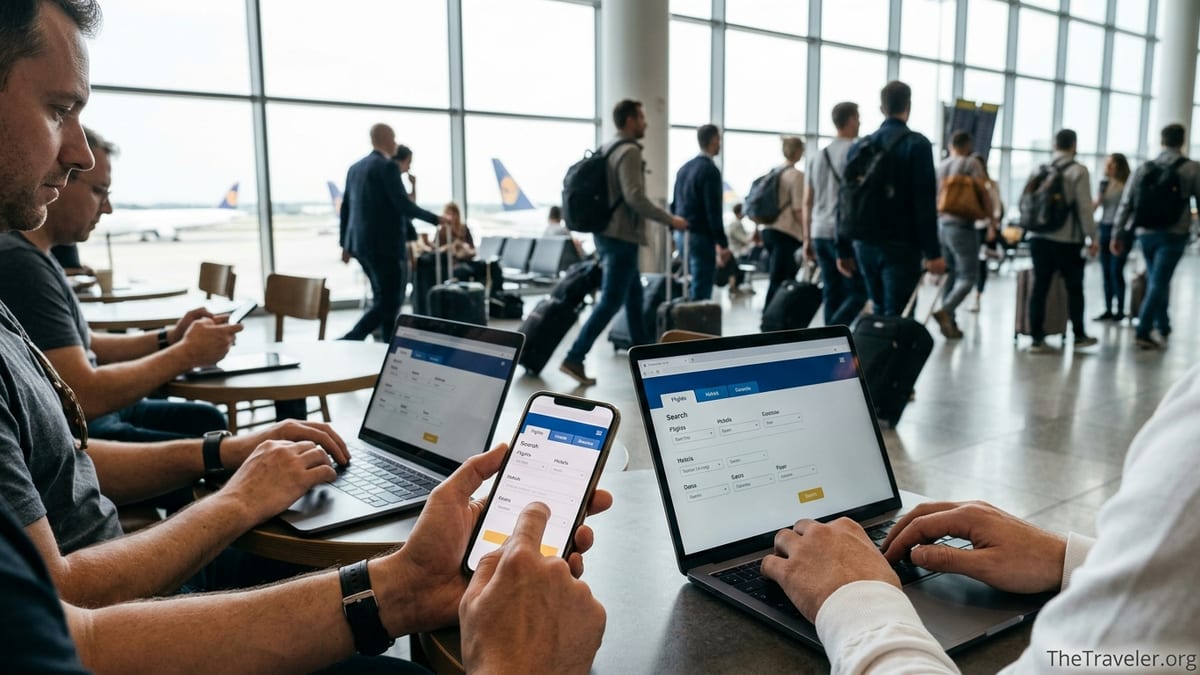
Where Expedia Group Stands in the Global Travel Landscape
Expedia Group today is one of the world’s largest online travel companies, operating consumer brands such as Expedia, Hotels.com, Vrbo, Orbitz, Travelocity, and Hotwire, alongside a growing B2B arm that quietly powers bookings on airline, bank, and loyalty program websites. Industry estimates suggest that Expedia and Booking Holdings together account for roughly four in ten online travel agency transactions in North America, underscoring Expedia’s weight in its home region even as it trails Booking globally.
Financially, Expedia Group is a clear top‑tier player, though not the largest. In 2025, Booking Holdings generated close to 27 billion dollars in revenue, while Expedia Group’s revenue was just under 15 billion dollars, both at or near record highs for online travel companies. That gap highlights how Booking has pulled ahead in profit and scale, particularly in Europe, but it also shows Expedia competing from a position of strength rather than as a niche challenger.
For travelers, this scale translates into breadth of choice. Expedia’s lodging business alone now handles tens of billions of dollars in gross bookings each year, with hotel room nights and vacation rentals available in most countries where tourists regularly travel. Whether someone is searching for a chain hotel near Chicago O’Hare for a one‑night layover or a family‑friendly cabin near Glacier National Park, Expedia’s marketplace density means it is likely to surface several viable options at competitive prices.
However, Expedia faces pressure on almost every side. Airbnb dominates the home‑sharing and unique stay segment, Booking.com is exceptionally strong in European city accommodations, and Trip.com and regional agencies in Asia and Latin America are expanding fast. This competition shapes how Expedia prices, markets, and packages travel, and it is a big reason travelers now see constant flash sales, flexible cancellation options, and loyalty bonuses across platforms.
Brand Portfolio: Expedia’s Multibrand Advantage and Challenge
One of Expedia Group’s defining strategic choices has been to maintain a broad portfolio of consumer brands rather than folding everything under a single global label. In the United States, the flagship Expedia brand competes side by side with Hotels.com and Vrbo, while Orbitz and Travelocity still attract loyal followings from travelers who started booking online in the 2000s. Each brand has been tuned to slightly different audiences: Expedia for bundled trips and frequent flyers, Hotels.com for straightforward hotel stays, and Vrbo for whole‑home vacation rentals that skew toward families and longer stays.
This multibrand approach gives Expedia reach. A traveler in Seattle might search for a five‑night package to Maui on the Expedia app, while a family in Dallas books a beach house on Vrbo and a business traveler in Chicago uses Hotels.com for a one‑night airport hotel, and all of those bookings still flow through Expedia Group. In practical terms, that means Expedia can negotiate strong rates with hotel chains and property managers because it can deliver demand from several front‑door brands at once.
Yet the same diversity introduces complexity that some rivals do not face. Booking Holdings has increasingly funneled customers toward Booking.com as a single flagship, while Airbnb has only one global brand. In contrast, Expedia has had to maintain multiple mobile apps, loyalty schemes, and marketing campaigns. A few years ago, a traveler could earn free‑night credits on Hotels.com but not on Expedia, and Vrbo had an entirely separate experience again. Recognizing the friction, Expedia has been working to unify its experience and technology stack, including a combined Expedia Group loyalty program that aims to let travelers earn and redeem points across Expedia, Hotels.com, and Vrbo.
For travelers, this means the competitive edge of Expedia’s portfolio is most visible when shopping across trip types. Someone might earn points on a business trip flight and hotel booked through Expedia.com, then redeem those points on a summer family rental through Vrbo. Booking Holdings and Airbnb are building similar ecosystems, but Expedia’s breadth across flights, car rentals, and packages gives it a particularly strong cross‑sell opportunity when the systems work smoothly.
Pricing, Packages, and Loyalty: How Expedia Competes for Value
Price is where most travelers feel competition most directly, and on this front Expedia Group is aggressive. In many city‑to‑city flight searches, Expedia’s airfares match what travelers see on airline websites and on rivals such as Booking.com or Skyscanner. Where Expedia often tries to differentiate is in bundling. For example, a traveler booking a four‑night October trip from Chicago to Yellowknife in Canada might see a package on Expedia that combines round‑trip flights and a stay at a mid‑range hotel near the aurora viewing areas for a price that undercuts booking those components separately by a modest but real percentage. These savings are especially noticeable in popular package destinations like Las Vegas, Cancun, and Orlando.
Expedia’s loyalty program and frequent coupon codes also shape its competitiveness. Registered users routinely see “member prices” that are a few percentage points lower than public rates, particularly on hotels where Expedia has negotiated private discounts. For a two‑night stay at a chain hotel in downtown Denver in shoulder season, for example, Expedia might display a publicly available rate of 180 dollars per night and a member rate of 170 dollars. A further loyalty tier discount or promotional code can bring that closer to 160 dollars, which starts to look attractive compared with Booking.com’s Genius discounts or an airline’s direct booking offer without points bonuses.
Against Airbnb, the value comparison depends heavily on party size and stay length. For a solo traveler in Lisbon for two nights, a mid‑range hotel booked on Expedia may end up cheaper and simpler once Airbnb’s cleaning and service fees are factored in. On the other hand, a family of six renting a four‑bedroom house on Vrbo for a week in the Outer Banks can often beat the combined cost of booking three hotel rooms through Expedia or Booking. Expedia Group’s ability to show both hotel and vacation rental inventory, combined with flexible filters, is where its cross‑category competitiveness is strongest.
That said, Expedia is not always the price leader. Local and regional agencies sometimes undercut it on hotels in specific markets, and direct bookings via hotel websites may include perks such as free parking, breakfast, or late checkout that Expedia cannot always match. Savvy travelers often use Expedia as a comparison engine before double‑checking at least one or two alternative channels before committing.
Technology, Mobile Experience, and Personalization
As online travel has matured, the competitive battleground has moved from raw inventory numbers to app quality, personalization, and the smart use of data. Expedia has been investing heavily in a single underlying technology platform that serves both its consumer brands and its B2B partners. That platform handles everything from search rankings to dynamic packaging and fraud detection, and its performance directly affects how quickly travelers can find the right stay or flight on their phones.
Compared with Airbnb and Booking.com, Expedia’s mobile apps are solid but still catching up in some areas. Airbnb has leaned into visual discovery, with full‑bleed photography and category‑based browsing like “Beachfront,” “Cabins,” or “Ski‑in/Ski‑out,” while Booking.com has refined its filters and review tools to help travelers quickly hone in on specific needs like “great for business travelers” or “family‑friendly apartments.” Expedia’s app offers a straightforward search‑and‑filter experience, plus some helpful trip organization features such as unified itineraries that combine flights, hotels, and car rentals in one timeline.
Where Expedia is becoming more competitive is in personalization and recommendations. By analyzing past searches, bookings, and loyalty data, it can surface member‑only deals or highlight properties similar to those a traveler has liked before. For instance, a traveler who has booked three mid‑scale chain hotels with free breakfast for work trips might start seeing those brands prioritized for future weekday searches, while beach resorts with kids’ clubs rise to the top when searching for school holiday weeks.
Expedia’s technology also powers its advertising business, which sells sponsored placements to hotels and destinations. While this brings in high‑margin revenue, it can blur the line between organic recommendations and paid prominence. Competitors like Booking and Airbnb also run promotional placements, though they present and label them differently. Travelers who want the best value on any platform should remain alert to the small “sponsored” tags and still scroll beyond the first few results when comparing options.
B2B Strength: Expedia Behind the Scenes
One of Expedia Group’s most important competitive assets is something many travelers never see directly: its business‑to‑business platform, often referred to as Expedia Partner Solutions. This division provides white‑label booking technology, inventory access, and payment tools to other brands, including airlines, hotel loyalty programs, credit card issuers, and smaller travel agencies that want to offer a full booking experience without building all the infrastructure themselves.
In practice, this means that a customer booking a hotel through the rewards portal of a major U.S. bank, or through an airline’s “book a complete trip” page, might actually be transacting on Expedia’s rails even though the Expedia name never appears. Expedia earns a share of revenue on those bookings without spending heavily on consumer marketing, which contrasts with the billions large OTAs collectively pour into search engine ads, TV campaigns, and social media to attract direct traffic.
This B2B strength makes Expedia structurally different from front‑facing rivals like Airbnb, which relies almost entirely on its own consumer brand, or even Booking Holdings, whose biggest engine is Booking.com itself. By diversifying into behind‑the‑scenes distribution, Expedia has effectively widened its competitive moat: it benefits from travel growth even in markets where its own brands are not well known, as long as partners use its technology to power their travel offerings.
For travelers, the B2B side matters because it affects where and how good deals appear. A traveler might see the same downtown Chicago hotel at a similar rate across the Expedia app, an airline‑branded package site, and a credit card travel portal, not realizing that all three are tapping into Expedia’s inventory. This can make Expedia’s network surprisingly sticky; even when a traveler believes they are diversifying beyond the big OTAs, they may still be booking through the same underlying platform.
Competitive Pressures: Airbnb, Booking, and Regional Rivals
Expedia’s competitiveness cannot be assessed in isolation. Its main global rivals, Booking Holdings and Airbnb, have built distinct strengths that pressure Expedia on different fronts. Booking.com is particularly dominant in European city accommodations, from business‑friendly hotels near Frankfurt’s financial district to small guesthouses in Italian hill towns. Travelers searching for independent hotels and apartments in Europe often find more reviews and slightly better availability on Booking.com than on Expedia, which encourages repeat behavior and loyalty to Booking’s Genius program.
Airbnb, meanwhile, sets the pace in alternative accommodations and has become a default search for travelers seeking unique or home‑like stays, such as a countryside farmhouse in Provence or a loft in Austin with space for a remote‑working couple. While Vrbo competes directly for family‑oriented vacation homes in markets like Florida’s Gulf Coast or Colorado’s ski towns, Airbnb’s sheer brand recognition and global reach give it a durable lead among younger travelers and international backpackers.
Expedia also competes with regional champions. Trip.com Group is powerful across China and increasingly throughout Asia, local platforms in India and Southeast Asia have strong footholds with domestic travelers, and European players continue to refine metasearch and specialized OTAs. In some of these markets, Expedia’s share is relatively modest, and it leans more heavily on its B2B partnerships to remain relevant.
To respond, Expedia has focused on improving its core product quality, consolidating overlapping functions between brands, and leaning into trip types where it already has an edge, such as packaged vacations originating in North America and corporate‑leaning hotel bookings through long‑standing relationships with major chains. For a U.S. traveler planning a Spring Break trip to Cancun or a Las Vegas conference, Expedia’s breadth of bundled flight, hotel, and activity options helps it remain highly competitive, even if that same traveler chooses Airbnb for a summer countryside retreat.
What All This Means for Travelers Choosing Between Platforms
From a traveler’s perspective, the competitiveness of Expedia Group is less about corporate market share and more about where and when it delivers the best combination of price, convenience, and confidence. For a typical U.S. consumer planning three or four trips per year, Expedia is often strongest in scenarios that involve multiple trip components: a flight plus hotel in a major city, a car rental added to a beach resort stay, or a multi‑city itinerary that mixes airlines and lodging types.
For example, imagine a couple in Boston planning a ten‑day trip to Italy with stops in Rome and Florence. On Expedia, they can see round‑trip flights, a high‑rated guesthouse near Rome’s Trastevere neighborhood, and a boutique hotel in Florence bundled into one booking, with options to add airport transfers and a guided Vatican tour. Booking.com might offer slightly more lodging choices, especially small independent guesthouses, while Airbnb is likely to show characterful apartments in residential districts. Expedia’s edge is the ability to tie the logistics together, manage changes through a single support channel, and sometimes save a few hundred dollars by booking as a package.
Conversely, if a group of friends wants a secluded cabin with a hot tub near a national park for a long weekend, Vrbo and Airbnb are typically the natural first stops, with Booking and Expedia’s hotel inventory playing a secondary role. In that situation, Expedia Group is still in the game via Vrbo, but travelers may not be conscious of the corporate connection and will evaluate Vrbo primarily on its own guest reviews, fee transparency, and cancellation policies.
Ultimately, Expedia is highly competitive in many mainstream travel scenarios but less so in a few key niches, especially European city breaks dominated by Booking.com and some urban short‑stay segments where Airbnb’s unique housing stock is hard to match. Savvy travelers respond by multi‑homing: they maintain accounts with at least two or three major platforms, compare prices for important trips, and selectively build loyalty where benefits are most generous.
The Takeaway
Expedia Group remains one of the strongest players in global online travel, combining a large consumer footprint with a powerful behind‑the‑scenes B2B platform. It trails Booking Holdings in overall scale and Airbnb in the home‑sharing spotlight, but its mix of brands, package strengths, and deep airline and hotel relationships make it a formidable competitor, especially for North American travelers booking flights plus hotels.
For travelers, the practical lesson is straightforward. Expedia is often an excellent first stop for complex itineraries, package deals, and trips that blend flights, hotels, and car rentals. Its loyalty program, member‑only pricing, and frequent promotions can yield real savings, particularly for those willing to book several components together. At the same time, checking a second platform or a hotel’s direct site before completing a booking remains wise, because competition is fierce and the “best” option can shift from trip to trip.
As travel companies continue to invest heavily in technology, marketing, and loyalty ecosystems, Expedia’s competitiveness will hinge on how well it can simplify its multibrand world into a seamless traveler experience. For now, it stands solidly in the top tier of global travel platforms, and travelers who understand its strengths and limits can often turn that competitive position to their advantage.
FAQ
Q1. Is Expedia cheaper than Booking.com or Airbnb?
It depends on the trip. Expedia can be cheaper for flight and hotel packages or chain hotels with member discounts, while Airbnb may win on large group stays and Booking.com often does well on independent European hotels.
Q2. When does using Expedia make the most sense?
Expedia is most competitive for complex itineraries that combine flights, hotels, and car rentals, and for North America–originating package trips to destinations like Cancun, Las Vegas, and major European cities.
Q3. How does Expedia’s loyalty program compare with Booking’s Genius or airline miles?
Expedia’s unified loyalty program offers member‑only prices and points that can be used across Expedia, Hotels.com, and Vrbo, while Booking’s Genius program focuses mainly on hotel discounts and airlines focus on flight rewards and elite status.
Q4. Does Expedia have as many vacation rentals as Airbnb?
No. Airbnb still has the largest global inventory of home‑sharing and unique stays, but Expedia’s Vrbo brand is strong in family‑oriented vacation homes in markets such as U.S. beach and ski destinations.
Q5. Are package deals on Expedia really better value?
Often they are, especially for popular leisure destinations where airlines and hotels offer discounted bundle rates, but travelers should still compare the package price with booking flights and hotels separately on at least one other platform.
Q6. Is it safer to book directly with airlines and hotels instead of through Expedia?
Booking direct can simplify changes and elite benefits, while Expedia can add savings and consolidate support across multiple components; the better choice depends on how complex the trip is and how important loyalty earnings are.
Q7. How good is Expedia’s customer service compared with rivals?
Experiences are mixed across all major OTAs. Expedia offers 24/7 support and in‑app messaging, but response quality can vary, much like it does on Booking.com or Airbnb, especially during major disruptions.
Q8. Does Expedia show all the same hotels and rentals that appear on other sites?
There is significant overlap, but not complete. Some hotels and hosts sign exclusive or preferred deals with certain platforms, so travelers may find a property on Booking.com or Airbnb that does not appear on Expedia, and vice versa.
Q9. How is Expedia competitive if many people do not see its B2B brands?
Expedia powers hotel and flight bookings behind the scenes on airline, bank, and loyalty websites, earning revenue and scale even when the Expedia name is not visible, which strengthens its bargaining position with travel suppliers.
Q10. Should frequent travelers stick to one platform or use several?
Most frequent travelers benefit from using at least two or three platforms, such as Expedia plus Airbnb and a preferred airline, to compare prices and availability while still concentrating enough bookings to earn meaningful loyalty rewards.