


Most travelers come to Baia for a single experience: a boat or dive over the drowned Roman villas of the underwater archaeological park. It is a justifiable draw, but it is only one layer of a volcanic landscape that the ancients saw as a gateway to the underworld. Linger a day or two and Baia and the surrounding Phlegraean Fields reveal secret bathhouses, half-forgotten lakes, atmospheric cisterns and working fishing harbors that almost every day-tripper misses.
Get the latest updates straight to your inbox!
Understanding Baia’s Otherworldly Landscape
To appreciate what lies beyond Baia’s headline attractions, it helps to understand where you are. Baia sits in the Phlegraean Fields, a vast caldera west of Naples where craters, fumaroles and thermal springs shape everything from the coastline to the wine. In Roman times, this was the empire’s most exclusive resort, a place of villas, pleasure gardens and experimental harbors that today are scattered across hilltops, lakeshores and the seabed.
Many visitors step off a boat tour having seen the submerged mosaics and statues, then immediately head back to Naples or Pompeii. They never notice the crater-rim roads above them, the low profile of Monte Nuovo, or the way Lago Miseno and Lago Lucrino fill ancient volcanic basins. When you know that the tiled floor you just glimpsed underwater once connected directly to the steaming springs you can still bathe in on land, the area turns from a single “Instagram spot” into a coherent, living landscape.
Even if you are not a geology enthusiast, tracing how bradyseism, the slow rise and fall of the ground, submerged Baia’s waterfront but left its hilltop baths dry adds texture to your trip. It explains why harbors have shifted, why Roman columns at nearby Pozzuoli are banded by ancient marine life, and why new archaeological discoveries still appear underwater after storms or seismic activity. Seeing Baia this way invites you to explore laterally instead of just vertically down to the ruins.
Lakes and Villages: Life Around Lago Miseno and Lago Lucrino
Only a short drive or bus ride from Baia, Lago Miseno and Lago Lucrino are where the archaeological story merges with daily life in a way most visitors overlook. Both lakes fill volcanic craters that once hosted Roman fleets and fish farms; today they are encircled by low-key promenades, simple beaches and family-run restaurants. Most tour groups never make it past the Baia marina, so these waterfronts remain largely the domain of locals from Bacoli and Pozzuoli.
On Lago Miseno, cafés and trattorias line the curve of the water with outdoor tables facing the lake. In summer, you might pay around 12 to 15 euros for a plate of spaghetti alle vongole and 4 to 6 euros for a glass of local Falanghina while children fish from the quay and older residents play cards under awnings. The atmosphere is a world away from the packed pizzerias of central Naples. In the evening, the view back across the water towards the silhouette of Procida and Ischia gives a sense of the broader Bay of Naples that the Romans also enjoyed.
Lago Lucrino is more intimate, partly hidden behind reeds and low houses near the main coastal road. Small stabilimenti balneari set up basic sunbeds on the narrow coastal strip for roughly 10 to 20 euros a day in high season, often including a coffee or soft drink. Behind them, you can still spot remnants of Roman structures and early fish ponds embedded in the modern landscape. Stopping here for a mid-morning espresso or an aperitivo spritz at sunset lets you watch how contemporary life has grown within the footprint of the ancient resort, something a quick underwater tour never reveals.
Thermal Baths and Hidden Wellness Traditions
Long before Baia became famous for its underwater villas, it was renowned for its thermal waters. That tradition quietly continues today in a handful of spa complexes and informal springs that many visitors to the ruins never realize exist. For travelers who want to connect with the area in a tactile way rather than just looking at ruins, these baths are the missing piece.
Between Baia and Pozzuoli, modern thermal parks draw on the same geothermal system that once fed imperial bathhouses. A full-day pass typically runs between 35 and 60 euros depending on the season and facilities, granting access to outdoor pools of varying temperatures, saunas carved into rock, steam grottoes and shaded gardens. Weekdays outside August are calmer and often slightly cheaper, with locals arriving after work for an evening soak and a simple buffet dinner.
Closer to Baia itself, smaller establishments tap hot springs in more rustic settings. Some offer basic entry from roughly 20 euros for a few hours, including access to thermal pools and a locker, while massages or mud wraps cost extra. Even without spa treatments, slipping into mineral-rich water you know has been flowing beneath Roman floors for two millennia creates a different kind of connection with the site. Bring flip-flops, a towel and a swimming cap, which Italian facilities often require, to avoid having to buy them at inflated on-site prices.
If your schedule is tight, an evening visit after exploring the archaeological park can be particularly rewarding. As the light fades and the air cools, soaking in a warm outdoor pool with the outline of crater rims on the horizon gives a sense of the “thermal resort” character that made Baia legendary, but in a living, contemporary form that most day visitors never experience.
Piscina Mirabilis and the Underground World
While Baia’s underwater park draws global attention, one of the region’s most extraordinary Roman structures stands perfectly dry above ground in nearby Bacoli. Piscina Mirabilis, a massive underground cistern that once supplied the Roman fleet at Miseno, is often visited by only a handful of people at a time yet rivals the grandeur of any amphitheater. Descending into its forest of stone pillars feels like stepping into an underground cathedral built for water instead of worship.
Access has improved in recent years through organized visits, often run with local guides who unlock the gate at set times or for small pre-booked groups. Expect to pay roughly 8 to 15 euros per person depending on group size and whether the visit is part of a combined tour with other Bacoli sites or tastings. Entry is typically by guided visit only, so it is worth checking schedules in advance and allowing time to walk through the residential streets above. The surrounding neighborhood is quiet and residential, with simple corner bars where you can sit afterward with a coffee or a lemon granita.
Inside, the cool, dim space and echoing acoustics deliver a sensory counterpoint to Baia’s sunlit ruins and sparkling sea. The cistern’s scale only becomes apparent when you see a person dwarfed by the vaulted ceiling and long central aisle. Guides often point out the fill and discharge points, traces of ancient plaster and the engineering solutions that kept fresh water stable for hundreds of sailors at a time. Many travelers rush past Bacoli on their way back to Naples, but those who plan a morning around Piscina Mirabilis often say it is the experience they remember most clearly.
Pairing Piscina Mirabilis with a walk along Bacoli’s waterfront or a lakeside lunch at Miseno turns what might have been a narrow “see the underwater park” outing into a broader exploration of how this entire area functioned as a naval base and holiday district. The shift from submerged mosaics to underground hydraulics gives your itinerary a satisfying narrative arc.
Coastal Walks, Small Harbors and Everyday Baia
Another aspect most visitors miss is simply walking the coastline and exploring the small working harbors that knit the area together. Tourists often arrive in Baia by car or pre-arranged transfer, head straight to the marina for a glass-bottom boat, and leave as soon as the tour dumps them back at the pier. Spending an extra hour or two on foot reveals how residents actually live along this volcanic shoreline.
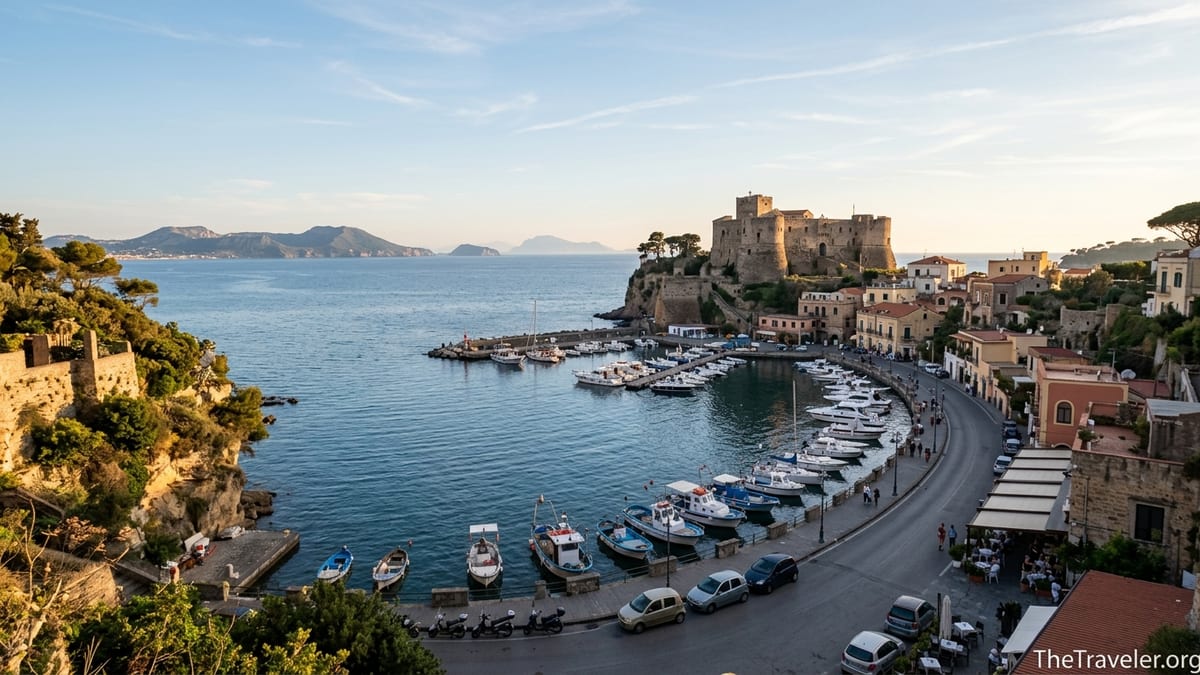
From the Baia marina, a modest stroll takes you past boatyards, modest fishermen’s houses and bars where a morning espresso costs around 1.20 to 1.50 euros if you stand at the counter. In the late afternoon, older locals lean on the railings, commenting on the returning fishing boats and the state of the sea. The view across the bay towards the Aragonese castle, perched on its promontory with the archaeological museum inside, is particularly striking in the golden hour, especially after the boat tours have gone.
Further along the coast, the small harbors of Miliscola and the seafront at Bacoli present a more local version of the Italian seaside than you will find in Capri or Sorrento. Beach clubs rent basic deckchairs and umbrellas, while small free stretches of sand remain if you are willing to sit on a towel. Gelato shops and bakeries sell fresh sfogliatelle and taralli for a couple of euros, ideal for a simple picnic while you watch families pack up after a day at the sea. Practically no one here is rushing back to Naples to tick off another landmark, which makes it an ideal place to slow your own pace.
In the early evening, you may stumble upon casual waterfront events, from amateur fishing competitions to summer music nights sponsored by local associations. Posters taped to lampposts or notices in bar windows advertise these gatherings, which are rarely marketed in English. Attending one, even briefly, can offer a glimpse into contemporary community life that no guidebook tour over the ruins can provide.
Volcanic Craters, Vistas and Quiet Trails
For travelers who enjoy walking, the crater-rim paths above Baia are among the region’s most overlooked experiences. The slopes surrounding the Phlegraean Fields are cut with roads and footpaths that link viewpoints, small shrines and patches of Mediterranean scrub. Many of these vantage points allow you to look simultaneously over the Bay of Naples, the lakes of Miseno and Lucrino, and the line where the sea has swallowed parts of ancient Baia.
Short informal hikes near Monte Nuovo and other crater edges can usually be completed in one to two hours, making them a realistic addition to a half-day visit. Trailheads are often unsigned or only lightly marked, and parking might be nothing more than a dirt pullout beside the road. Sturdy walking shoes, water and a hat are essential, especially from late spring to early autumn when the sun can be intense and shade is limited.
What these paths offer is perspective and quiet. Away from the marinas and main roads, you may encounter only a few local dog walkers or small groups out for exercise. From higher viewpoints you can trace the lines of Roman and modern infrastructure, seeing how ancient roads roughly parallel today’s highways and where old harbors have silted up. It is also one of the best ways to grasp the scale of the caldera and understand why this entire region, not just Baia, fascinated ancient authors with its fumes, hot springs and abrupt cliffs.
Because these trails are not heavily promoted, they retain an unpolished feel. You might pass abandoned farm buildings, patches of litter or half-finished structures alongside wild herbs and sea views. This is not a manicured national park experience, but for many travelers that mix of beauty and rough edges is precisely what makes the walk memorable.
Taste of the Phlegraean Fields: Wine, Seafood and Simple Bars
The food culture around Baia often remains invisible to visitors who arrive on a tight schedule or as part of a larger Naples excursion. Yet the region produces distinct wines and seafood specialties that quietly appear on chalkboard menus and wine lists in humble trattorias from Baia to Bacoli. Paying attention to what is local rather than defaulting to generic dishes can turn an ordinary lunch into a deeper encounter with the place.
Falanghina and Piedirosso are the two names you will see most frequently on local wine lists. Glasses of house Falanghina commonly cost 4 to 6 euros and pair well with seafood antipasti like marinated anchovies, octopus salad or local mussels. Piedirosso, a light, earthy red, works nicely with grilled sausages or simple pasta with tomato and cheese if you want a break from fish. Many small restaurants in and around Baia source their bottles from wineries in the nearby hills, though they rarely advertise this beyond a line on the menu.
Seafood remains the backbone of most menus. At modest, family-run places away from the waterfront, a full meal of mixed fried fish, salad and wine might total 20 to 30 euros per person, depending on the catch of the day and your appetite. Closer to the ports, prices are higher but still reasonable compared to central Naples, especially at lunchtime. Look for dishes referencing the lakes and bays directly, such as clams from the local lagoons or preparations that mention “alla baiana,” to taste recipes that grew up alongside this particular coastline.
Equally revealing are the neighborhood bars and pasticcerie that cluster near bus stops and small squares. A pastry and cappuccino breakfast remains around 3 to 4 euros, and mid-afternoon snacks like filled panini or arancini are similarly affordable. Spending half an hour at a plastic table outside one of these bars while buses come and go is a chance to watch the area’s daily rhythms: schoolchildren with backpacks, workers on espresso breaks, older residents chatting about local politics. This quiet observation is often what turns a quick visit into a genuine sense of having been somewhere, not just having seen something.
The Takeaway
Baia ranks among Italy’s most talked-about underwater sites, but the experience most travelers have is surprisingly narrow: a brief glide over submerged mosaics followed by a quick return to Naples. The real richness of the area lies in how those ruins connect to the living landscape above them: thermal waters still used for bathing, crater lakes bordering working villages, underground cisterns that preserved fleets, and everyday bars where the descendants of ancient sailors and fishermen go about their lives.
By planning even one extra day around Baia rather than treating it as a single stop, you gain access to this quieter world. Prioritize at least one thermal bath, a visit to Piscina Mirabilis, time at the lakes of Miseno or Lucrino, and an unhurried walk through the small harbors. Leave space in your schedule for the unscripted moments on a lakeside bench or at a corner bar that rarely make it into guidebook summaries.
In doing so, you will come away with more than a remarkable set of underwater photographs. You will have traced the full arc of Baia’s story, from the hot springs that drew Roman elites to the caldera that swallowed their villas and the communities that continue to adapt to this shifting ground. That layered experience, rather than any single attraction, is what most visitors miss and what makes Baia worth knowing in depth.
FAQ
Q1. Is Baia worth visiting if I am not a certified diver?
Yes. Non-divers can explore the underwater ruins by glass-bottom or semi-submarine boat, visit the hilltop archaeological park, enjoy thermal baths and discover nearby lakes and villages.
Q2. How much time should I plan in Baia beyond the underwater park?
A full day allows you to see more than the main attractions, but staying one night gives time for a thermal bath, Piscina Mirabilis and relaxed lakeside meals.
Q3. Can I visit Piscina Mirabilis on my own?
Access is usually by guided visit at set times, often arranged through local organizations or tour operators, so it is best to check schedules and book in advance rather than simply showing up.
Q4. Are the thermal baths near Baia suitable for families?
Many thermal parks welcome families and have varied temperature pools, though some areas may be reserved for adults. Checking age policies and facilities in advance is advisable.
Q5. What should I wear for a day exploring Baia’s lesser-known sites?
Wear comfortable walking shoes, light clothing, a hat and bring swimwear, a towel and flip-flops if you plan to use thermal baths or lakeside beaches.
Q6. Is it easy to reach Baia and Bacoli by public transport from Naples?
Yes. Regional trains and local buses link Naples with the Phlegraean Fields, but connections can be slow, so allowing extra time and checking timetables is important.
Q7. Are there good places to eat near Lago Miseno and Lago Lucrino?
Both lakes are ringed with small cafés and seafood trattorias offering local dishes, lake views and more relaxed prices than many central Naples restaurants.
Q8. When is the best season to explore Baia beyond the main attractions?
Late spring and early autumn are ideal, with warm weather, swimmable water and fewer crowds, while high summer can be hot and busier along the coast.
Q9. Do I need a car to see the lesser-known areas around Baia?
A car offers maximum flexibility for reaching crater viewpoints and thermal parks, but patient travelers can combine regional trains, local buses and walking to cover many highlights.
Q10. Is Baia safe to visit given the volcanic activity in the Phlegraean Fields?
The area is monitored by Italian authorities and remains a lived-in region with towns, schools and businesses; travelers should simply follow local guidance as they would in any active volcanic zone.