


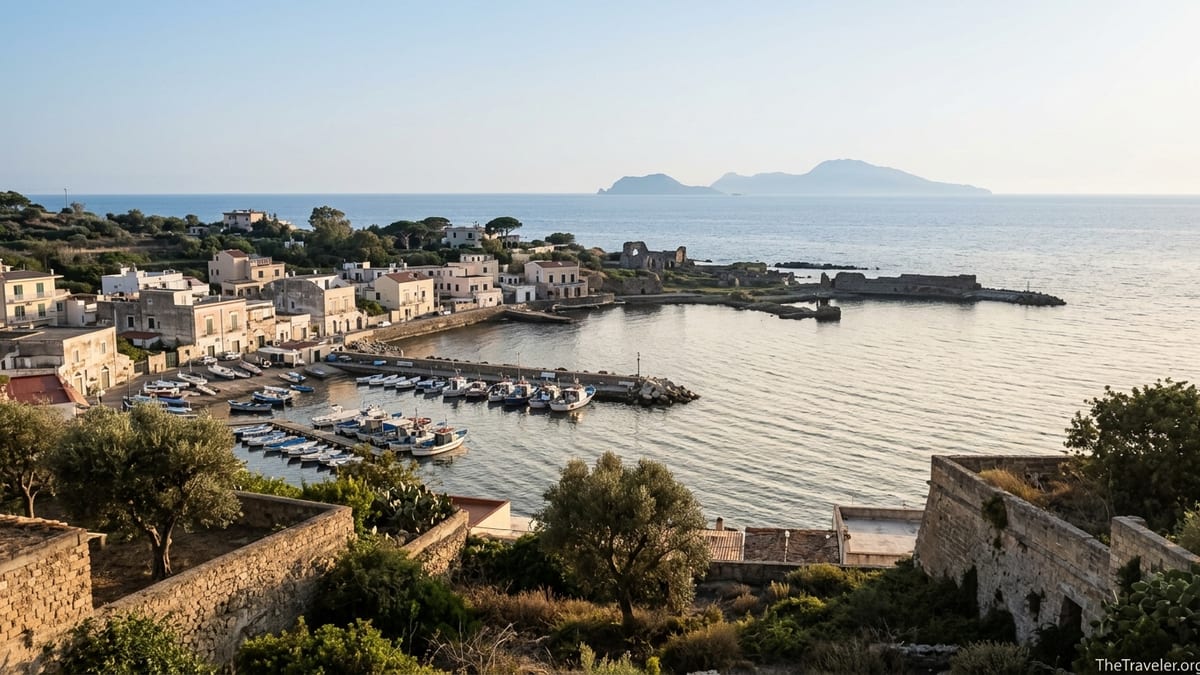
Just west of Naples, where most travelers race toward Capri and the Amalfi Coast, a small bay curves gently around a cluster of pastel houses and fishing boats. This is Baia, once the decadent playground of Roman emperors and senators, now a sleepy suburb of Bacoli that many visitors barely notice as they speed along the coast road. Stay a while, though, and Baia reveals a different side of the Bay of Naples: ruined villas slumbering under the sea, volcanic hills laced with forgotten paths, thermal pools where locals still soak in mineral water, and family trattorias where the menu depends on the morning’s catch. These are the hidden corners of Baia that most travelers never discover.
Get the latest updates straight to your inbox!
Baia’s Sunken City: A Ghost Resort Beneath the Waves
From the road, Baia looks like a modest harbor town. The real drama lies just offshore, where the remains of an ancient Roman resort have slipped under the waterline. Because this stretch of coast sits inside a restless volcanic zone, the land has slowly sunk over centuries, leaving colonnades, mosaics and villa courtyards a few meters below the surface. What was once the most exclusive address in the Roman world has become one of Europe’s most unusual archaeological sites: an underwater park that can be visited by boat, glass bottom vessel or guided dive.
Most visitors to Naples and nearby Pozzuoli never make time for Baia’s submerged ruins, and organized group excursions tend to fill up with day trippers in summer. The quieter way to experience the site is to book a midweek morning snorkel or scuba session with one of the small local dive operators based right in the port. Basic snorkel outings usually run around 35 to 50 euros per person, including guide and equipment, and last about two hours on the water. Certified divers can expect to pay from roughly 70 to 100 euros for a double tank trip, depending on season and gear rental.
Conditions are often best from late May to early October, when the Tyrrhenian Sea is calmer and the visibility more reliable. On clear days you can float above wave-softened walls, patterned marble floors and the outlines of private bath complexes that once echoed with elite gossip. Guides point out details you might otherwise miss: a sunken nymphaeum where statues still stand ankle deep in sand, or the submerged quay that once welcomed gilded pleasure barges. It feels less like visiting a museum and more like drifting through a flooded movie set, except the story here is real.
To make the most of the experience, plan your timing around the tide and light. Local skippers know that late morning sun cuts through the water at a gentle angle, throwing mosaics and stonework into relief. Bring a thin rash guard rather than relying only on rental wetsuits, since early season water temperatures can sit in the mid teens Celsius. Even in high summer, a light wind on the boat can feel surprisingly cool after time in the sea, so a simple cotton towel and dry layer are worth carrying in your daypack.
Thermal Pools and Steam Caves Far from the Crowds
Baia earned its ancient reputation not only for lavish villas but also for its hot springs. The volcanic field beneath your feet still fuels patches of steaming ground, sulfur vents and pockets of warm mineral water. The most obvious modern expression of this are the thermal complexes near the harbor, but many travelers bypass them in favor of better known spas closer to Naples or on Ischia. That leaves Baia’s baths quieter, cheaper and far more local in character.
Several small thermal centers operate within a short walk or drive of the waterfront, at prices that usually undercut the glossier island resorts. A couple of hours in simple outdoor pools filled with mineral-rich water typically cost between 20 and 35 euros per person, sometimes including use of loungers and a basic changing area. Weekdays outside of August are especially peaceful, and you will often share the pools with elderly locals coming for therapeutic soaks rather than tourists chasing Instagram shots.
The atmosphere here is resolutely practical. Expect concrete basins, rising plumes of steam and the faint tang of sulfur on the air rather than polished marble and designer robes. For many travelers that is precisely the appeal. One pool might be just warm enough to linger with a book, while another is fed directly from a hotter spring where water flows in at around 40 degrees Celsius. It is common to see regulars following their own slow ritual: ten minutes soaking, a spell sitting in the shade, then another immersion while chatting quietly with friends.
If you have a car, ask your guesthouse host or a café owner about lesser known fumaroles and small public springs on the hills behind town. Some residents still use trickles of warm water on the edges of private gardens to irrigate lemon trees or to rinse aching joints after a day of work. You may be pointed to a rough stone trough at the end of a lane, or a spot where steam seeps from the earth beside a crumbling wall. These tiny signs of underground heat are reminders that Baia’s apparent sleepiness hides a powerful geology just beneath the surface.
Quiet Viewpoints over the Phlegraean Fields
Most newcomers experience Baia from sea level, but the best way to understand its setting is to look down on it from above. The town is nestled inside the Campi Flegrei, or Phlegraean Fields, a wide volcanic caldera dotted with craters, lakes and sulfur vents. You can see some of this from the main road that links Baia with Bacoli and Pozzuoli, yet the most atmospheric viewpoints are hidden up side streets and on little used walking paths that few visitors explore.
One rewarding vantage point lies above the modern village where a short, steep walk climbs between low houses, vegetable gardens and washing lines to reach an old defensive terrace. In the late afternoon it offers a sweeping view over the harbor, the arc of the bay and, beyond, the hazy outline of Procida and Ischia on the horizon. You may find only a couple of locals sitting on a bench, passing time before dinner. Bring a bottle of water and sit quietly as the light softens and fishing boats trace slow lines back toward the marina.
With a bit more effort, you can follow footpaths along the ridges above Baia that link neighboring volcanic features. The land here undulates rather than rising into sharp peaks, so walks are more about distance than elevation. Old agricultural roads weave between fig trees, low stone walls and patches of scrub where lizards dart over sun-warmed rocks. In spring the air smells of wild fennel and broom; by late summer it is dry and resinous. Good walking shoes are enough, and distances between viewpoints are short enough that you can improvise a circuit without committing to a full day hike.
These vantage points also reveal how close Baia lies to other pieces of the Phlegraean puzzle. To the north, caldera walls cradle residential neighborhoods and small vineyards. To the east, you can glimpse the outlines of craters that appear at first like ordinary hills. Seeing the larger landscape puts the submerged ruins and hot springs in context: this entire coastline is the rim of a vast, restless system, and Baia just happens to occupy one of its calmest corners.
Everyday Baia: Harborside Life and Family Trattorias
For many travelers, the most memorable part of Baia is not the underwater archaeology or geology but its quiet daily rhythms. The harbor is still a working port, and early mornings are the best time to watch local life unfold. Small fishing boats return from night trips, their crews hauling crates of squid, mullet and anchovies up to the quay. On some days a refrigerated van from a Naples market will be waiting to buy part of the catch, while the rest goes directly to nearby trattorias. Coffee bars along the waterfront fill with men taking an espresso at the counter before heading to work, while bakery doors click open and neighbors stop to exchange news.
Food here tends to follow the sea and the seasons. A typical dinner at a simple family trattoria tucked back from the main promenade might start with a plate of mixed antipasti from the day’s catch, then a generous bowl of spaghetti alle vongole or paccheri with local mussels. House wine is often from Campania’s coastal vineyards and arrives in plain carafes rather than labeled bottles. Expect to pay in the region of 15 to 25 euros per person for a full meal with wine if you choose from the day’s specials rather than insisting on a printed menu.
Because Baia is not primarily a tourist town, eating times follow local habits. Lunch service can be relaxed, and some places close entirely between mid afternoon and evening. Aim for lunch around one or two o’clock, and dinner from eight onwards. If you want a terrace table with a view over the marina at sunset, reserving earlier in the day by phone or by stopping in person is a wise idea, especially on summer weekends when Neapolitans drive out for the evening breeze.
Beyond the harbor, narrow residential streets hold tiny grocery shops, fruit stands and bakeries that see few visitors. Shopping here is a way to experience daily routines without intruding. Buy a couple of peaches, a slab of focaccia or a packet of local taralli biscuits, and you will quickly find yourself drawn into brief, friendly conversations. A few words of Italian go a long way; even a simple greeting and thank you often result in a smile and perhaps a recommendation for the best time to visit the harbor walls, or which café serves the strongest morning coffee.
Easy Day Trips That Keep Baia as Your Base
One of Baia’s biggest advantages is its location. It sits within easy reach of Naples, Pozzuoli and the islands of the Bay of Naples, yet remains quieter and generally better value for money than the most famous resort areas. Many travelers treat it as a half day stop on a wider circuit, but using Baia as a base for several nights lets you enjoy its hidden corners in the early mornings and evenings while still exploring the region by day.
From the small train stations and bus stops near Baia and Bacoli, you can reach central Naples in roughly an hour, depending on connections. That makes it feasible to spend a day visiting the Archaeological Museum, wandering the historic center or trying Neapolitan pizza in its home city, then retreating to a calmer harbor for the night. Transport tickets on regional lines are relatively inexpensive, and day passes that cover buses and trains in the wider area keep costs predictable if you plan to move around frequently.
Ferries from nearby ports connect you to Procida and Ischia, two islands that share the same volcanic heritage as Baia but have very different atmospheres. Procida’s pastel harbor and tight lanes feel almost like an extension of Campanian village life, while Ischia offers larger spa complexes and more developed beach resorts. By basing yourself in Baia you can sample both on separate day trips without paying island accommodation prices, which tend to rise sharply in high season and on weekends.
Closer still are the lesser known volcanic sites around the Phlegraean Fields. A short drive or bus ride brings you to crater lakes, fumarole fields and small archaeological parks that see a fraction of the visitor numbers of Pompeii or Herculaneum. Returning to Baia in the late afternoon, when the harbor begins to glow and restaurant tables start filling with families, you may appreciate how rare it is to find a base that combines genuine local life with such a rich set of nearby excursions.
Practical Tips for Experiencing Baia’s Hidden Side
Because Baia remains off most mainstream itineraries, planning requires more initiative than in heavily touristed destinations. Accommodation options lean toward small family run guesthouses, simple seaside hotels and apartment rentals rather than large international chains. Prices fluctuate by season, but a modest double room with harbor or hillside views might cost somewhere between 70 and 140 euros per night in spring and autumn, rising in August when Italian vacation season peaks. Booking a few months ahead for stays that include weekends will give you more choice in smaller properties with the most character.
Public transport connections are adequate but not always intuitive for first time visitors. If you are arriving from Naples by train and bus, allow extra time for transfers and check the latest schedules close to your travel dates, since local timetables can change. Renting a small car for a few days offers the most flexibility to explore back roads, stop at viewpoints and visit neighboring coastal villages. Keep in mind that parking close to the harbor is limited in peak periods, so choosing a guesthouse that provides a dedicated space can save stress on busy evenings.
Weather in this part of Campania is typically Mediterranean, with hot, dry summers and mild winters. Spring and early autumn are ideal for combining time in the water with walking and sightseeing. Summer brings long daylight hours and lively evenings but also higher temperatures and more visitors from elsewhere in Italy. Even in July and August, though, Baia rarely feels overwhelmed compared with better known resort towns. Local shops often close for a pause in the early afternoon heat, so planning your underwater excursions or hill walks for the cooler morning and late afternoon is sensible.
Above all, approach Baia with a slower rhythm in mind. This is not a place of showpiece attractions designed for quick checklists, but a compact community built around a harbor, its springs and its volcanic hillside. The more you adjust your pace to the town’s own, the more likely you are to notice its quiet pleasures: laundry fluttering in a sea breeze above Roman stonework, cats napping in the shade of fishing nets, an old man teaching a grandchild to cast a line from the quay. These small scenes are as much part of Baia’s hidden character as the ruins beneath the waves.
The Takeaway
Baia is a reminder that some of the most intriguing places sit just beyond the edges of familiar maps. Overshadowed by nearby Naples, Pompeii and the famed islands of the bay, it receives a fraction of their visitor numbers yet holds stories and landscapes at least as compelling. Here you can float over submerged Roman mosaics in the morning, soak in volcanic mineral water in the afternoon and eat seafood landed hours earlier by boats you watched at dawn.
What sets Baia apart is not any single must see sight but the way its pieces fit together: a working harbor layered over an ancient resort, warm springs threaded through an ordinary neighborhood, hills that offer broad views yet remain free of crowds. For travelers willing to trade a famous name for a quieter experience, it offers a kind of luxury that cannot be bought: the feeling of discovering a place at your own pace, in the company of people who are living their everyday lives. Spend a few days here, and Baia is unlikely to stay a hidden gem in your memory.
FAQ
Q1. Where exactly is Baia and how do I get there from Naples?
Baia sits on the coast west of Naples, in the municipality of Bacoli within the Phlegraean Fields. From central Naples you can reach it by a combination of regional train and local bus via Pozzuoli or by car in roughly 40 to 60 minutes, depending on traffic.
Q2. Is Baia really less crowded than other spots on the Bay of Naples?
Baia receives far fewer international visitors than Naples, Pompeii or the islands, and most people who come are day trippers from nearby areas. Outside peak August weekends you will usually find the harbor, thermal pools and backstreets pleasantly uncrowded, especially in the mornings and on weekdays.
Q3. Do I need to be a certified diver to see the submerged ruins?
No certification is required for basic boat or glass bottom tours, and several local operators offer guided snorkeling excursions suitable for confident swimmers. Scuba diving among the ruins is reserved for certified divers, who must bring proof of qualification and typically join small guided groups.
Q4. When is the best time of year to visit Baia?
Late spring and early autumn are ideal, with warm but not extreme temperatures and generally good sea conditions. Summer offers the calmest water and liveliest evenings but higher prices and more local visitors, while winter can be atmospheric for walks and hot springs, though some water activities may be limited by weather.
Q5. How much should I budget per day in Baia?
Daily costs vary with travel style, but many visitors find that around 80 to 150 euros per person covers a midrange guesthouse, meals at local trattorias, local transport and one paid activity such as a boat tour or thermal bath session, assuming they are not paying for private guides or luxury services.
Q6. Are the thermal baths in Baia suitable for children?
Policies differ between facilities, but many of the simpler outdoor pools welcome families provided children are supervised and follow the rules. Water temperatures in some basins can be quite high, so parents should check with staff and choose cooler pools or shorter soaking periods for younger visitors.
Q7. Is Baia a good base without renting a car?
It is possible to stay in Baia without a car if you are comfortable using regional trains, buses and occasional taxis or ride services. That said, having a small rental car makes it easier to reach hilltop viewpoints, neighboring villages and less frequent bus routes, especially in the evening when public transport thins out.
Q8. What should I pack for a visit to Baia’s underwater park?
Bring a swimsuit, quick drying towel, sun protection, a light long sleeved layer for the boat, and if you have one, your own mask that fits well. Operators usually provide basic equipment, but many travelers prefer the comfort of personal gear, especially for longer snorkel or dive sessions.
Q9. Are there sandy beaches in Baia itself?
The immediate shoreline around Baia is more focused on the harbor and rocky edges than broad sandy beaches. If you want a classic beach day, nearby stretches of coast toward Bacoli and the wider Phlegraean area offer small sandy coves and lidos that can be reached by short drives or local buses.
Q10. Is Baia safe for solo travelers?
Baia is generally considered safe, with the same common sense precautions you would use in any small coastal town near a large city. Keep an eye on belongings in busy public areas, avoid leaving valuables on display in parked cars, and at night stick to lit streets around the harbor and main residential zones.